
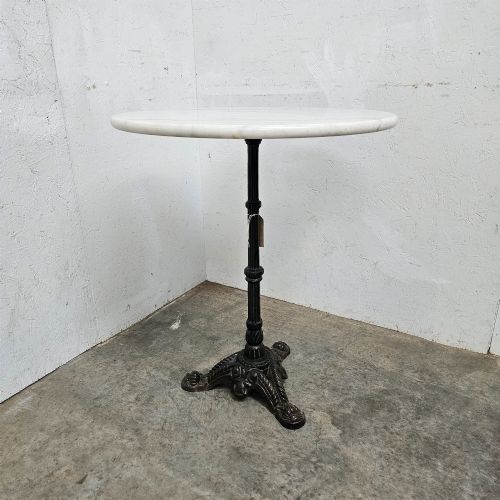


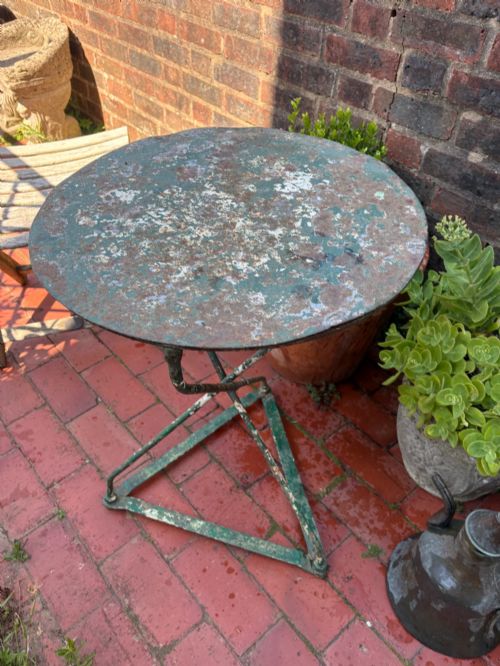


French Bistro Side Table
These french bistro side table pieces bring practical charm to a room, combining sturdy metal bases with classic stone or wood tops.
French Bistro Side Table
A french bistro side table combines utilitarian metal frames with stone or wooden surfaces, reflecting a heritage of European café and garden culture. These compact items serve smaller spaces well while retaining a distinct period character from the nineteenth and early twentieth centuries.
The selections encountered here span from cast iron and marble café tables to oak kitchen consoles and folding garden pieces. Buyers most frequently encounter round pedestal designs featuring veined marble tops paired with heavy iron bases.
Origins stretch across French provincial, industrial, and Victorian traditions, encompassing both indoor café furniture and outdoor conservatory pieces. Each object shows the practical adaptation of durable materials for commercial hospitality and domestic use.
What varies in quality
The sophistication of the cast iron base design dictates much of the visual merit, with finer examples displaying crisp relief work and elegant curves. Heavier gauge metalwork and substantial marble thicknesses separate utilitarian pieces from more decorative parlour or conservatory items.
Originality of surface finish, such as patinated green paint or unpolished timber, influences the overall character. The integration between the stone top and the metal frame reveals the care taken in original assembly.
Some folding garden tables still wear the quiet dust of a Parisian pavement after a century of service.
The French Bistro Side Table Glossary
- Gueridon
- A small round table, typically supported by a single central pillar or pedestal. These items originated in France during the seventeenth century and remain popular for casual dining or display.
- Cast iron
- An iron-carbon alloy poured into moulds to create complex shapes and heavy bases. It provides the necessary weight to keep small tables stable in busy settings.
- Marble top
- A polished stone surface prized for its cool touch and resistance to moisture. White and green varieties appear frequently on nineteenth-century café tables.
- Strap work
- Flat strips of metal interwoven or applied to reinforce furniture frames. This technique adds both structural rigidity and decorative linear detail to ironwork.
French Bistro Side Table: Frequently Asked Questions
Where were these tables used originally?
These tables served primarily in public cafés, patisseries, and outdoor terraces across France and Britain. Their compact footprints allowed establishments to maximise seating in constrained spaces.
Later, domestic buyers adopted them for conservatories, kitchens, and small dining areas, valuing their robust construction and easy maintenance.
How do I clean a marble top?
Maintenance requires mild soap and warm water applied with a soft cloth to protect the polished stone. Avoid acidic cleaners or vinegar, which can etch the marble surface.
Dry the top thoroughly after washing to prevent water spotting and maintain the stone's natural lustre.
Are these tables suitable for outdoor use?
Many examples originated as garden, café, or conservatory furniture designed to withstand outdoor conditions. Iron bases tolerate weather well, though protective winter storage prevents excessive paint flaking.
Marble tops benefit from being kept under cover to protect against frost damage and staining from outdoor elements.
How do I identify a nineteenth-century piece?
Dating relies on observing construction methods, such as hand-mixed paint surfaces, heavy sand-cast iron components, and patinated timber. Maker marks or foundry stamps occasionally appear on the underside of the metal bases.
Comparing the weight, joinery, and wear patterns against established period examples helps confirm the age of the item.