



French Bench Stool
These french bench stool designs bring continental scale and carved detail into a room, offering versatile seating and foot support.
French Bench Stool
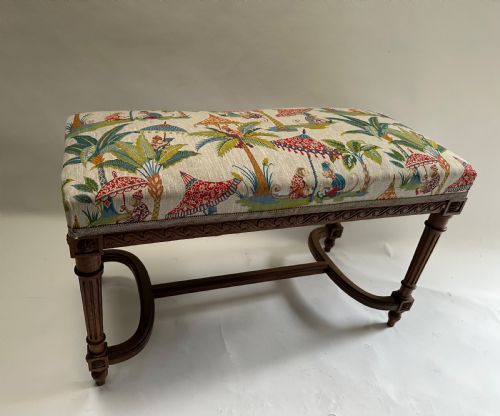
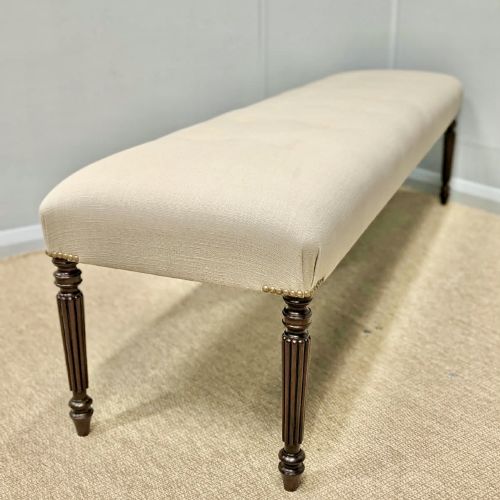
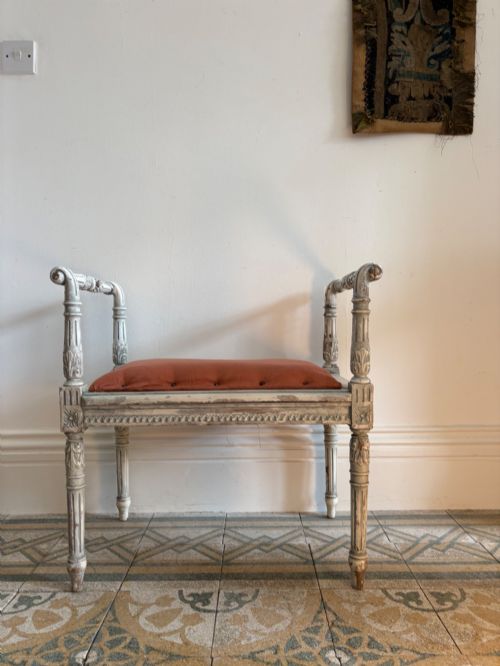
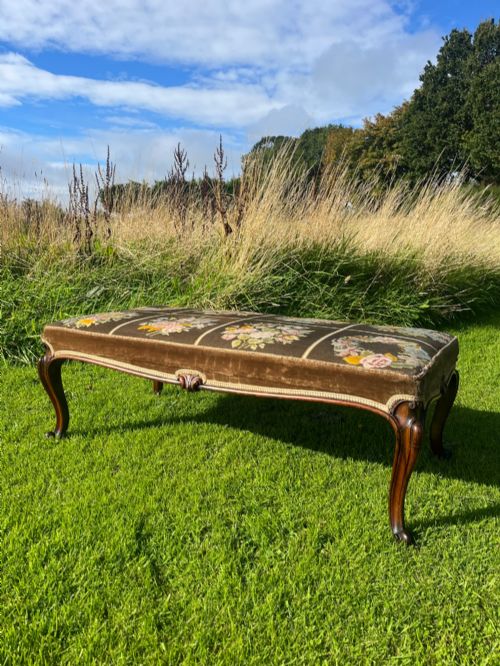
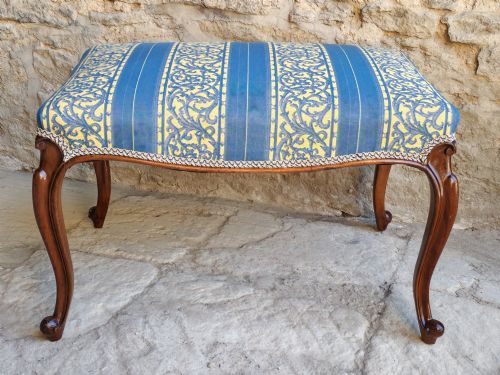
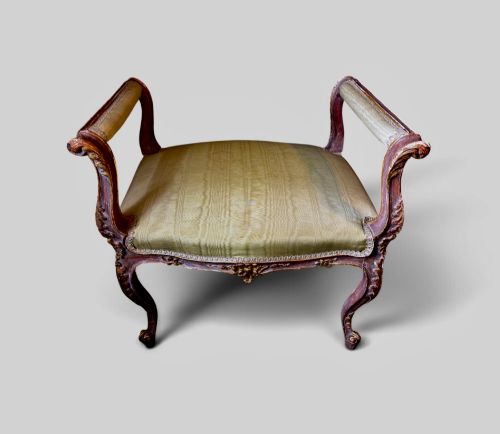
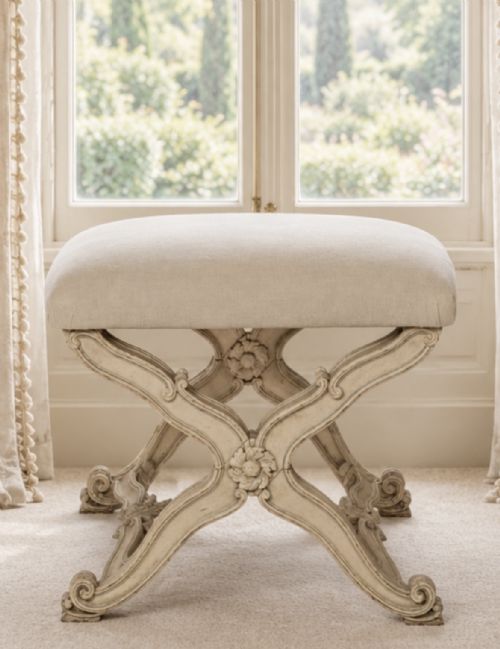
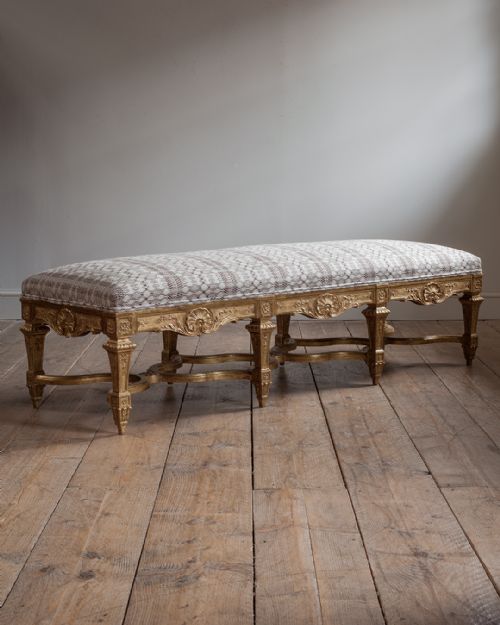
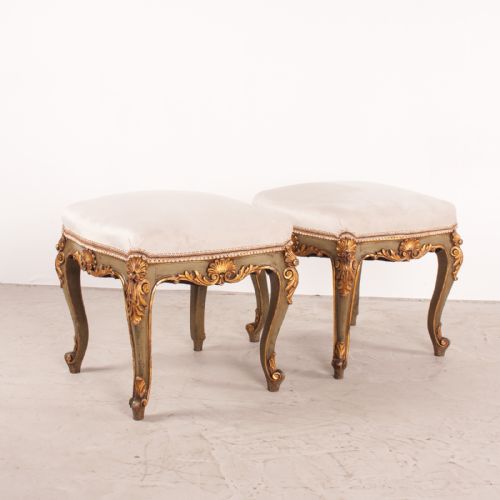
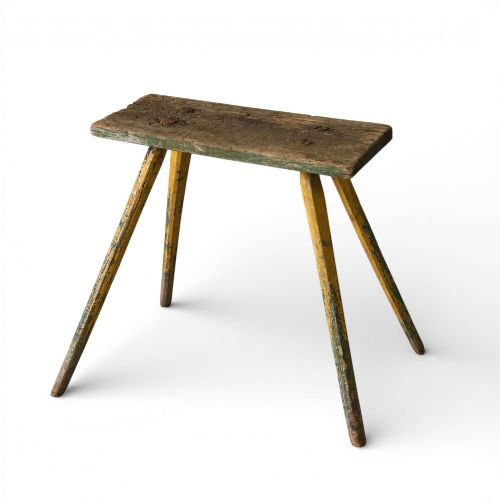
A french bench stool unites the low profile of a footstool with the elongated proportions of a window seat or long bench. These pieces range from rustic country pine forms to grand giltwood salon seats built in the nineteenth century.
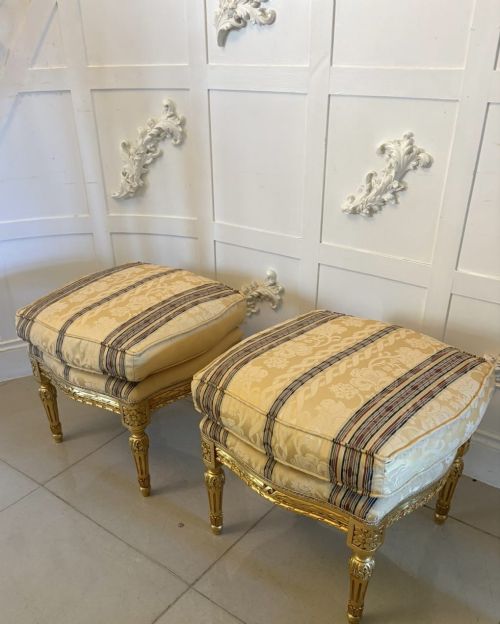
Makers drew on historical vocabularies, producing items styled after the reigns of Louis XV and Louis XVI alongside robust Victorian interpretations. Buyers frequently encounter low footstools, upholstered window seats, and long duet benches on this page.
The regional variety spans carved walnut framework from provincial workshops to gilded Parisian seating bearing intricate neoclassical ornamentation. Such seating functions equally as low cocktail tables or decorative footrests within a traditional interior.
Materials and construction methods
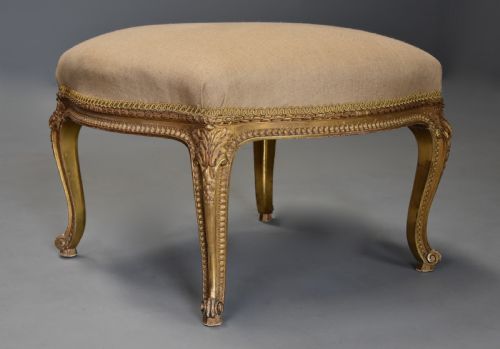
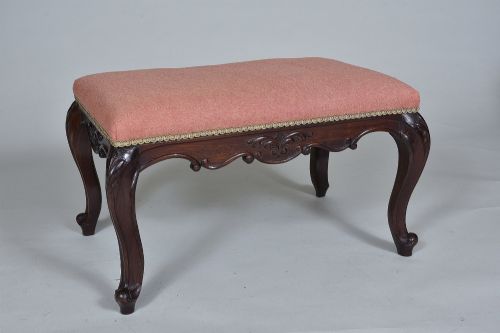
Craftsmen shaped these frames from dense hardwoods like walnut, beech, and mahogany, alongside softer timbers designated for painted or gilded finishes. Structural elements often incorporate hand-carved cabriole legs, fluted neoclassical columns, or robust X-frame supports.
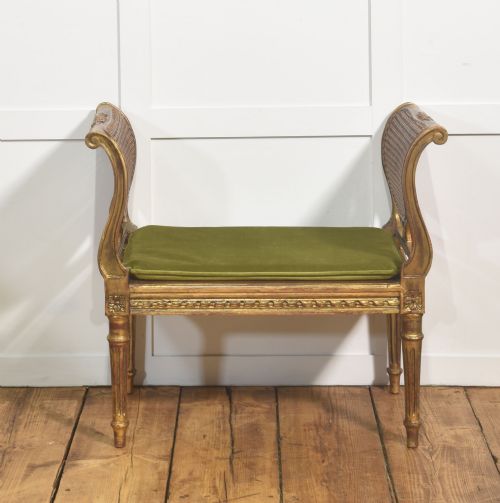
Surface decoration relies heavily on applied gesso beneath gold leaf, or layered historical paint finishes that display original distressing. Upholstery utilises traditional stuffing materials secured beneath textiles such as velvet, silk, linen, or woven cane panels.
French Bench Stool Retail Price Guide 2026
Typical asking prices for french bench stool among the pieces listed under this phrase on Sellingantiques today, from the lower quarter to the upper quarter. They describe what is for sale here now, not the wider market.
Some humble milking stools survived centuries of barn work only to find themselves draped in velvet beside gilded Parisian salon benches.
Distinguishing quality in construction
The distinction between standard utility seating and high salon furniture rests in the crispness of the hand-carved ornament and the depth of the timber frame. Superior examples display meticulously jointed corners and deeply sculpted floral or scroll motifs rather than shallow cast plaster enrichments.
Original surface treatments dictate much of the desirability, with untouched historical gilding or authentic period paint holding greater integrity than later refurbishment. The structural rigidity of the cabriole legs and the tension of the original webbing determine daily utility.
LOIDRAULT FRERES PARIS
The French Bench Stool Glossary
- Giltwood
- Timber coated with a thin layer of gold leaf applied over a prepared gesso ground. This finish appears frequently on formal nineteenth-century salon seating.
- Cabriole leg
- A furniture leg featuring a double curve, stepping outward at the knee and tapering inward toward the foot. This form derives from animal limbs and typifies revival styles.
- Window seat
- An elongated stool designed specifically to fit the width of a window recess. These pieces often feature low arms or bolsters at each end.
- Banquette
- An upholstered bench or long seat with or without a backrest. The term denotes formal seating originating in French domestic architecture.
- Gesso
- A plaster-like mixture applied to wood surfaces to provide a smooth base for gilding or painting. Artisans carve fine details directly into this hardened layer.
French Bench Stool: Frequently Asked Questions
How were french bench stool forms used historically?
These pieces served practical and decorative functions in large salons, bedchambers, and corridors throughout grand nineteenth-century residences. Longer formats provided seating near windows or at the foot of large beds, while smaller versions supported tired feet.
Over time, many lower examples adapted into casual coffee tables or low resting platforms. Their versatile dimensions allowed them to move easily between rooms as household needs shifted.
How do I distinguish Louis XV from Louis XVI styles?
Louis XV pieces rely on asymmetrical curves, flowing organic lines, and exuberant rococo scrolls. Cabriole legs curve gracefully without sharp angles, emphasising fluid movement across the frame.
Louis XVI furniture introduces strict symmetry, straight fluted legs, and classical neoclassical geometry. Rectangular proportions and crisp architectural mouldings replace the undulating contours of the earlier period.
Are these seats suitable for daily seating?
Most antique stools and window seats retain sturdy timber frames capable of supporting everyday weight. However, historic upholstery webbing may require reinforcement if subjected to heavy daily use.
Low footstools function well as occasional seats or ottoman surfaces in modern living spaces. Placing them away from direct heat sources helps preserve the stability of the dry nineteenth-century wood.
What indicates an original painted finish?
Original painted surfaces show natural craquelure, subtle wear patterns, and layered tones accumulated over decades of exposure. Brush marks and minor imperfections reveal the hand of the early decorator rather than modern spraying techniques.
Under magnification, genuine historical paint layers integrate tightly with the underlying gesso or timber. Modern overpainting often sits flatly across joins and conceals authentic surface grain.