




French Architectural Artwork
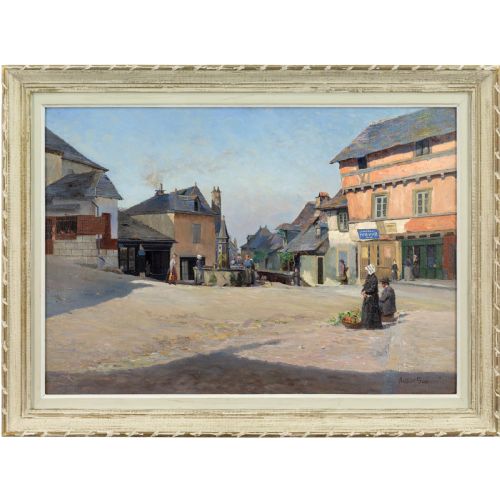
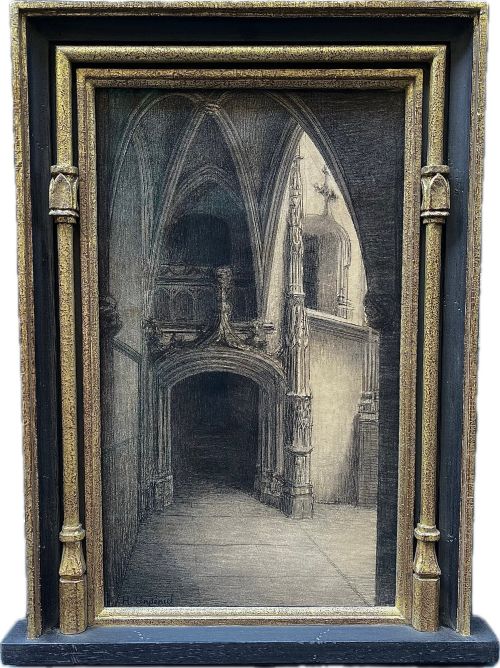
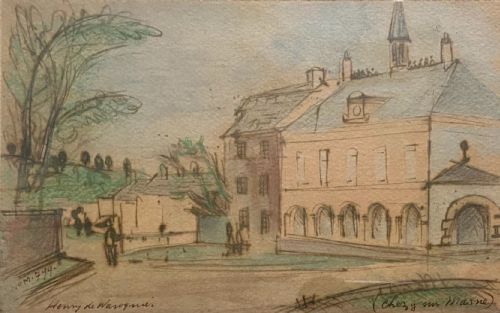
French architectural artwork captures the streets, monuments, and buildings of France through paintings, prints, and drawings.
French Architectural Artwork
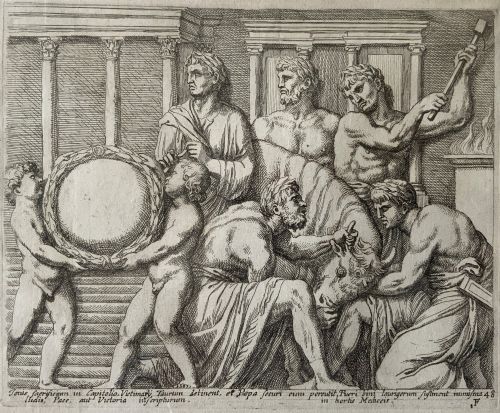
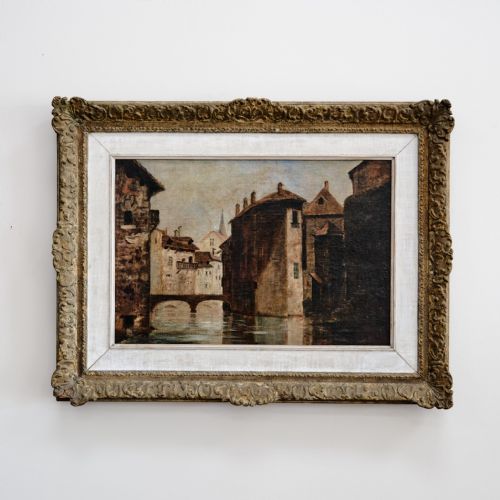
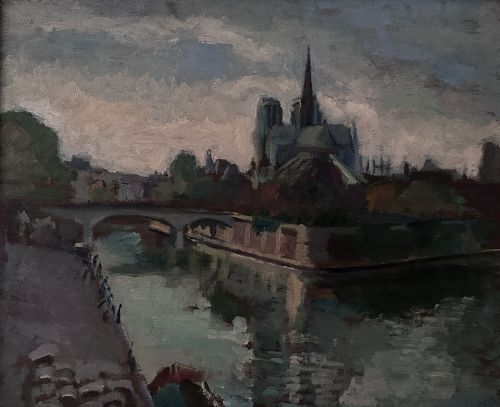
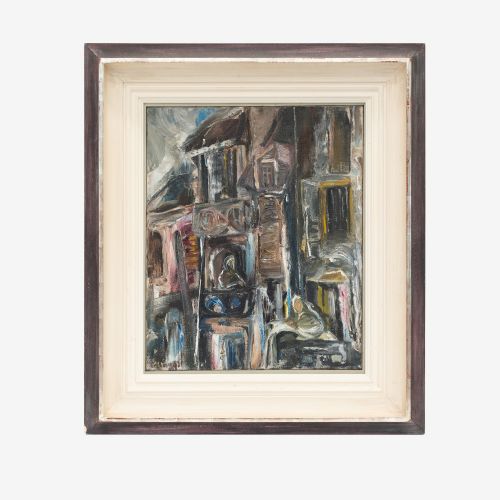
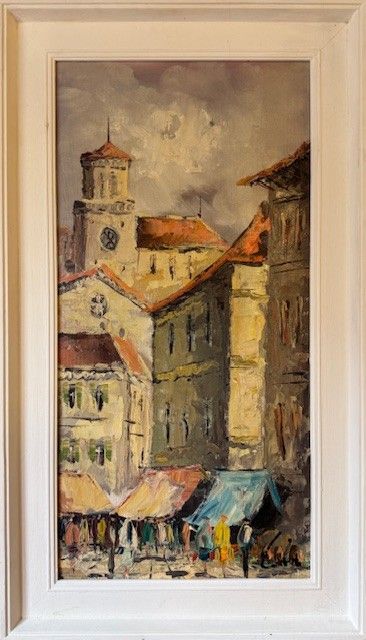
French architectural artwork encompasses paintings, watercolours, prints, and drawings depicting urban streetscapes, cathedrals, chateaux, and village buildings. When searching for French architectural artwork, buyers encounter pieces ranging from Victorian industrial lithographs to mid-century oil paintings on canvas.
The selection includes depictions of Parisian landmarks such as Notre Dame and the Arc de Triomphe alongside rural farmhouses and market squares. Works span multiple decades from the nineteenth century through the 1960s, reflecting changing artistic interpretations of French civic and rural design.
How they were made
Artists utilised traditional media including oil paint on canvas or panel, watercolour, ink, charcoal, and pastel on paper. Graphic works encompass etchings, drypoint engravings, and industrial lithographs produced on paper.
Framed works combine these painted or printed surfaces with period wooden frames, occasionally incorporating glass protection for delicate watercolours and paper plans.
Artists occasionally captured the bustling morning mist and cold drafts of historic French streets.
What varies in quality
Quality rests upon the sureness of the draftsmanship and the artist's ability to render spatial depth and structural perspective convincingly. Stronger works demonstrate accomplished handling of light and shadow across stone facades and street surfaces.
Material preservation further distinguishes the pieces, with well-kept paper, stable paint layers, and intact period framing representing the upper tier of surviving examples.
Arthur Gué·François Perrier·Henri Charles Angéniol·Henry de Waroquier·Lilian Colbourn·Paul-Élie Gernez·Victor Gabriel Gilbert·Ron Folland·Caroline Burnett·Joseph W. Milliken·Armand Guillaumin·Noel Harry Leaver·Francis Dodd·Maurice Asselin·Charles Eyres Simmons·Lamorna Birch·Fred Lawson·Victor Valery·Henry Schafer·Letitia Marion Hamilton
The French Architectural Artwork Glossary
- Etching
- A printmaking technique where lines are bitten into a metal plate with acid before ink is applied and transferred to paper.
- Lithograph
- A planographic print method utilising a stone or metal plate to carry the image design.
- Drypoint
- An intaglio printmaking process where an image is scratched directly into a metal plate with a sharp needle.
- Watercolour
- A painting method where fine pigment powders are suspended in a water-soluble binder for application on paper.
- Post-Impressionism
- An art movement extending beyond Impressionism with increased emphasis on symbolic content and geometric forms.
French Architectural Artwork: Frequently Asked Questions
What subjects appear in French architectural artwork?
The subjects include urban street views, Parisian river scenes, cathedrals, town halls, and rural chateaux.
Artists also depicted marketplaces, farmhouses, and specific architectural plans from various regions across France.
Which materials are common in these pieces?
Works commonly utilise oil paint on canvas or panel, watercolour on paper, and ink or charcoal drawings.
Printed formats include industrial lithographs, etchings, and drypoint engravings on paper supports.
How do these artworks reflect different time periods?
Nineteenth-century works often present detailed topographical views and classical structures with academic precision.
Twentieth-century pieces introduce modernist perspectives, looser brushwork, and abstracted interpretations of cityscapes.
How should these pieces be displayed at home?
Framed oil paintings and watercolours suit walls in studies, living rooms, and hallways.
Works on paper benefit from placement away from direct sunlight to preserve the integrity of the pigments.