
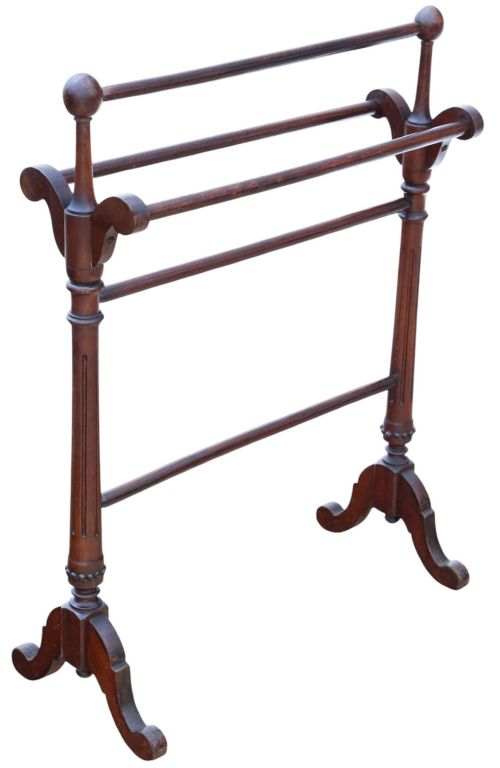
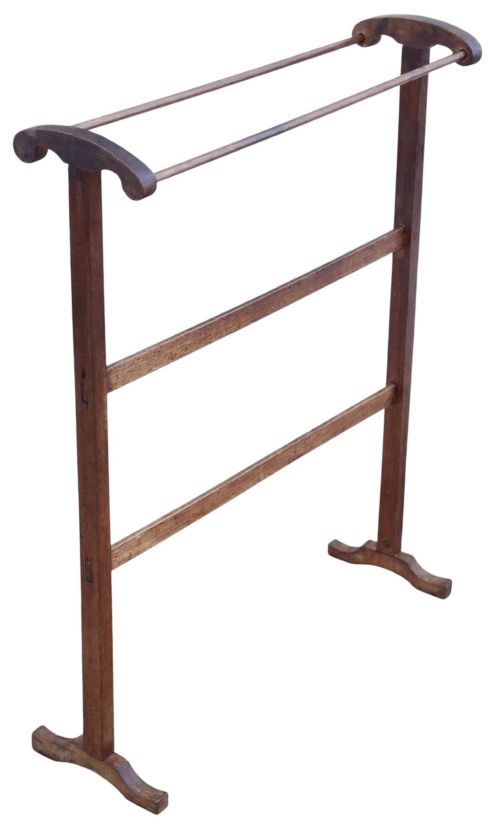
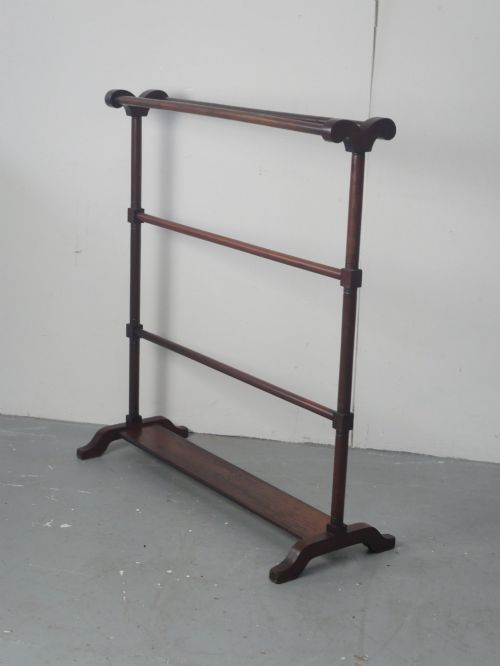
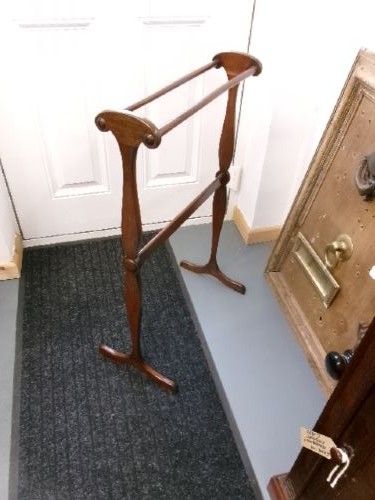
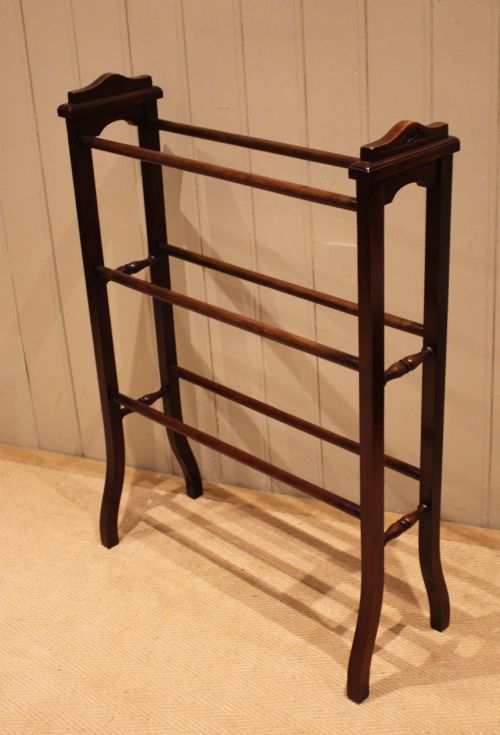
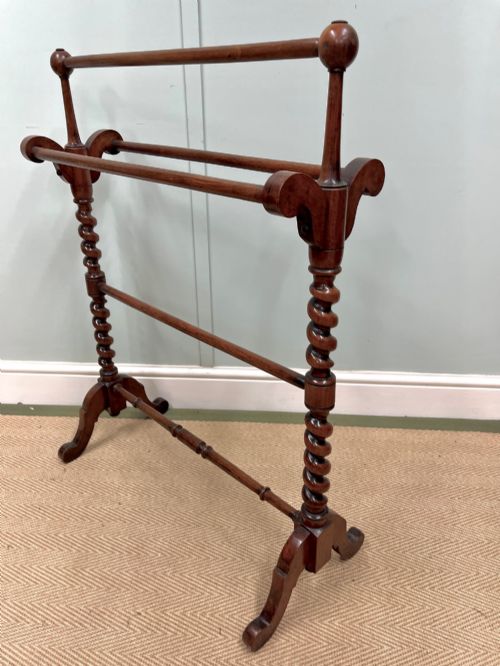
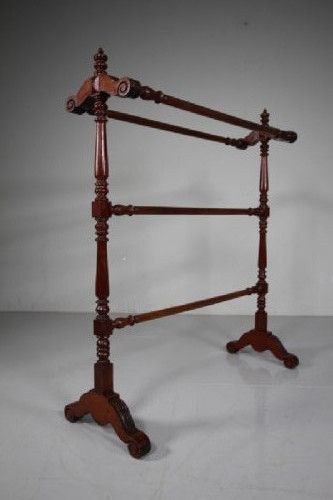
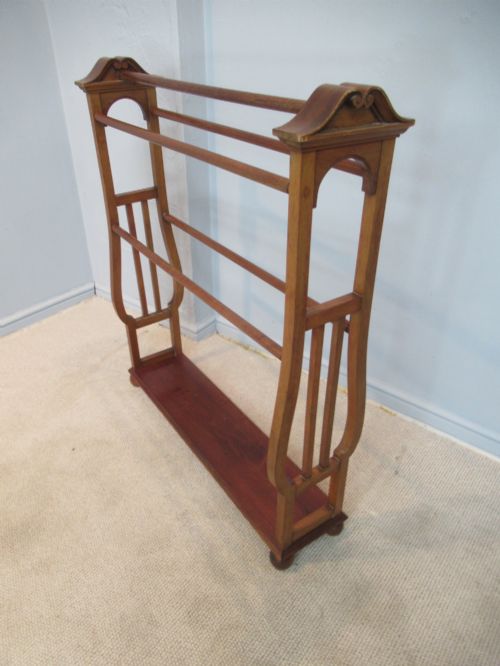



Freestanding Wooden Airer
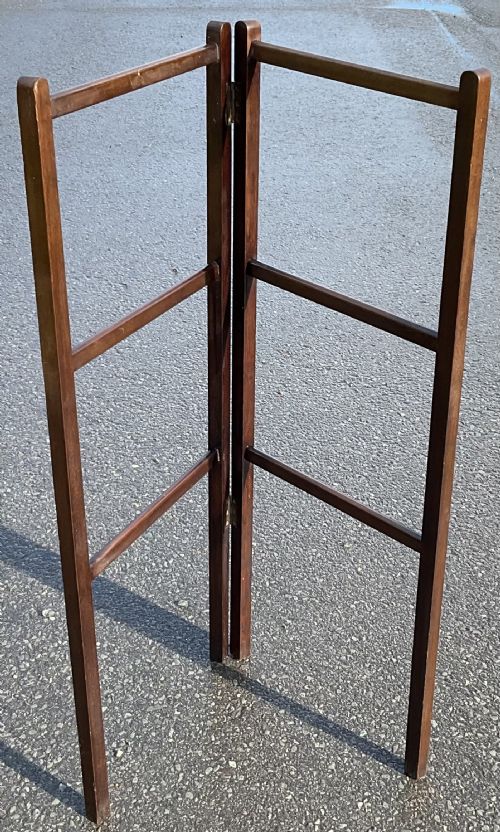
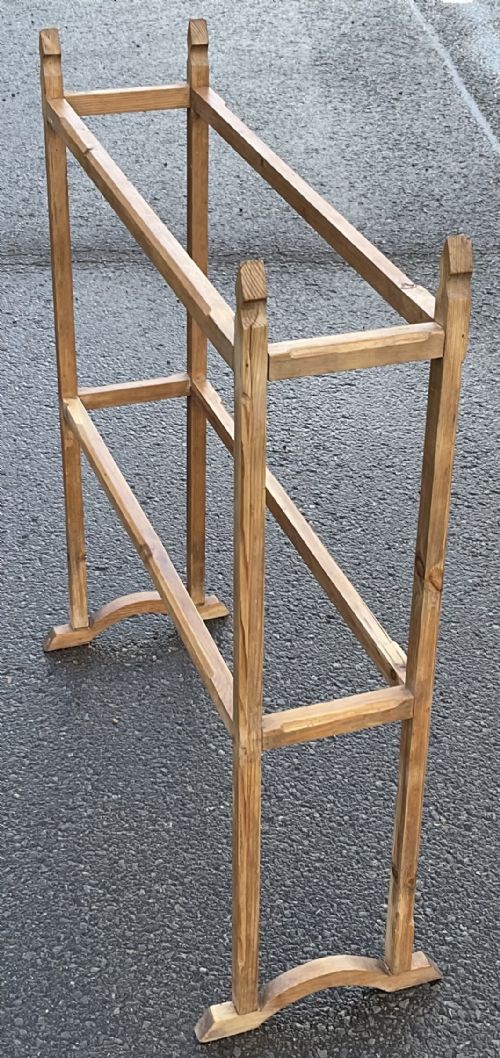
A freestanding wooden airer is a practical piece of period furniture designed for drying laundry or hanging textiles.
Freestanding Wooden Airer
A freestanding wooden airer provides a dedicated, movable frame for airing and drying clothes or linens without fixing anything to the walls. These pieces appear in various forms, from simple upright stands to multi-fold rails and cheval designs.
The pieces on this page span the Regency, Victorian, and Edwardian eras, reaching from the mid-nineteenth century into the early twentieth century. Most examples date from the Victorian and Edwardian periods, constructed to serve domestic utility in bedrooms and dressing rooms.
Makers shaped these stands from timbers such as mahogany, pine, oak, and walnut, frequently building folding sections to maximise hanging space. Buyers encounter both generous, oversized clothes rails and smaller domestic towel rail stands.
How they were made
Cabinetmakers constructed these airers primarily using solid hardwoods and softwoods like mahogany, oak, pine, and walnut, occasionally adding brass hardware for hinges or fixings. Selected pieces feature ebonised finishes, boxwood details, or inlaid woodwork to enhance their appearance.
Construction techniques focused on stability and mobility, employing folding hinges and multi-bar frames to support damp textiles. Workshops utilised traditional joinery to ensure the upright stands and rail arms withstood daily domestic use.
One generous clothes rail carries an attribution to Gillows, proving that even laundry day deserved fine cabinetmaking.
What varies in quality
The choice of timber creates a distinct difference across these airers, with dense hardwoods like mahogany and walnut occupying the upper end compared to utility pine. Timber selection dictates the weight and overall substance of the standing frame.
Subtleties in construction separate standard pieces from finer examples, such as the inclusion of multiple folding rails, inlaid wood details, or brass mounts. Generous proportions and robust joinery indicate a piece built for a substantial country house or larger residence.
Gillows
The Freestanding Wooden Airer Glossary
- Ebonised wood
- Timber treated with a dark finish to imitate expensive ebony. Makers utilised this method to give ordinary woods a dramatic, polished appearance.
- Inlaid mahogany
- Mahogany decorated with contrasting strips or pieces of lighter wood set into the surface. This technique added decorative refinement to Edwardian pieces.
- Gothic Revival
- A nineteenth-century style drawing inspiration from medieval architecture. Pieces in this aesthetic incorporate pointed arches, heavy mouldings, and structural motifs.
- Arts and Crafts
- A movement prioritising simple construction and visible material honesty. Objects from this style display straightforward woodwork without excessive ornamentation.
Freestanding Wooden Airer: Frequently Asked Questions
How were freestanding wooden airers used?
These airers stood near hearths or in bedrooms to dry laundry, air out garments, and hang household linens.
Their movable frames allowed servants to shift them around the house to catch the heat from fires.
What woods were used for these airers?
Cabinetmakers built them from native and imported timbers, depending on the intended room and budget.
Mahogany, oak, walnut, and pine appear frequently across the surviving nineteenth and early twentieth-century examples.
How do I date a wooden airer?
Dating relies on timber choice, construction techniques, and stylistic markers tied to specific historical periods.
Regency and early Victorian pieces display heavier proportions, while Edwardian versions often incorporate lighter frames and simple inlay.
Can I use an antique airer today?
These pieces function well for hanging textiles, displaying quilts, or airing garments in modern homes.
Their sturdy wooden frames handle everyday fabric weight just as they did in past centuries.