

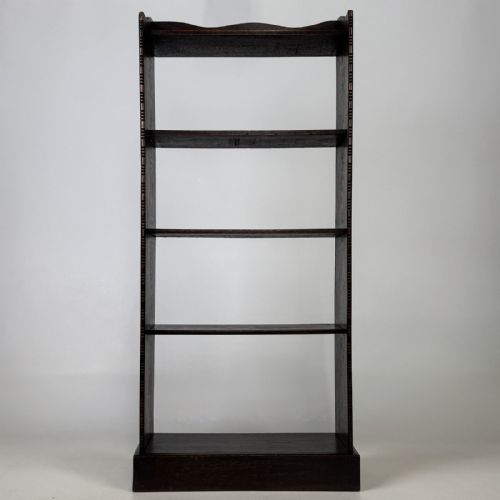
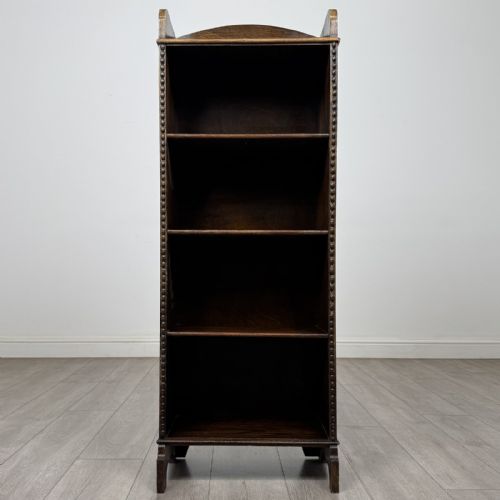
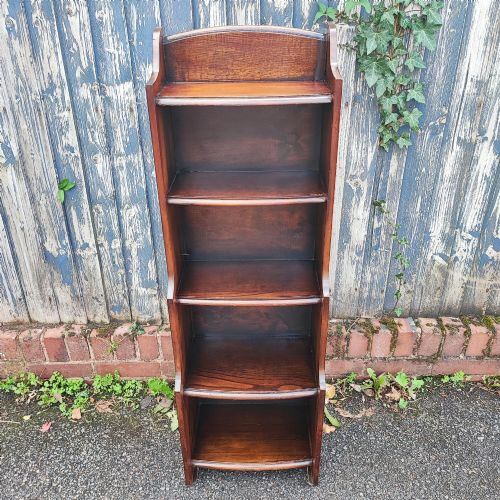
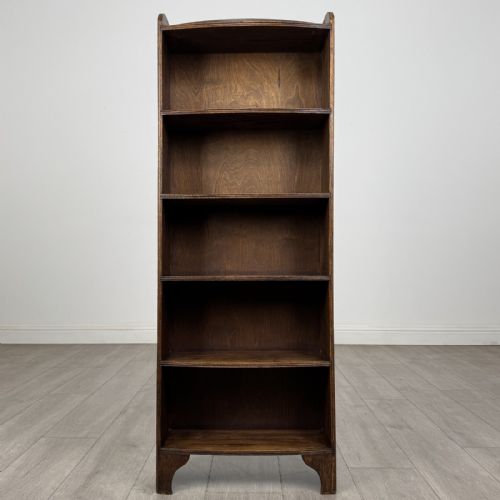



Freestanding Wood Shelving
Freestanding wood shelving delivers practical room organisation through open bookcases, corner units and tiered what-nots built from rich timbers.
Freestanding Wood Shelving
Freestanding wood shelving encompasses open bookcases, tiered what-nots and corner display units that stand without wall fixing. These pieces organise books and objects across multiple horizontal tiers while remaining entirely moveable within a room.
The selections span distinct historical periods from Regency elegance through Victorian mass and Edwardian utility to Interwar minimalism. Alongside British designs, pieces originate from continental workshops and international traditions including Anglo-Indian and Rustic Indian craftsmanship.
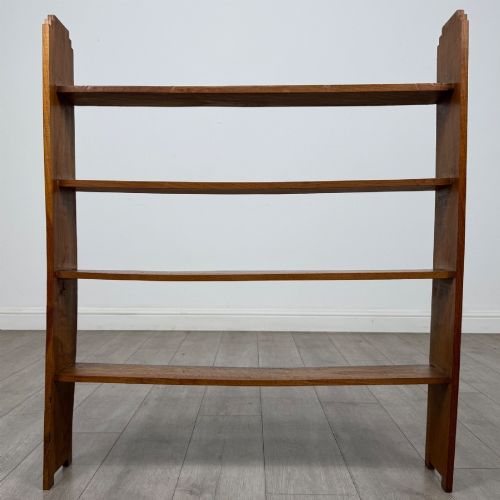
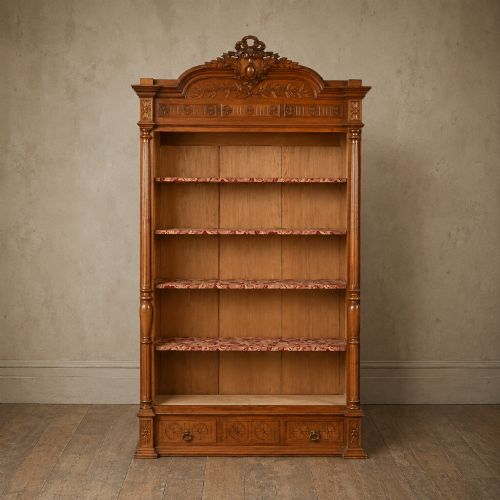
Bookcases and open shelving units dominate the offerings, often featuring dedicated tiers for display or storage. Buyers encounter everything from compact oak corner units to large mahogany library bookcases designed for floor placement.
Materials and construction methods
Makers utilised a range of dense hardwoods including mahogany, oak, walnut and rosewood, frequently selecting figured timbers for visible surfaces. Brass fittings and iron accents appear on specific items for structural support or decorative contrast.
Construction relies on traditional solid wood techniques, incorporating carved details, moulded edges and occasional painted finishes. Cabinetmakers built these items to bear weight independently, balancing the natural movement of timber with stable carcass design.
Freestanding Wood Shelving Retail Price Guide 2026
Typical asking prices for freestanding wood shelving among the pieces listed under this phrase on Sellingantiques today, from the lower quarter to the upper quarter. They describe what is for sale here now, not the wider market.
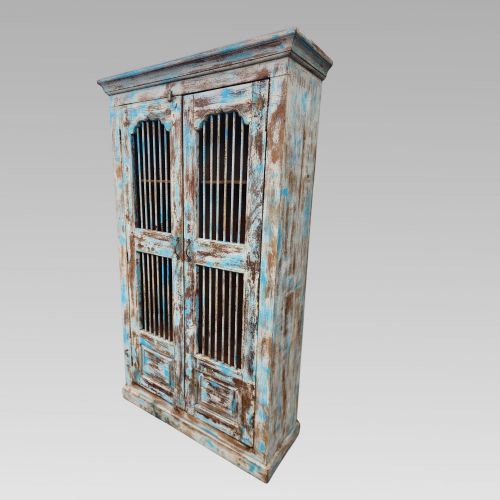
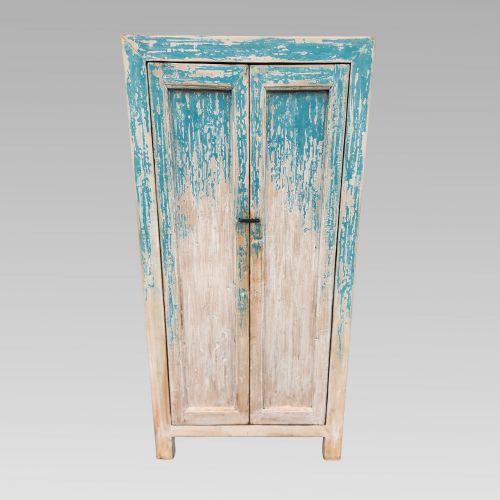
Several units double as wardrobes with hidden internal shelving, proving that Victorian furniture makers loved a clever multi-tasker.
Distinguishing quality in timber shelving
Quality rests in the selection of timber grain and the integrity of the joinery rather than mere decorative flourish. Finer examples display thoughtful proportioning, clean moulding work and cohesive timber matching across all visible shelves and uprights.
Secondary elements such as backboards, shelf supports and brass or iron hardware indicate the overall standard of manufacture. Pieces that maintain structural rigidity without excessive bulk reflect superior historical craftsmanship.
The Freestanding Wood Shelving Glossary
- What-not
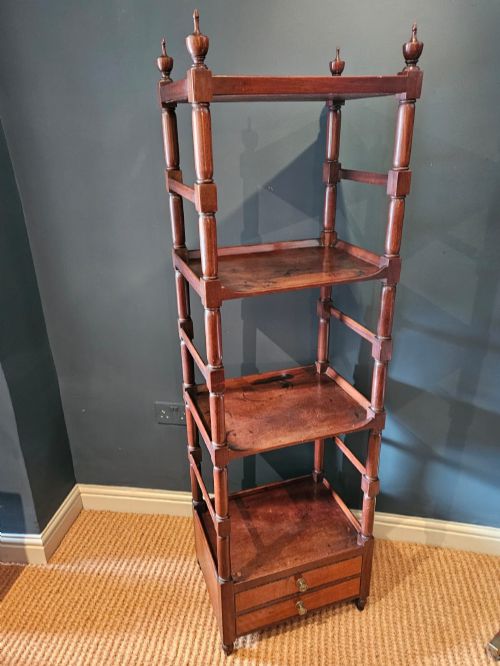
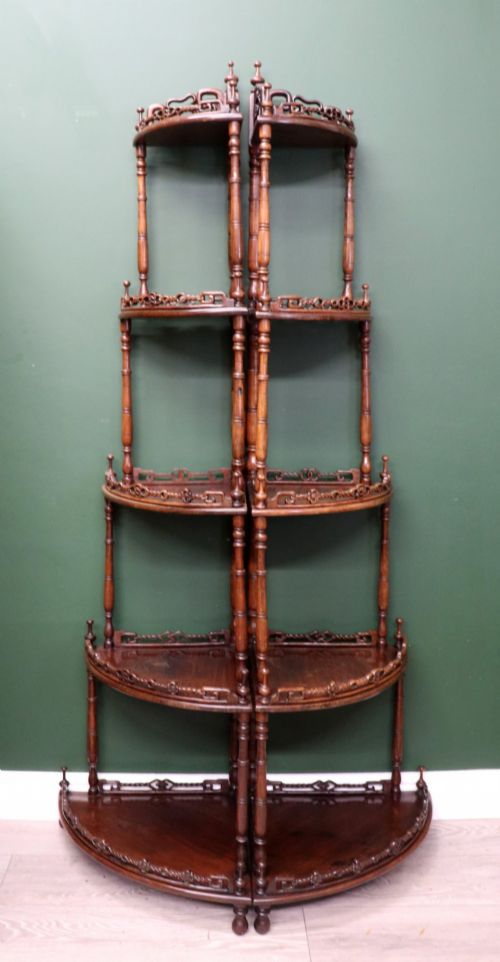
- A set of open shelves standing on legs, designed for displaying ornaments and small books. These tiered pieces gained popularity during the Regency and Victorian periods.
- Waterfall bookcase
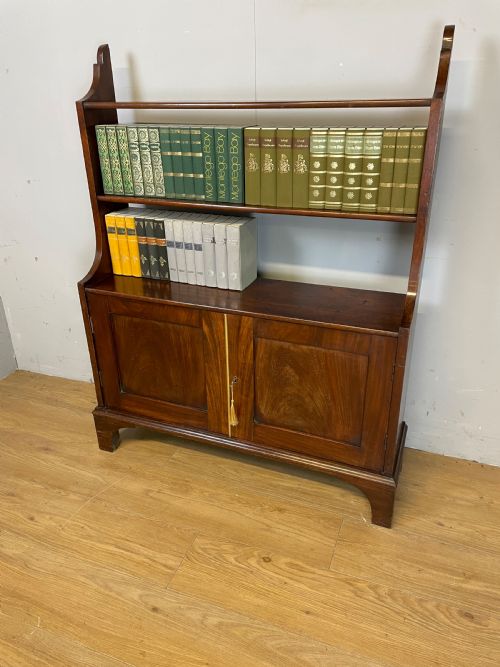
- A shelving unit where each successive tier steps back from the one below it, creating a cascading profile. They frequently appear in mahogany from the Edwardian and nineteenth-century eras.
- Open bookcase
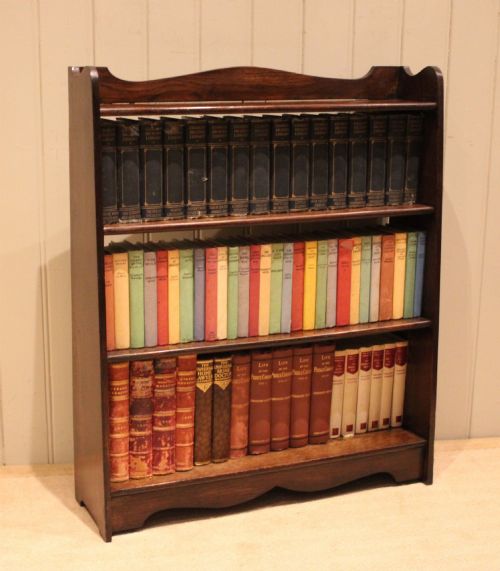
- A piece of furniture dedicated to book storage without doors enclosing the front shelves. They allow immediate access to volumes and showcase the book bindings.
- Padauk
- A heavy tropical hardwood with a reddish hue used in specific nineteenth-century Anglo-Indian furniture. It provides exceptional durability and a distinct deep colour.
- Corner cabinet
- A storage or display unit constructed with an angled back to fit neatly into the corner of a room. These pieces maximise spatial efficiency in smaller interiors.
Freestanding Wood Shelving: Frequently Asked Questions
How do I place freestanding shelving in a room?
Position these units against flat walls or utilise corner versions to activate unused angles in sitting rooms and studies.
Ensure the floor is level so the independent structure remains stable without needing wall anchors.
What is the difference between an étagère and a bookcase?
An étagère functions primarily as an open display stand for decorative items and ornaments across multiple tiers.
Bookcases are engineered specifically to bear the weight of heavy volumes on sturdy wooden shelves.
How should I care for antique wood shelves?
Maintain stable indoor humidity levels to prevent the solid hardwoods from splitting or warping over time.
Dust regularly with a dry cloth and occasionally apply appropriate natural wax to nourish the timber surface.
Can these shelves hold heavy modern books?
Solid wood construction provides natural strength, but older shelf spans should be assessed for sag under immense weight.
Distribute heavy folio volumes evenly across the lower tiers to maintain structural balance.