


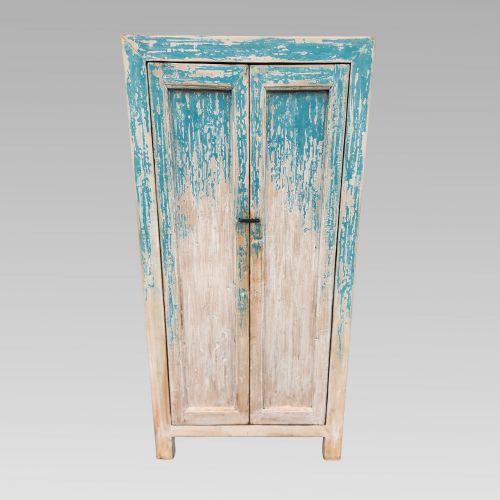


Freestanding Wood Shelves
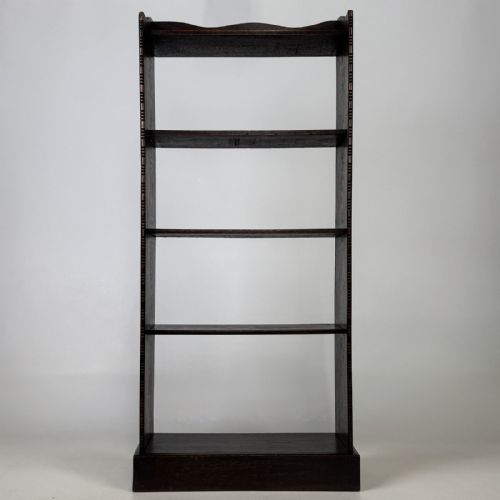
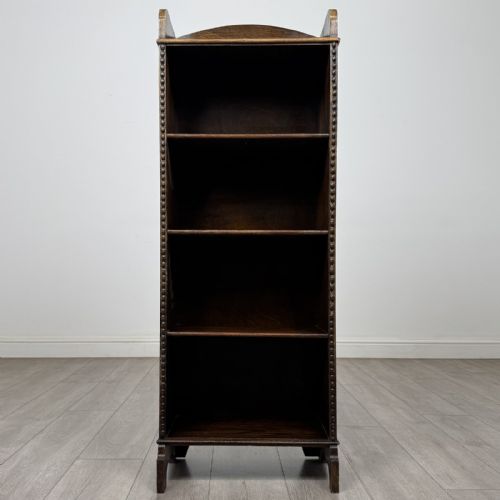
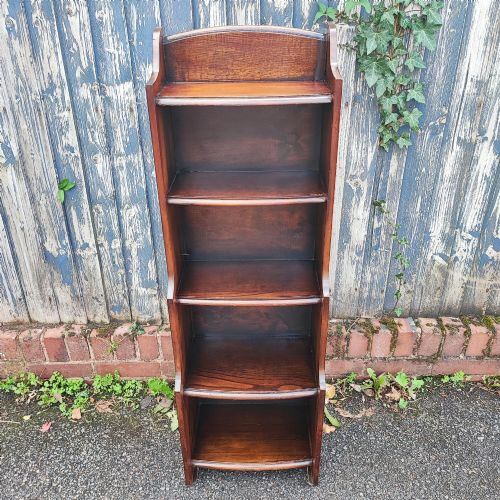
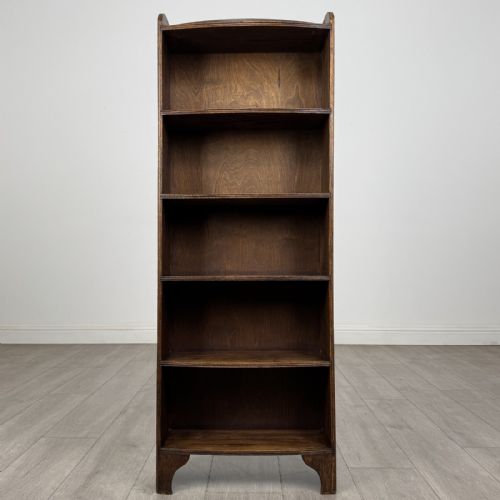
Freestanding wood shelves offer practical book storage and display space, bringing rich grain and solid construction straight into your rooms.
Freestanding Wood Shelves
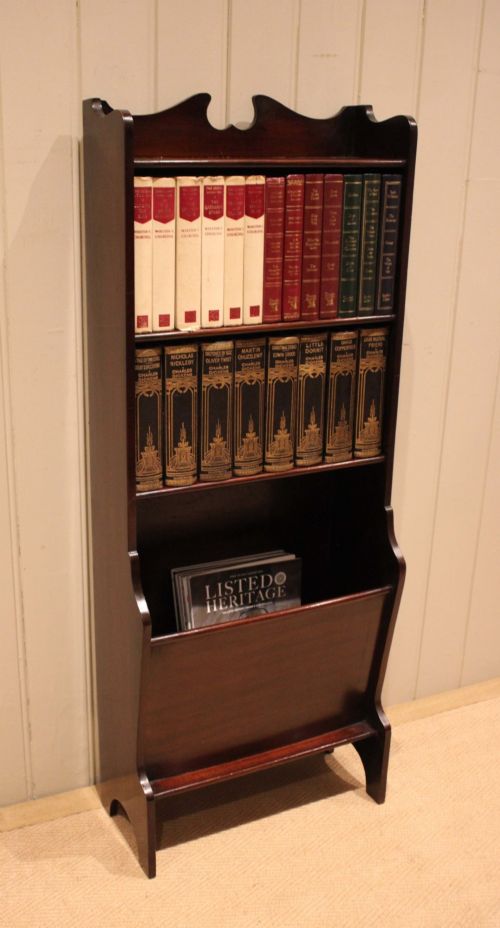
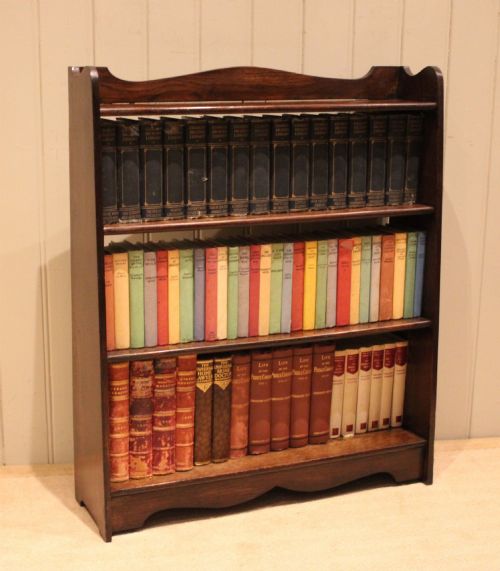
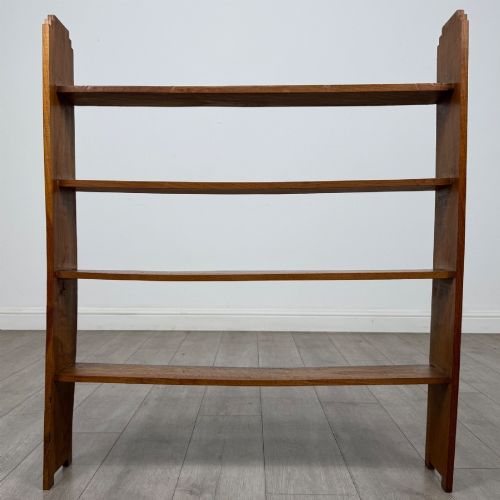
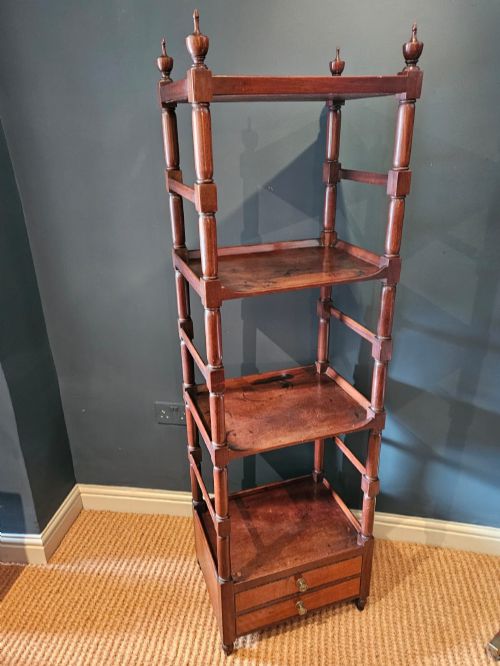
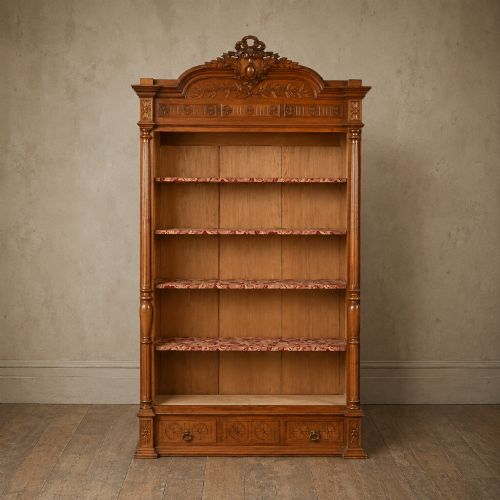
Freestanding wood shelves encompass a diverse group of open bookcases, multi-tiered whatnots, and display units designed to stand away from walls without permanent fixings. These items range from compact Edwardian and 1920s oak or mahogany open bookcases to elaborate Regency rosewood and Victorian tiered pieces.
The versions most commonly met on this page span the nineteenth and early twentieth centuries, drawing heavily on Victorian, Edwardian, and 1920s periods. Buyers encounter everything from simple oak open shelves to refined flame mahogany waterfall units and Anglo-Indian padauk compartments.
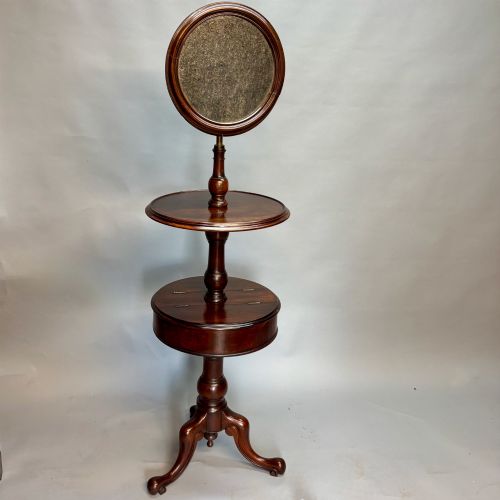
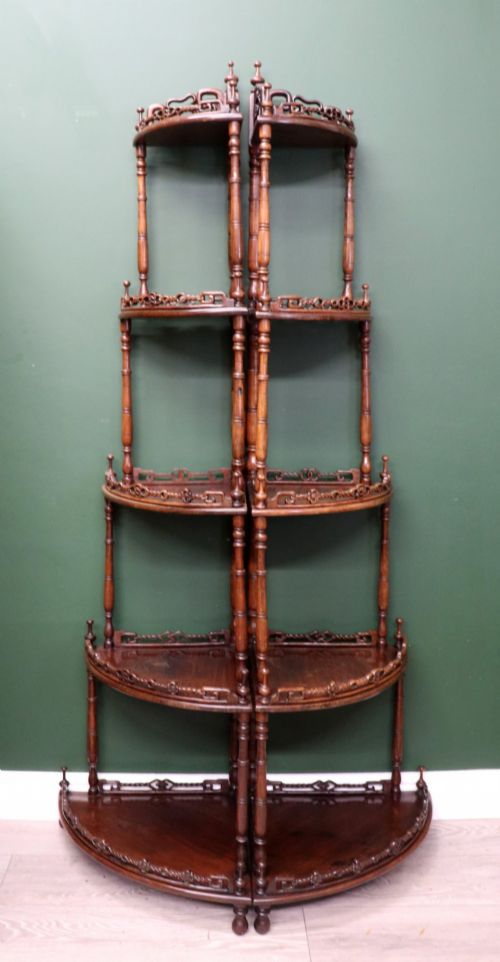
Forms extend beyond standard rectangular bookcases to include octagonal display cabinets, corner whatnots, book troughs, and cupboard base units. Such variety means pieces adapt readily to studies, libraries, and living spaces needing accessible surface storage.
How they were made
Makers utilised solid timbers and selected veneers, notably mahogany, flame mahogany, oak, walnut, rosewood, and partridge wood, alongside occasional teak, cedar, and padauk. These woods were chosen for their distinct grain patterns and structural durability.
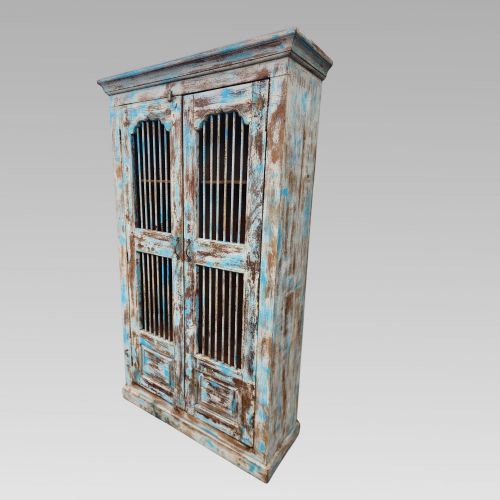
Construction techniques involve stable corner joints, pegged shelving supports, and moulded framing, sometimes supplemented by brass fittings, glass panels, or painted finishes on reclaimed woods.
Freestanding Wood Shelves Retail Price Guide 2026
Typical asking prices for freestanding wood shelves among the pieces listed under this phrase on Sellingantiques today, from the lower quarter to the upper quarter. They describe what is for sale here now, not the wider market.
Listings feature woods including mahogany, flame mahogany, oak, walnut, rosewood, brass, glass, iron, partridge wood, teak, cedar, and padauk.
What varies in quality
Quality rests upon the selection of timber and the precision of the joinery, distinguishing finely figured flame mahogany or rosewood from simpler utilitarian pine or oak. Superior examples display careful grain matching and balanced proportions across multiple tiers.
Design sophistication also sets pieces apart, where refined mouldings, turned supports, and integrated magazine racks or cupboards elevate a standard bookshelf into a notable furnishing.
Waring and Gillows
The Freestanding Wood Shelves Glossary
- Whatnot
- A set of open shelves, typically with three or four tiers, used for displaying ornaments or holding books.
- Waterfall bookcase
- A tiered shelving unit where each successive shelf is set slightly further back than the one below it, creating a cascading profile.
- Padauk
- A heavy tropical hardwood valued for its dense grain and deep reddish-brown colour, seen in Anglo-Indian furniture.
- Flame mahogany
- Mahogany timber cut at the junction where branches meet the main trunk, producing a distinctive flickering flame-like grain pattern.
- Book trough
- A low, open receptacle designed to hold books upright at an accessible angle on a table or floor.
Freestanding Wood Shelves: Frequently Asked Questions
What is a whatnot shelf?
A whatnot is a multi-tiered freestanding shelving unit traditionally used for displaying decorative objects, ornaments, and small books in nineteenth-century interiors.
These pieces typically feature three or more open levels supported by slender turned columns or uprights, allowing items to be viewed from multiple angles.
How do I style freestanding shelves?
Freestanding shelves sit away from walls, making them useful as room dividers or accessible storage units in open spaces.
Balance heavier books on lower tiers while using upper levels for lighter displays, ceramics, or frequently read volumes to maintain visual stability.
Are these shelves solid wood?
The pieces span various construction methods, utilising solid timbers like oak, teak, and cedar alongside fine mahogany, rosewood, and walnut veneers applied to stable secondary woods.
Cabinetmakers balanced structural strength with decorative surface qualities, employing dense hardwoods to support heavy book collections.