

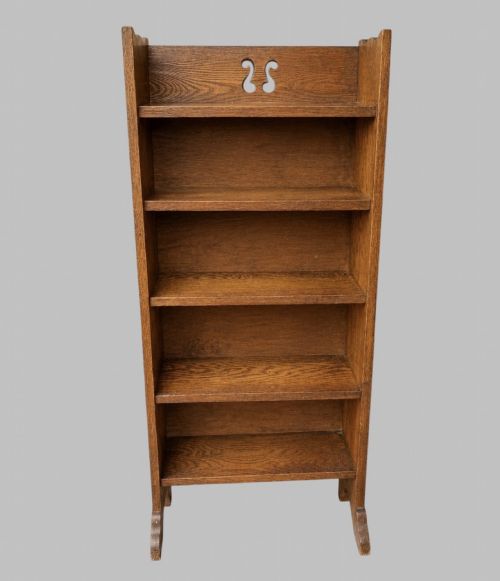
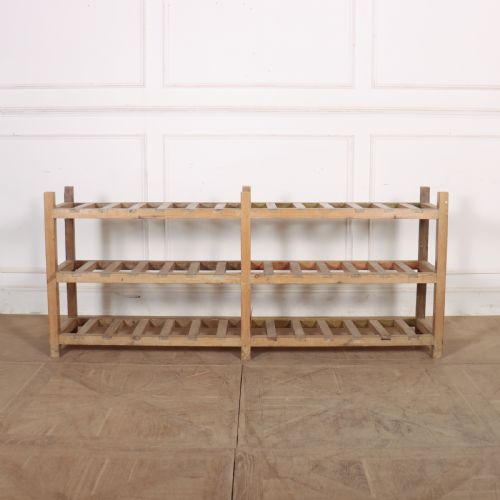

Freestanding Shelving Stand
A freestanding shelving stand gives you open display and storage anywhere in a room without needing wall support.
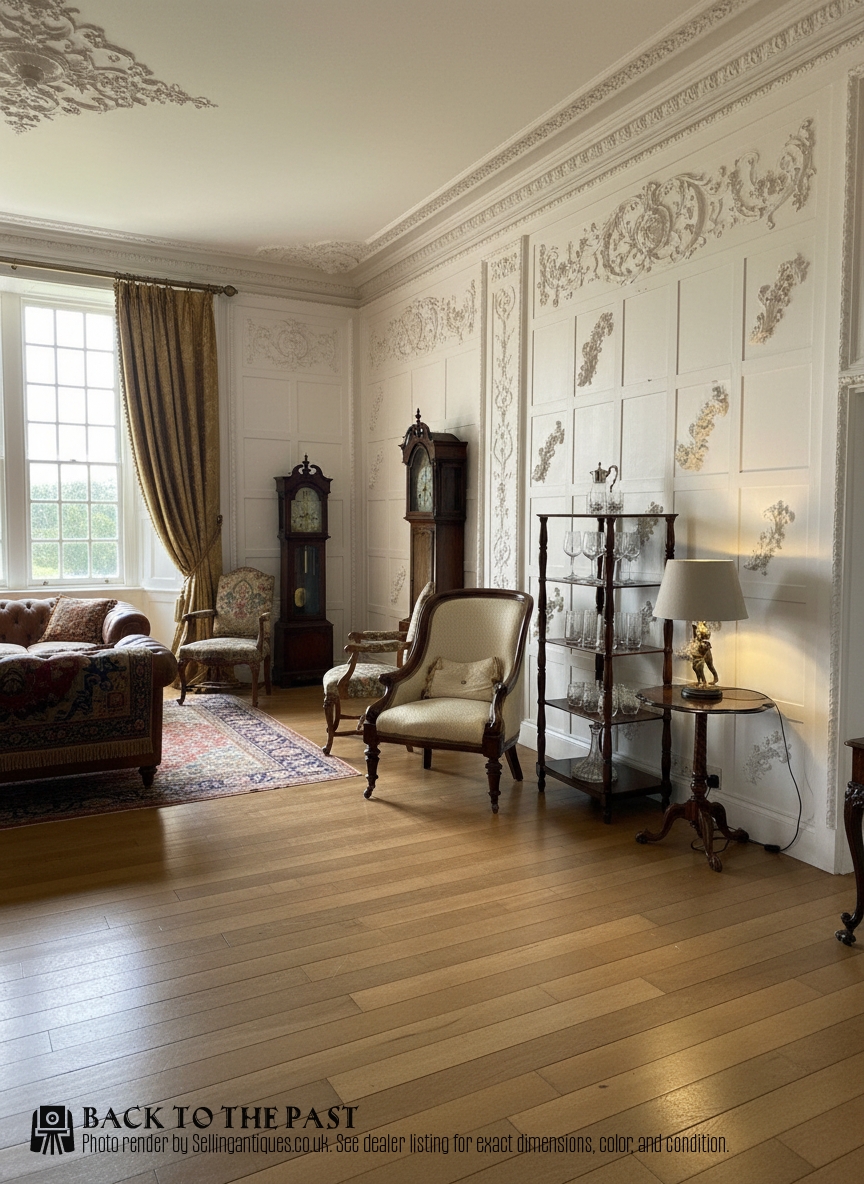
Freestanding Shelving Stand
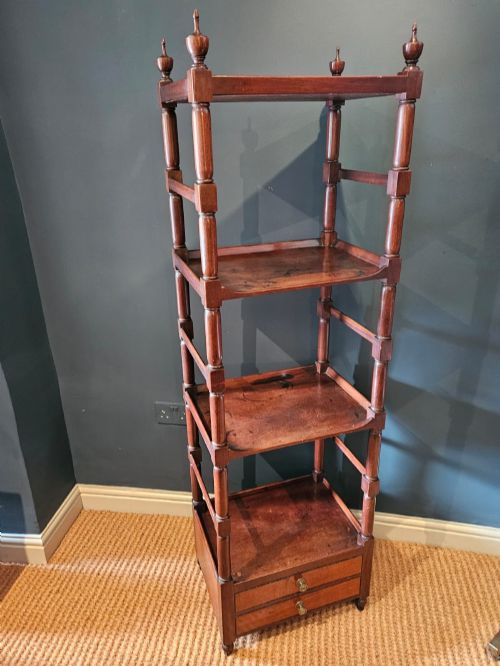
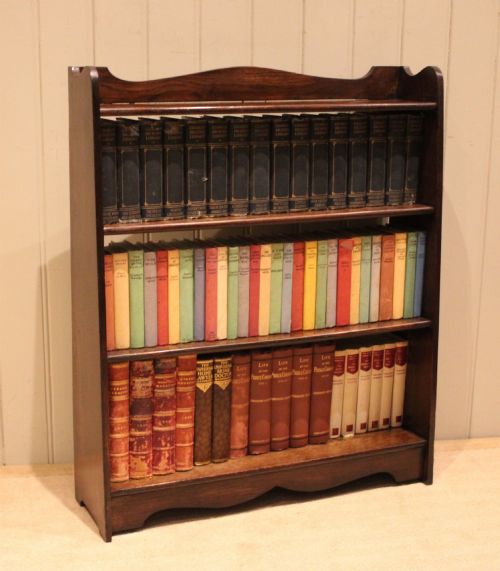
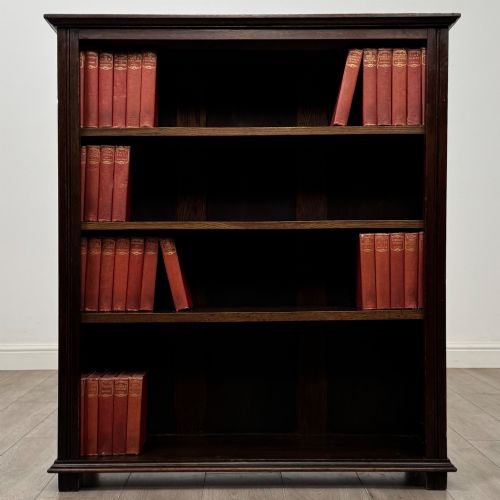
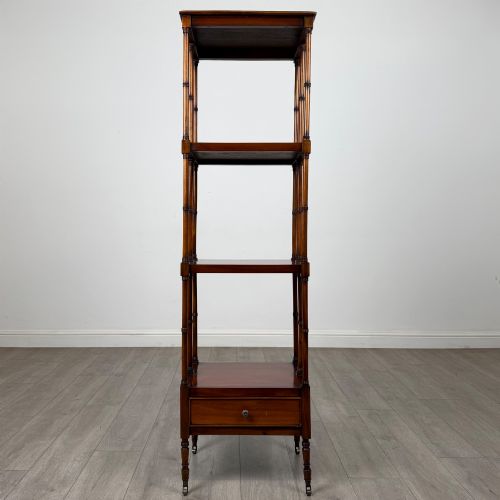
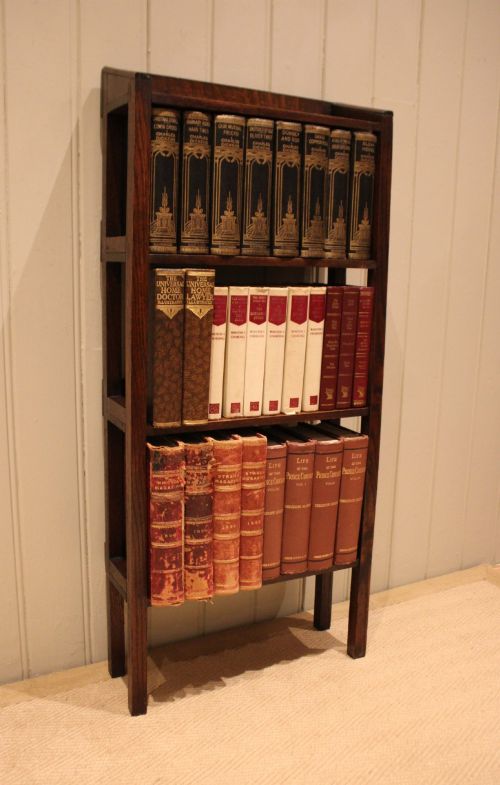
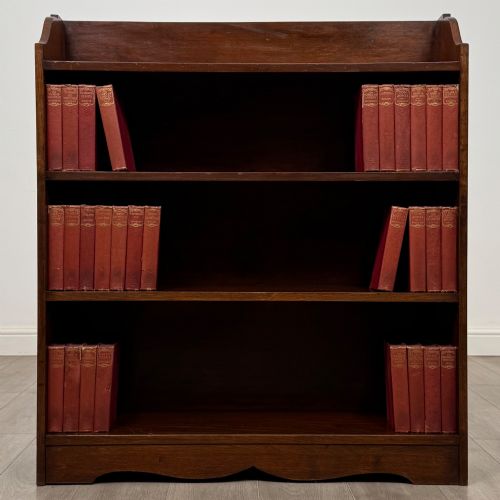
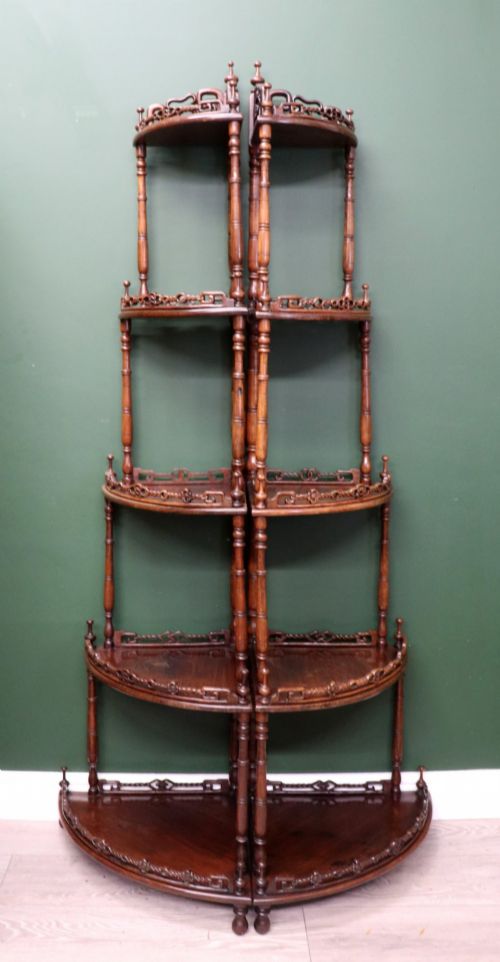
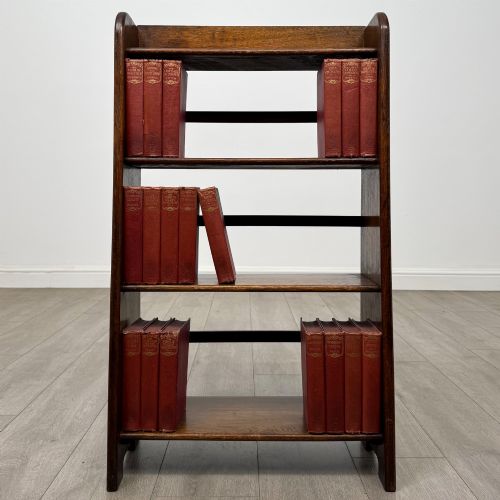
A freestanding shelving stand offers versatile open storage, and on this page you will most frequently encounter bookcases, whatnots, and display shelves spanning the nineteenth and twentieth centuries.
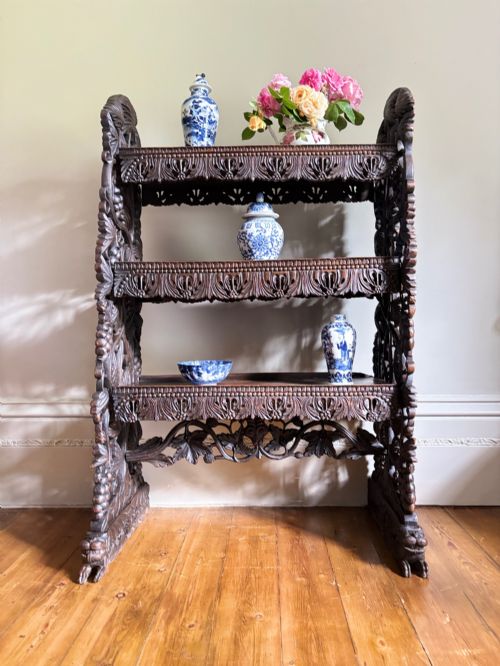
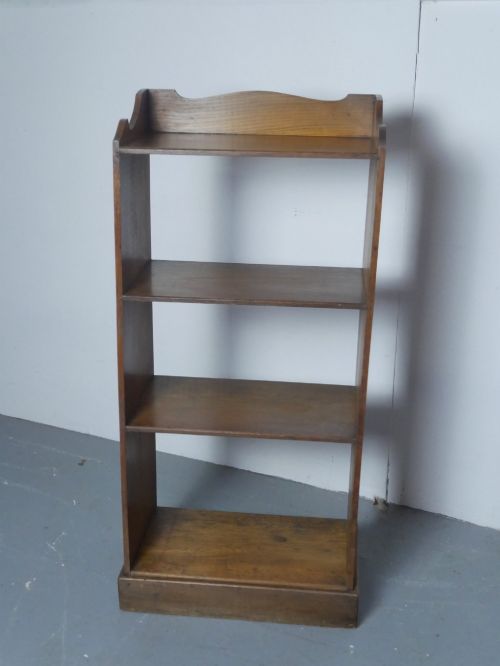
The selection ranges from Regency mahogany tier pieces and Victorian rosewood whatnots to Edwardian oak bookcases, alongside utility forms such as bakers racks and shoe racks.
These items were designed to stand away from walls, providing accessible display space for books and decorative objects within domestic and commercial interiors.
Materials and Construction
Cabinetmakers utilised dense hardwoods such as mahogany, rosewood, padauk, and walnut for formal display pieces, alongside durable oak and pine for utilitarian shelving.
Construction methods vary from traditional joinery in tiered whatnots and bookcases to robust ironwork frameworks suited to functional kitchen and bakery storage.
Materials span dense hardwoods, pine, brass, wrought iron, and distressed metal across nineteenth and twentieth-century designs.
Indicators of Quality
Quality reveals itself in the selection of timber figures, such as figured mahogany or rich rosewood grain, paired with refined proportions and balanced tier heights.
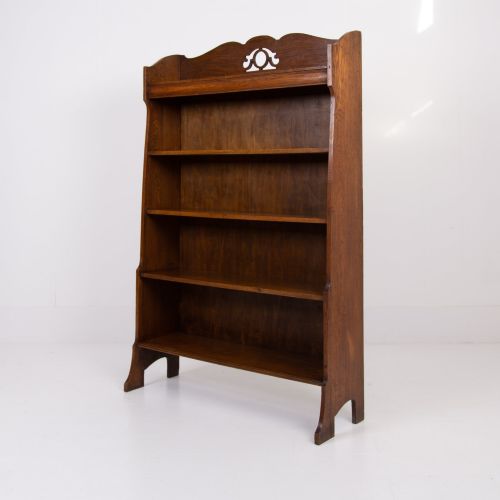
The execution of decorative details, from carved mouldings to decorative cut-outs in Arts and Crafts oak, separates standard utility pieces from finer cabinet work.
The Freestanding Shelving Stand Glossary
- Waterfall bookcase
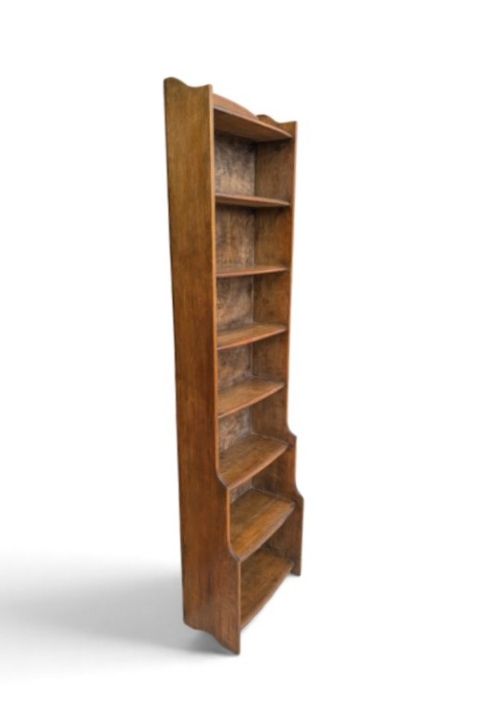
- A tiered open bookcase where each successive shelf steps back from the one below it. This creates a cascading silhouette popular during the Edwardian period.
- Bakers rack
- A robust metal or iron shelving unit originally utilised in commercial food preparation. They often incorporate scroll-work iron and slatted shelves.
- Corner cabinet
- A fitted or freestanding storage piece designed to fit snugly into the internal angle of a room. They maximise floor space by utilising neglected corners.
Freestanding Shelving Stand: Frequently Asked Questions
Where should I place a freestanding shelving stand?
These pieces work well against interior walls or placed at right angles to divide a larger room. Double-sided variations can sit comfortably in the middle of a space.
Ensure the location allows easy access to the open shelves without obstructing household traffic flow.
How do I care for wooden tiers?
Dust the surfaces regularly with a dry, soft cloth to prevent the accumulation of grit. Avoid placing timber in direct sunlight or near heat sources to prevent warping.
Apply occasional appropriate wax polish to nourish hardwoods like mahogany and oak.
What is the difference between a whatnot and a bookcase?
A whatnot is typically a lighter, multi-tiered stand intended for display items and ornaments with open access from all sides. A bookcase is built specifically for holding volumes.
Bookcases frequently incorporate solid backs or enclosed lower cupboards, whereas traditional whatnots remain open.
How do I date an oak shelving unit?
Examine the timber grain, construction joints, and any decorative motifs present on the frame. Arts and Crafts pieces often show hand-crafting details and cut-outs.
Later twentieth-century versions display simpler machine milling and standard commercial fixings.