


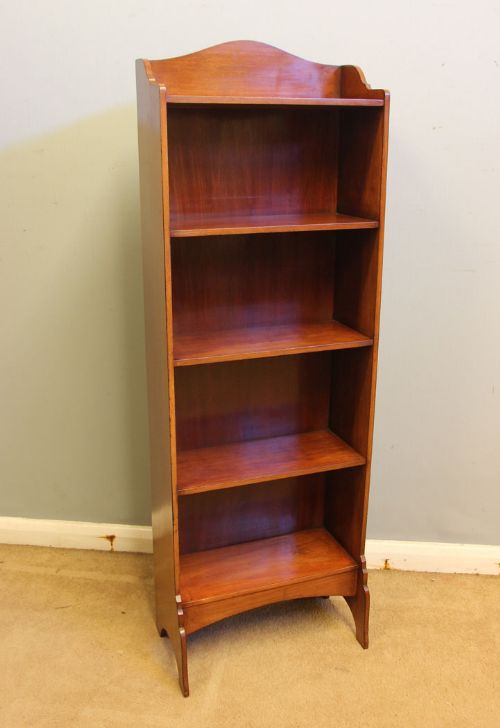
Freestanding Mahogany Bookcase
A freestanding mahogany bookcase brings warmth and structure to a room, offering accessible shelving finished in rich timber.
Freestanding Mahogany Bookcase
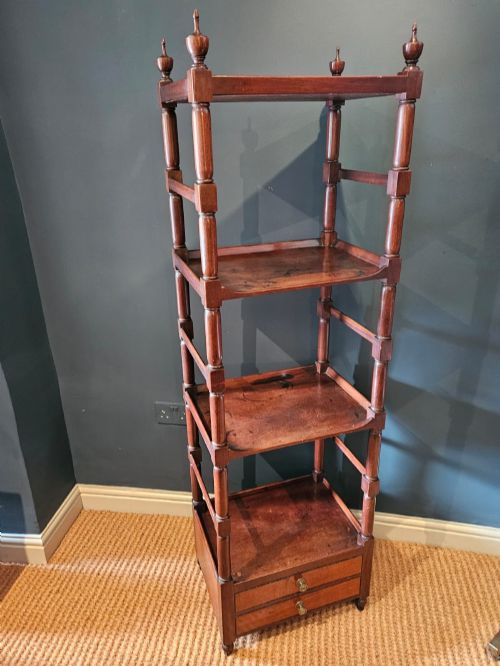
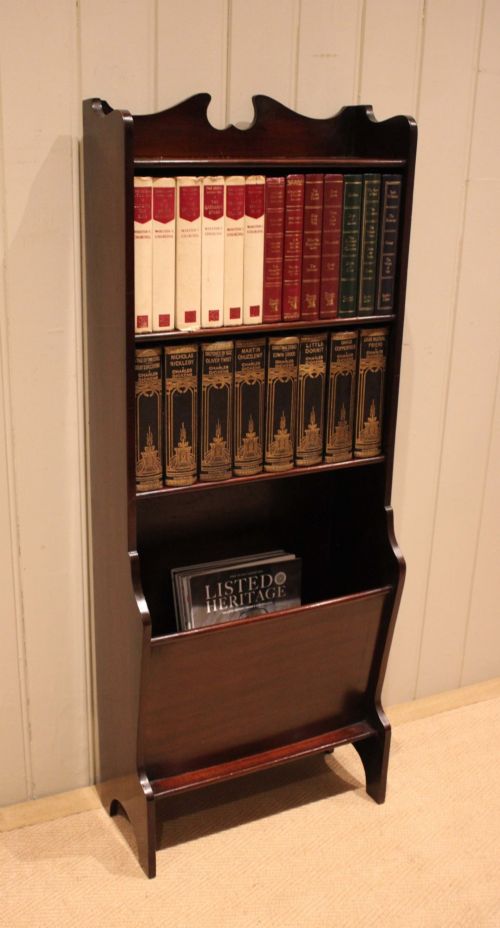
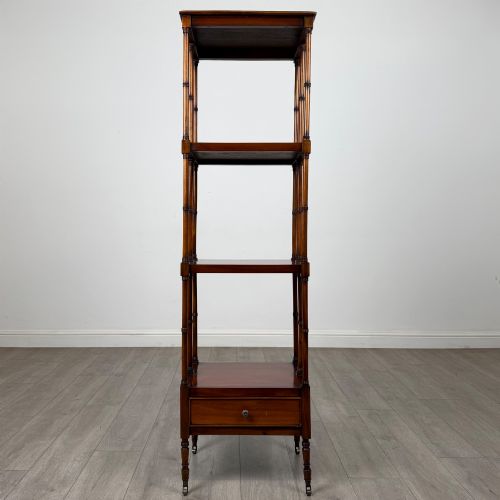
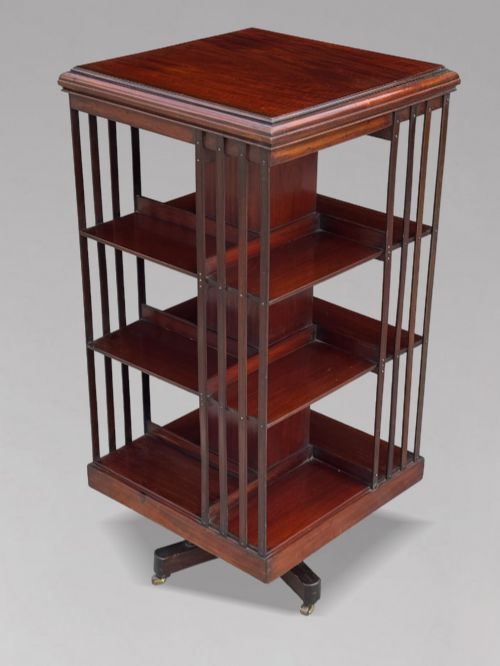
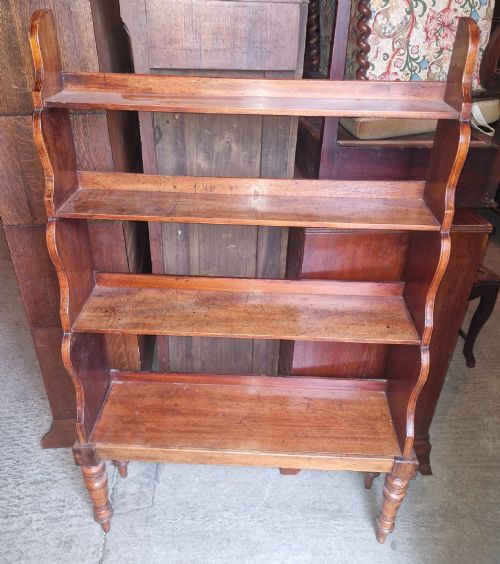
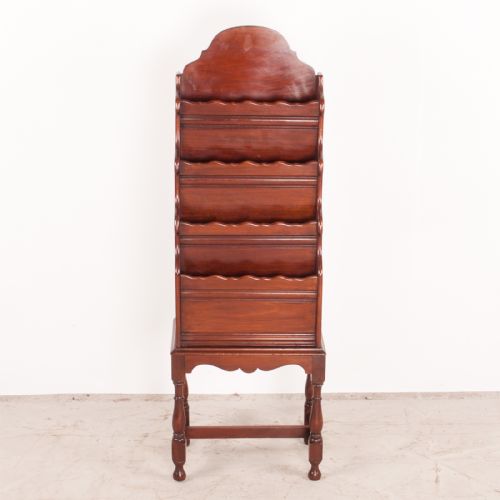
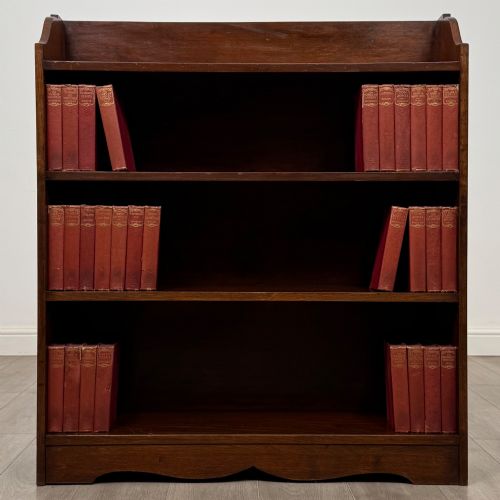
A freestanding mahogany bookcase provides independent storage that sits away from the wall, finished on all visible sides. These pieces appear across several periods, most commonly taking the form of open shelf units, revolving designs, and multi-tiered whatnots.
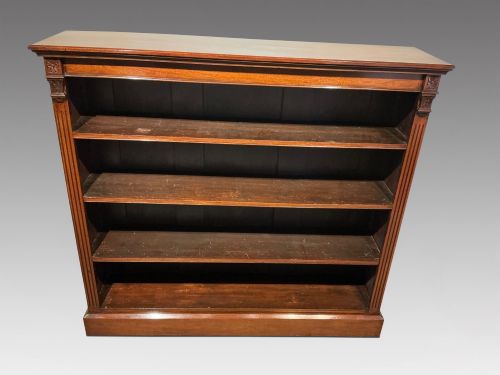
The selection ranges from compact Edwardian examples to larger nineteenth-century iterations. Buyers often encounter open formats with adjustable shelves alongside glazed cabinets and specialised lawyer troughs.
How they were made
Cabinet makers utilised solid mahogany and flame mahogany veneers over secondary timbers such as oak, applying polished finishes to highlight the grain. Brass fittings, glass panes, and occasional cast iron elements provide structural support and functional detail.
Construction techniques include adjustable shelf mechanisms and sectioned compartments. Glazed doors and open tier configurations reflect the varied functional demands placed on library and parlour furniture.
Listings feature mahogany, brass, glass, and oak across Victorian, Edwardian, and Regency periods.
What varies in quality
The standard of a piece rests on the selection of the timber, particularly the depth and figure of flame mahogany veneers. Refined proportions and the crispness of carved details distinguish finer examples from simpler utilitarian items.
Integrity of construction, such as the smooth operation of revolving mechanisms and the original state of brass hardware, separates standard workshop output from exceptional library pieces.
Muirhead Moffat Glasgow·Laverton of Bristol
The Freestanding Mahogany Bookcase Glossary
- Flame mahogany
- A veneer cut from the fork of the mahogany tree, producing a distinctive rippled pattern resembling flickering flames. This figure is prized for its dramatic visual impact on cabinet fronts.
- Waterfall bookcase
- A tiered shelving unit where each successive shelf steps back from the one below it. The profile creates a descending waterfall effect popular in nineteenth-century designs.
- Whatnot
- An open, multi-tiered piece of furniture used for displaying books or ornaments. These pieces typically feature several open shelves supported by slender corner columns.
- Revolving bookcase
- A compact bookcase mounted on a hidden rotating base. This design allows users to access volumes from all sides while occupying a minimal floor footprint.
Freestanding Mahogany Bookcase: Frequently Asked Questions
Where should I place a freestanding mahogany bookcase?
Because these bookcases are finished on all sides, they work well placed perpendicular to a wall to divide a large room or positioned centrally within a home library.
Ensure the placement avoids direct sunlight and consistent heat sources, which can dry out the mahogany timber and affect the polished finish over time.
How do I adjust the shelves?
Many nineteenth-century and Edwardian examples feature side uprights fitted with brass ratchets or wooden slots to alter shelf heights. Lift the shelf slightly and slide the supports to the desired notch.
Take care when shifting heavy wooden shelves to avoid catching the edges against the interior walls of the bookcase.
What is the difference between an open and glazed bookcase?
Open bookcases provide immediate access to volumes and display the books directly. Glazed versions feature glass-fronted doors that protect leather bindings from dust and environmental wear.
Glazed models often incorporate locks and key escutcheons, reflecting their original use as secure repositories for valuable libraries.
How do I care for mahogany surfaces?
Dust the timber regularly with a soft, dry cloth to prevent particulate buildup on the polish. Avoid silicone-based sprays, which can penetrate the grain and damage the finish.
Apply a traditional wax polish sparingly when the wood appears dry, buffing it gently to maintain the natural lustre of the mahogany.