



Freestanding Hall Table
These freestanding hall table pieces are designed to anchor an entrance, offering practical surface space and period character.
Freestanding Hall Table
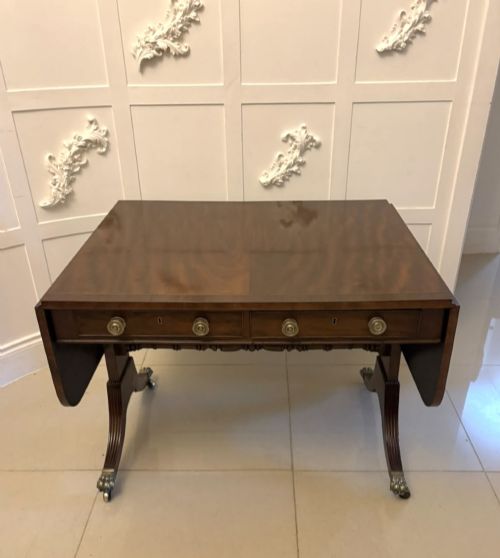
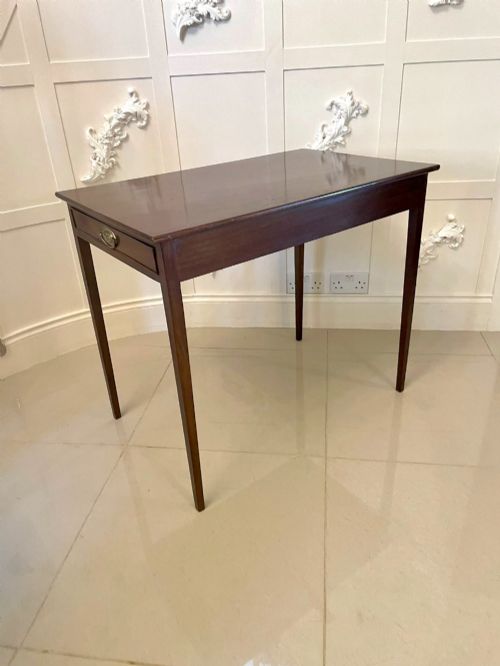
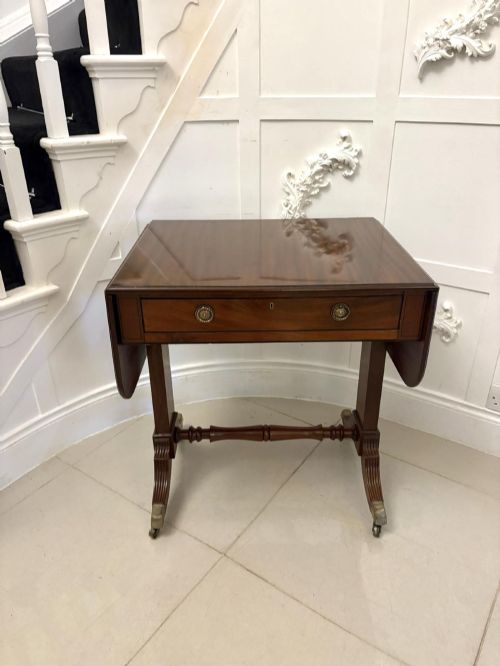
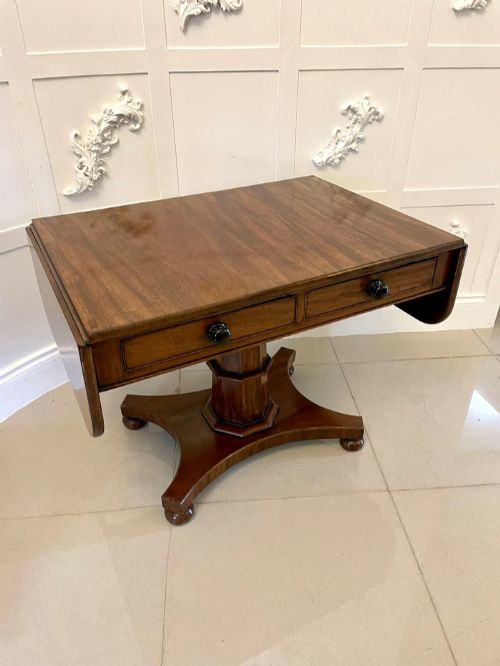
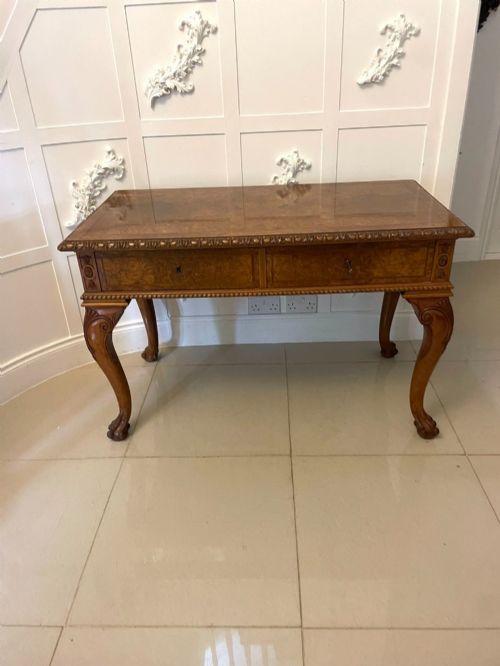
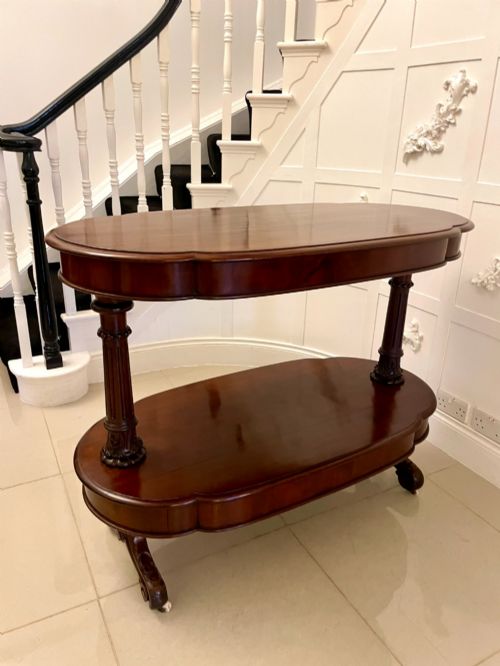
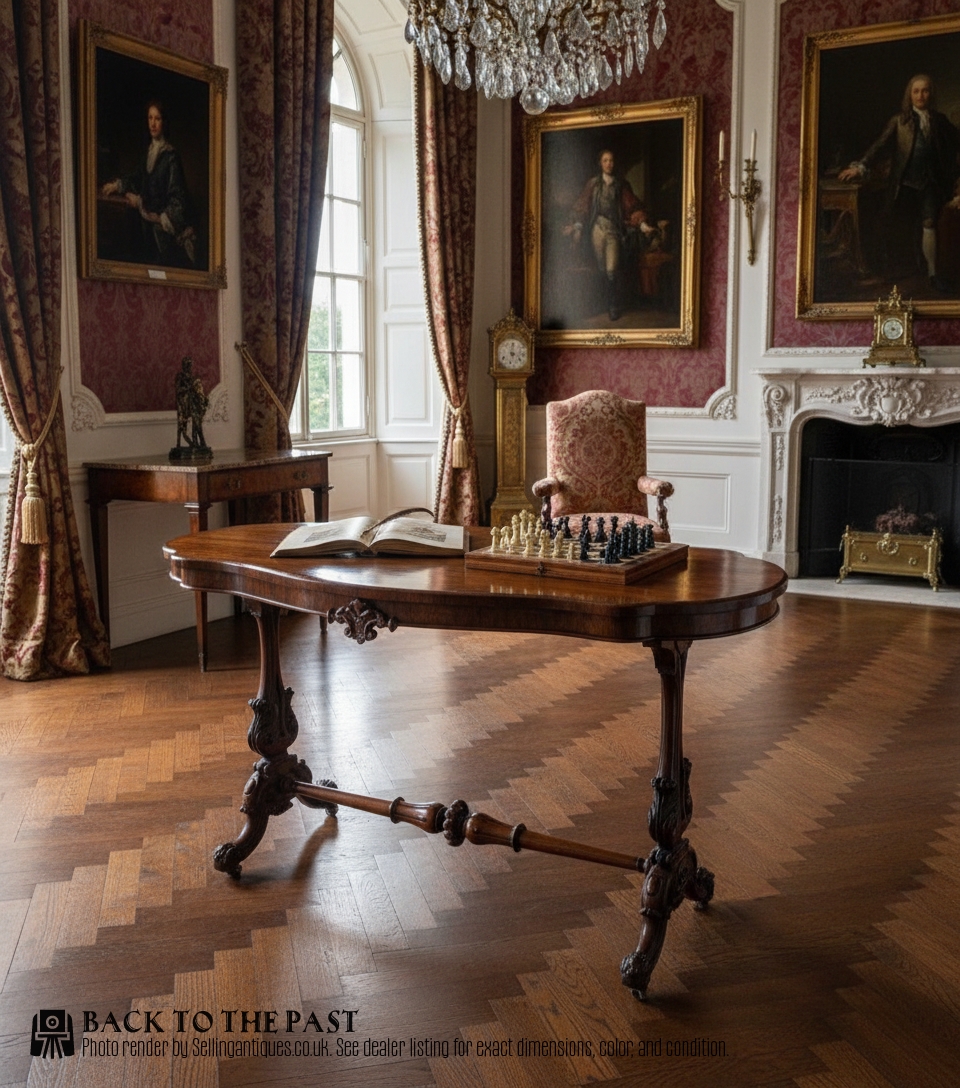
A freestanding hall table sits away from the wall to serve as a central focal point in an entranceway. These pieces encompass forms such as centre tables, console tables, sofa tables, and library tables.
The selection ranges across several distinct periods, including George III, Regency, William IV, and Victorian examples. Buyers will frequently encounter burr walnut and mahogany constructions dating from the nineteenth century.
How They Were Made
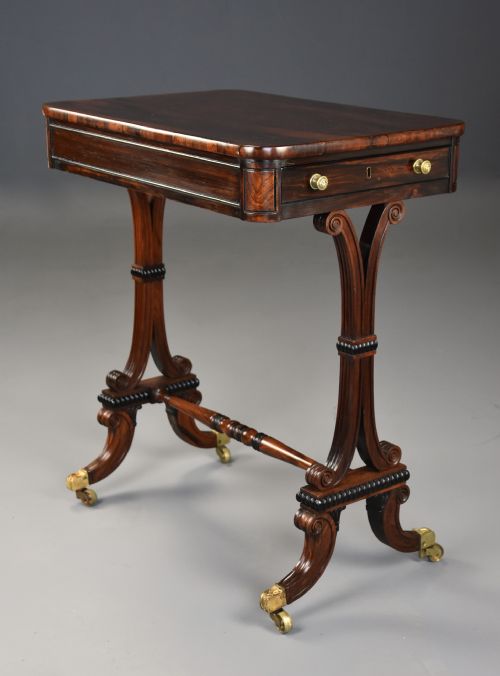
Cabinet makers utilised dense hardwoods such as mahogany, walnut, burr walnut, and rosewood for durability and rich grain patterns. Inlays of satinwood and boxwood frequently decorated the surfaces of finer pieces.
Structural stability was achieved through heavy timber framing, occasionally supported by carved elements and specialist bases such as the Victorian basket base. Brass components were incorporated into hinges, castors, and mounts on select tables.
Freestanding Hall Table Retail Price Guide 2026
Typical asking prices for freestanding hall table among the pieces listed under this phrase on Sellingantiques today, from the lower quarter to the upper quarter. They describe what is for sale here now, not the wider market.
Materials appearing across the inventory include mahogany, burr walnut, oak, rosewood, and satinwood.
What Varies in Quality
The standard of timber selection divides the ordinary from the exceptional, particularly in figured mahogany and burr walnut veneers. Figured grains and symmetrical veneers demand greater skill from the cabinet maker.
Carving execution and inlay precision indicate the workshop standard. Crisp, hand-carved details and tightly fitted boxwood or satinwood stringing elevate a piece above simpler utilitarian items.
The Freestanding Hall Table Glossary
- Freestanding
- Finished on all sides to allow placement in the middle of a room rather than flat against a wall.
- Sofa table
- A rectangular table traditionally placed before a sofa, featuring drop leaves at either end.
- Library table
- A large sturdy table designed for holding books and writing materials, often fitted with drawers.
- Burr walnut
- Timber taken from the warted growth of a walnut tree, prized for its swirling grain patterns.
Freestanding Hall Table: Frequently Asked Questions
How do I style a freestanding hall table?
Place the table centrally in a spacious entrance hall to create a deliberate focal point.
Style the surface with a modest lamp or a decorative bowl, leaving enough clearance around the piece for movement.
What is the difference between a console and a centre table?
A console table is traditionally designed to stand against a wall, though freestanding variants exist.
A centre table is finished on all sides specifically to occupy the middle of a room.
How do I identify a Regency period hall table?
Regency tables date from the early nineteenth century and frequently display classical proportions.
Look for figured mahogany timbers, clean architectural lines, and occasional satinwood inlay.
Can these tables be used for dining?
Certain larger sofa tables and library tables offer adequate surface area for occasional dining.
Check the height clearance beneath the frieze and the stability of the base before putting the table to practical use.