
Freestanding Hall Rack
A freestanding hall rack organises outdoor garments and walking gear, offering structural presence and daily utility in an entryway.
Freestanding Hall Rack
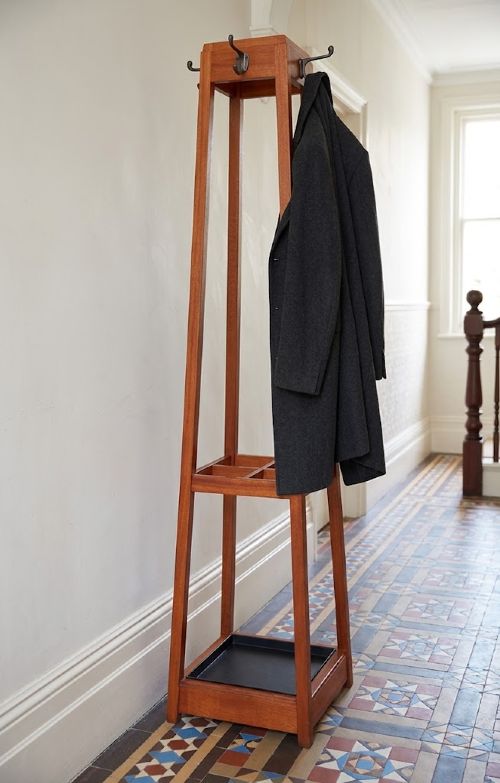
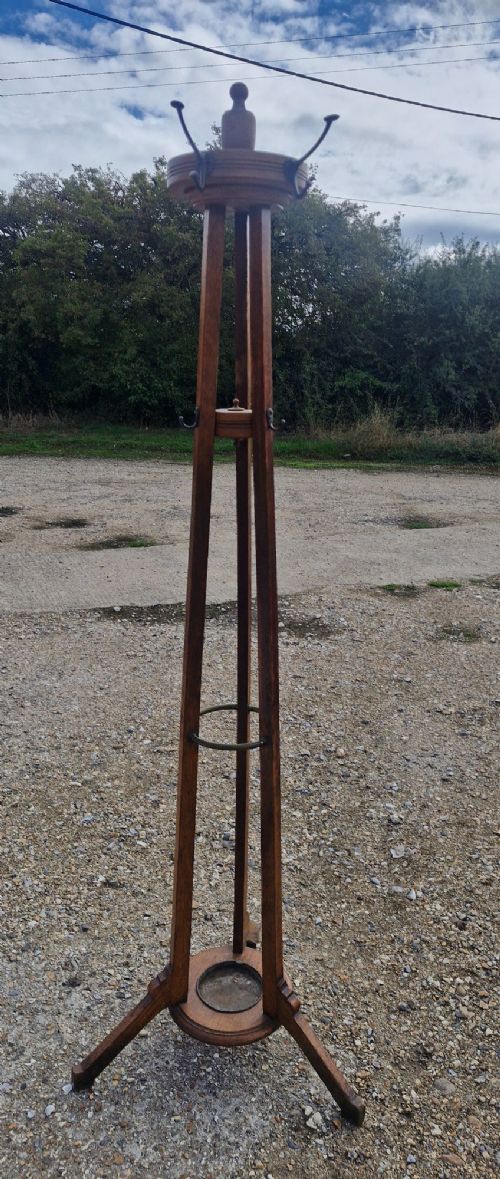
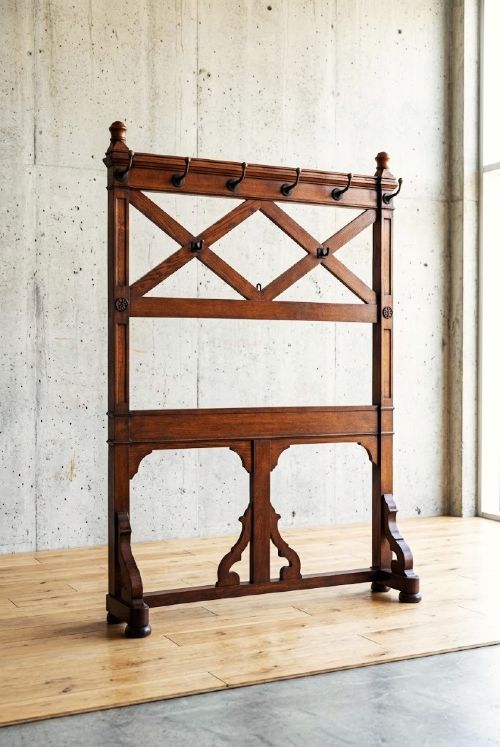
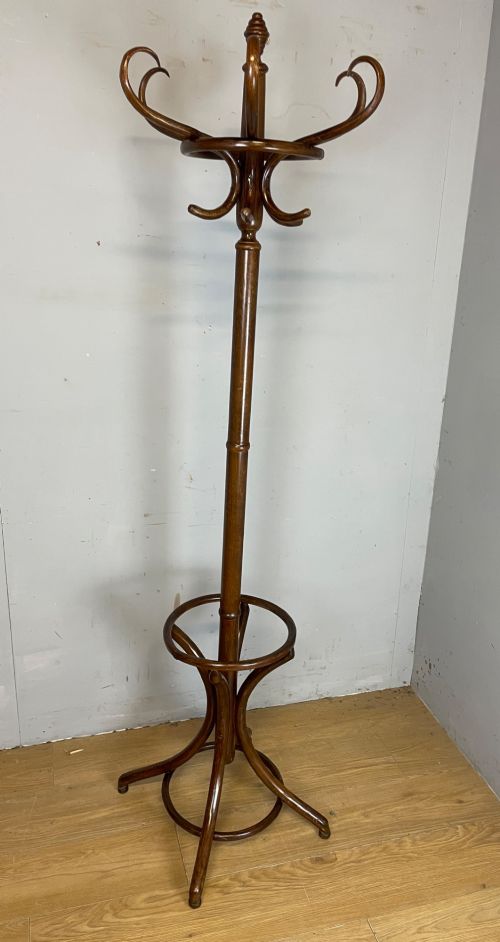
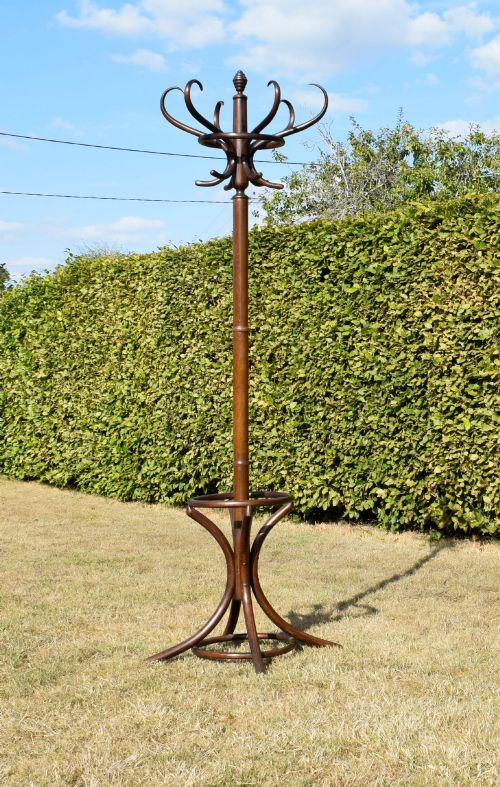
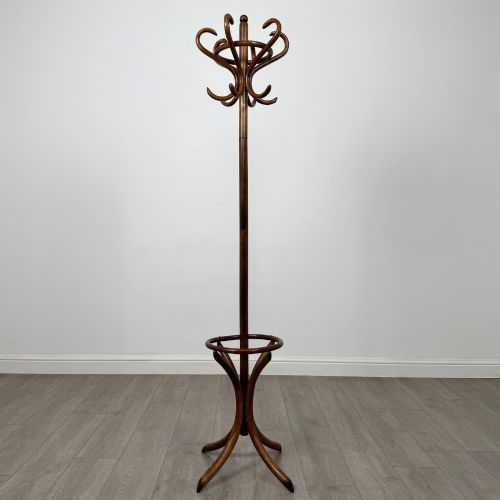
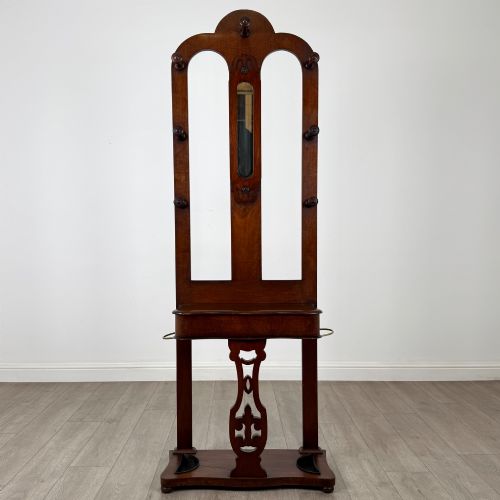
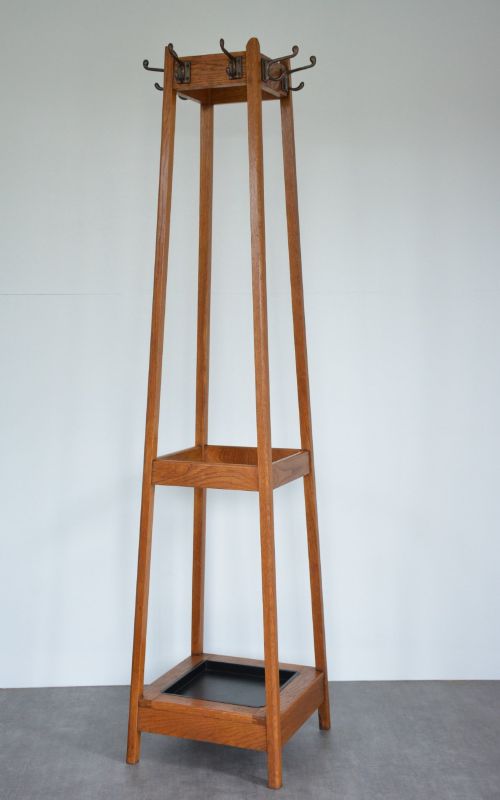
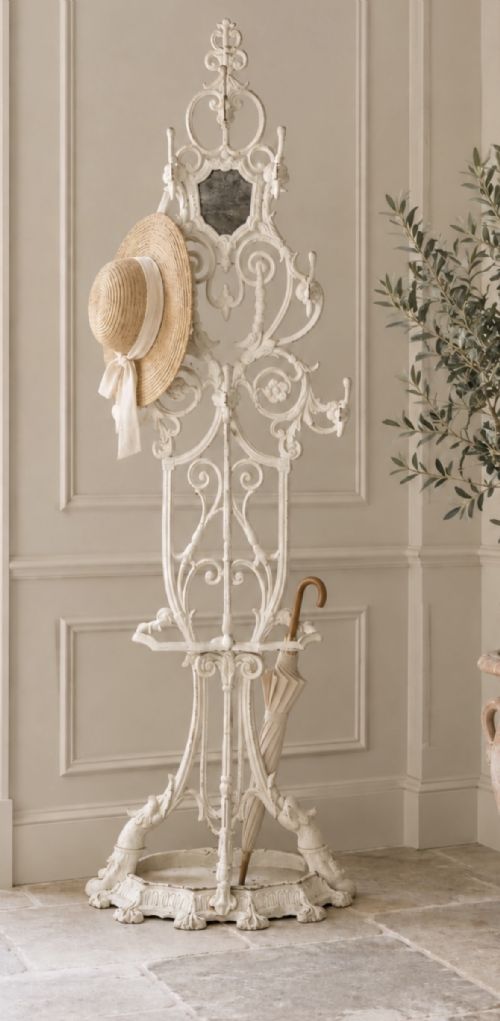
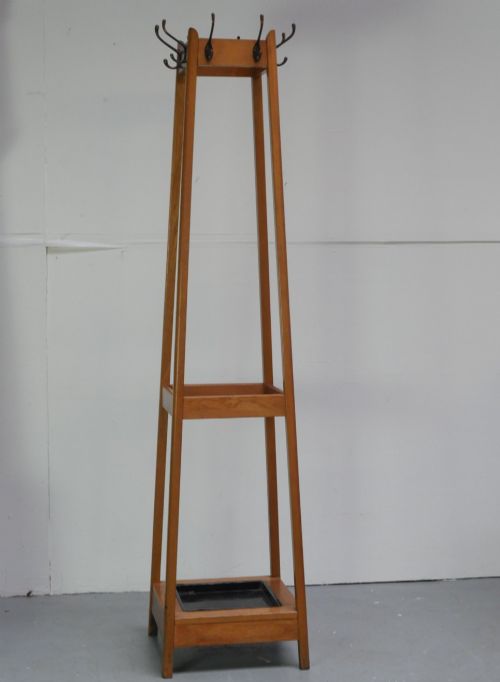
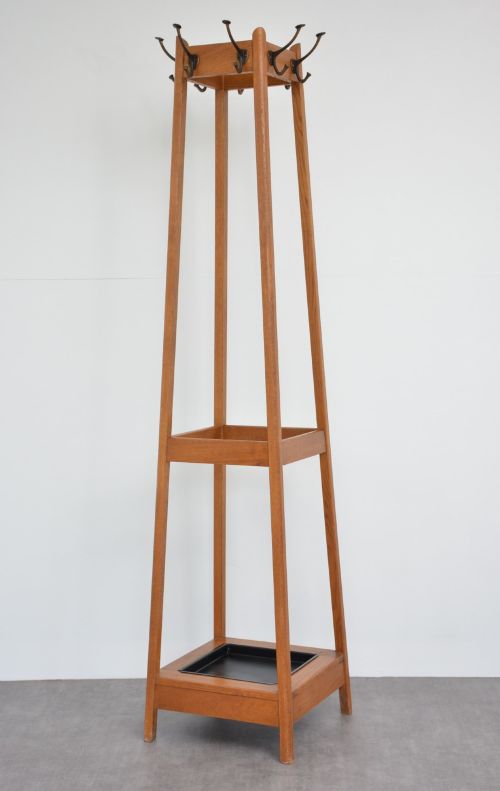
A freestanding hall rack serves as a practical entryway furnishing for hats, coats, sticks and umbrellas, appearing in forms such as coat stands, hall trees and umbrella stands. The pieces seen here span periods from the Regency era through the Victorian and Edwardian decades into the early twentieth century.
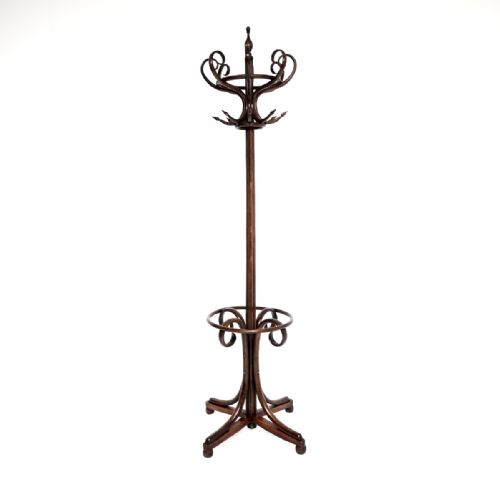
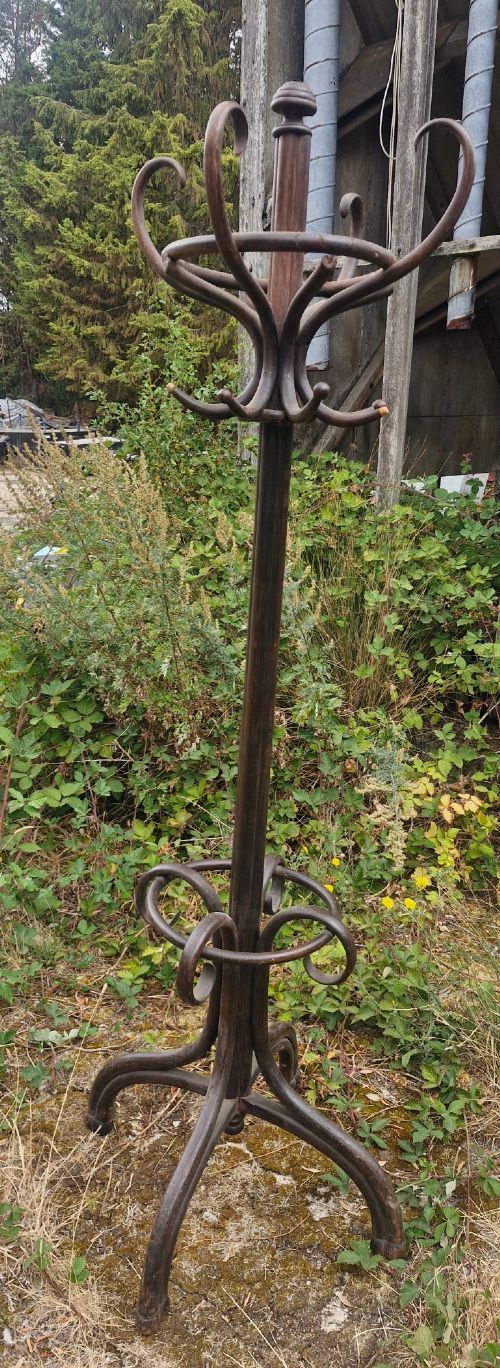
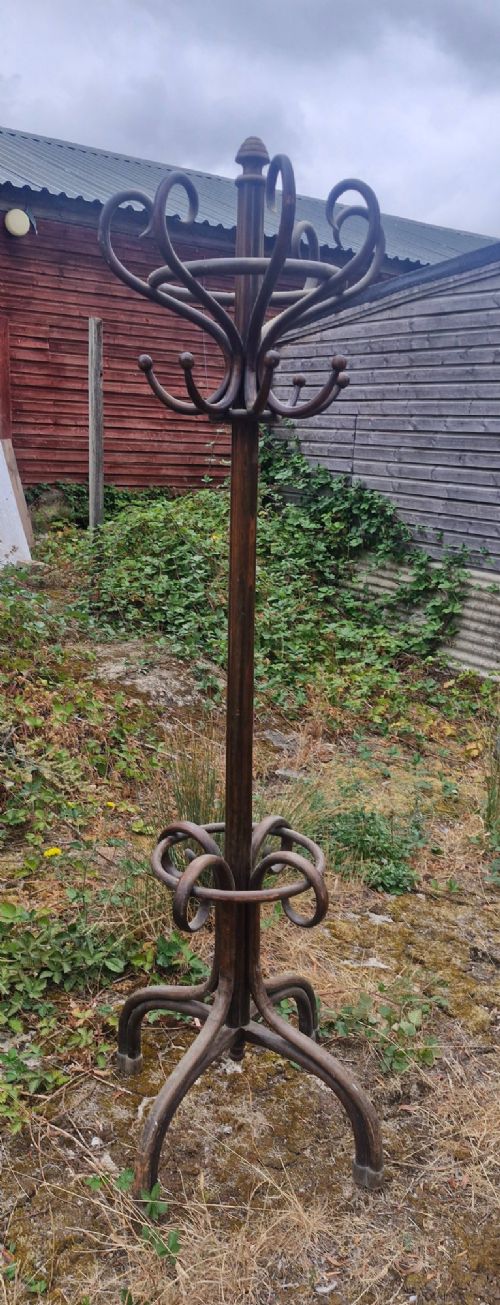
Most examples encountered on this page belong to the Victorian and Edwardian periods, alongside numerous bentwood designs from around nineteen hundred to nineteen thirty. Common woods include oak, mahogany, beech and bentwood, frequently accompanied by brass fittings and integrated drip trays.
Materials and construction
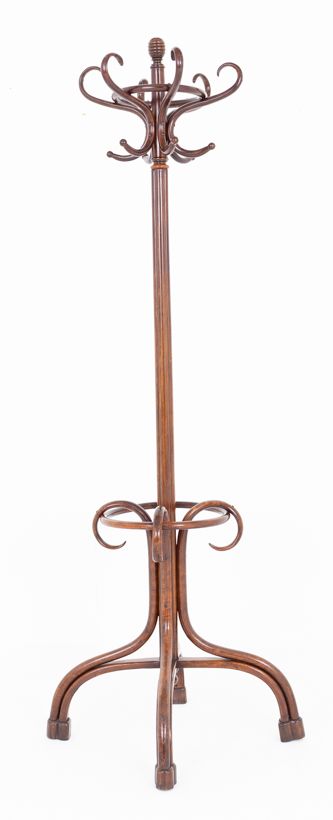
Construction methods rely heavily on steam-bent beech and solid hardwoods like oak and mahogany, utilised to build sturdy upright frames capable of bearing heavy winter garments. Bentwood pieces employ steam-bent timber techniques pioneered by makers like Thonet to create curved hooks and looped umbrella rings without heavy joints.
Metal elements such as brass hooks, rails and cast iron or zinc drip trays appear across oak and mahogany hall stands to handle wet umbrellas and heavy coats. Secondary materials like pitch pine, bamboo and walnut also feature in country house and Arts and Crafts examples.
Listings feature items from the Victorian, Edwardian and Regency periods, constructed in oak, mahogany, beech and bentwood.
Quality factors
Quality rests on the integrity of the timber, the weight of the frame and the retention of original hardware such as brass hooks and drip trays. Heavy construction in solid oak or beech indicates durability, whereas lighter or modified examples lack the structural stability required for daily hallway use.
The sophistication of the design distinguishes standard items from superior pieces, particularly in carved oak Arts and Crafts models or labelled bentwood productions. Original surfaces and intact multi-tiered revolving mechanisms elevate an example above repaired or altered pieces.
Thonet·Fischel·Jas Shoolbred·GW Evans·Astrola
The Freestanding Hall Rack Glossary
- Bentwood
- Timber shaped by steaming and bending rather than carving. This technique creates continuous curved profiles used extensively in nineteenth-century coat stands.
- Hall tree
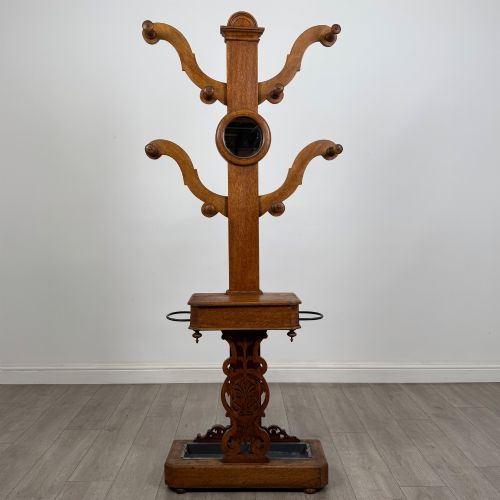
- An alternative term for a freestanding piece combining hooks for garments with umbrella holders and frequently a mirror or seat.
- Drip tray
- A metal base situated at the bottom of a stand to catch water from wet umbrellas and walking sticks.
- Arts and Crafts
- A design movement prioritising traditional craftsmanship, solid materials and visible construction over mass production.
Freestanding Hall Rack: Frequently Asked Questions
What is a freestanding hall rack?
A freestanding hall rack is an upright piece of furniture designed to hold coats, hats, sticks and umbrellas in an entrance hallway.
Unlike wall-mounted rails, these pieces rest entirely on the floor and can be moved around a room as needed.
How do I care for antique wood?
Antique wood benefits from gentle dusting with a dry cloth and occasional application of appropriate wax to maintain the finish.
Keep wooden stands away from direct heat sources and damp exterior walls to prevent warping.
How do I identify bentwood?
Bentwood pieces feature smooth, flowing curves formed by steaming timber until pliable and placing it in moulds to dry.
This method produces lightweight yet strong frames without traditional joinery.
Where were these stands used?
These pieces historically stood in the entrance halls and vestibules of houses to receive outdoor garments upon arrival.
They provided a designated spot for hats, coats and walking sticks before guests entered the main living spaces.