

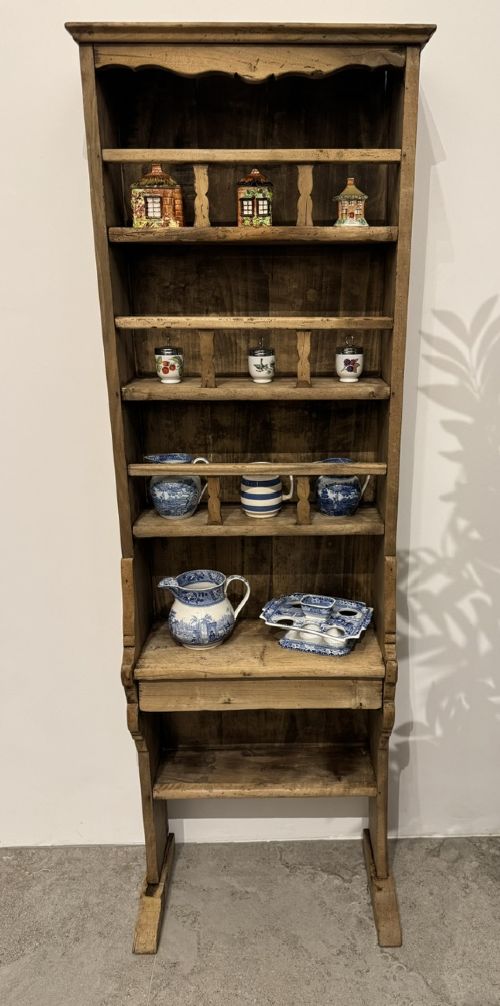
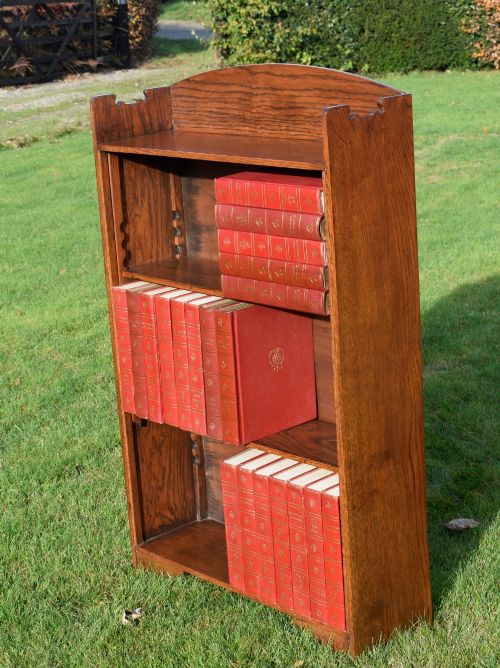
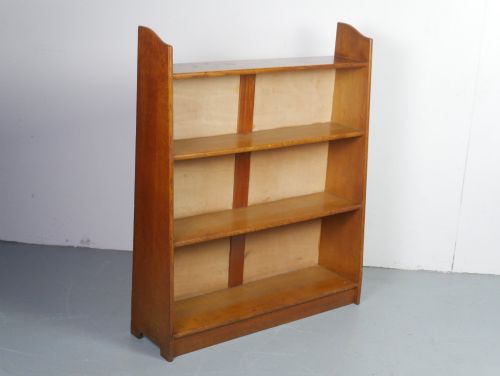
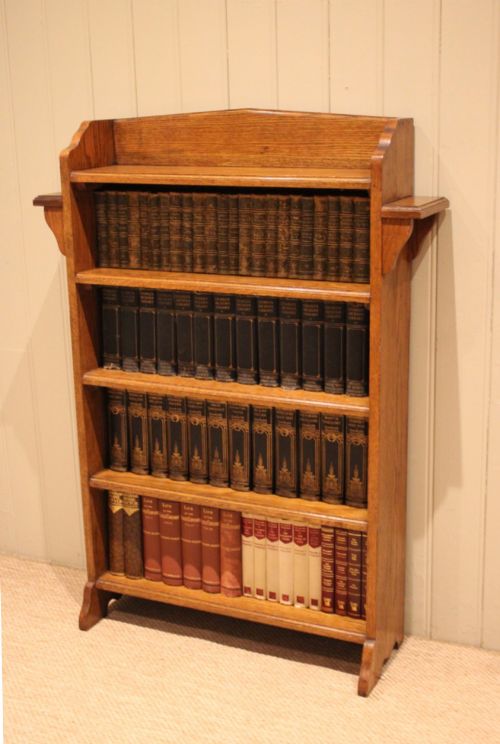


Freestanding Display Shelves
Freestanding display shelves offer practical utility and architectural presence, holding everything from fine pottery to working libraries without touching a wall.
Freestanding Display Shelves
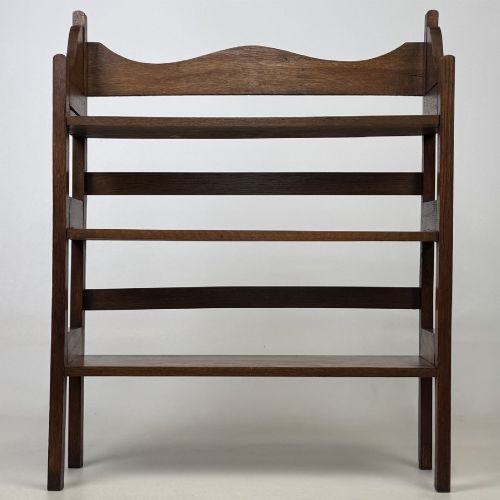
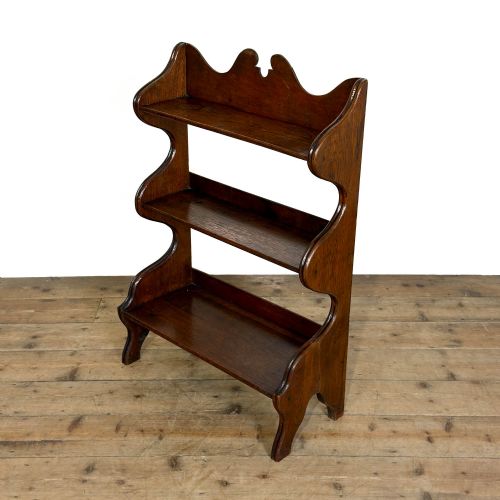
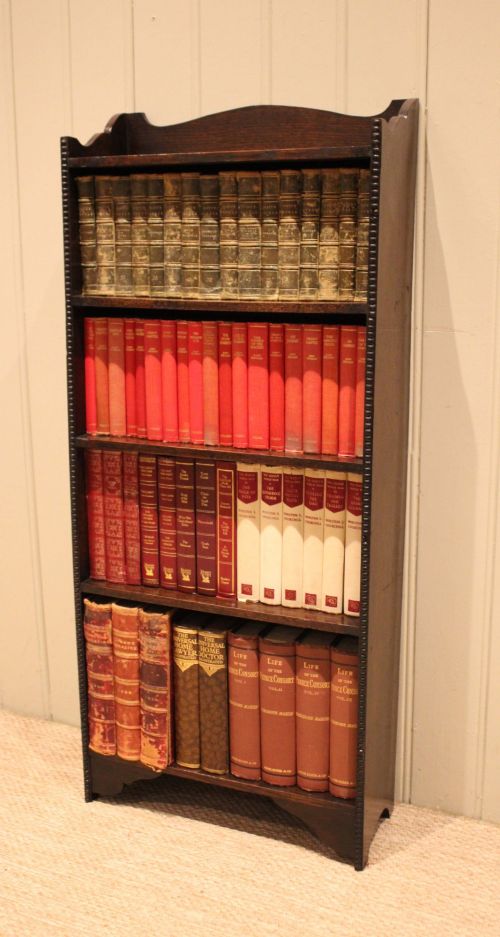
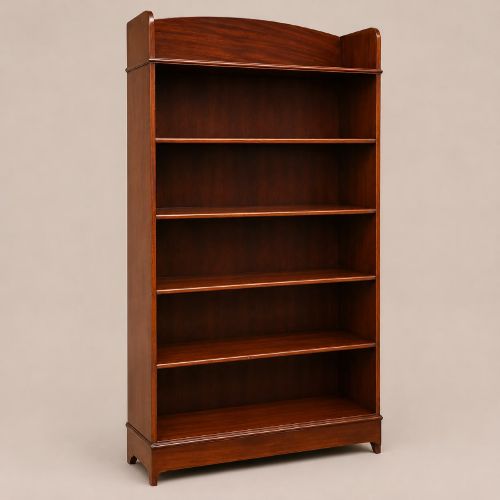
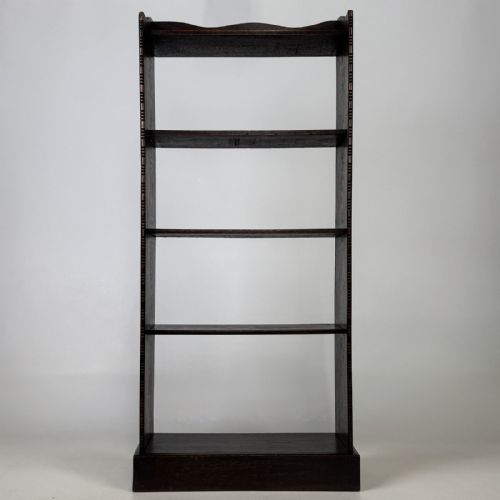
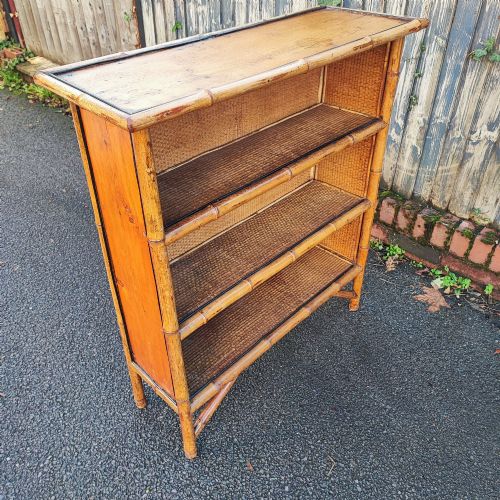
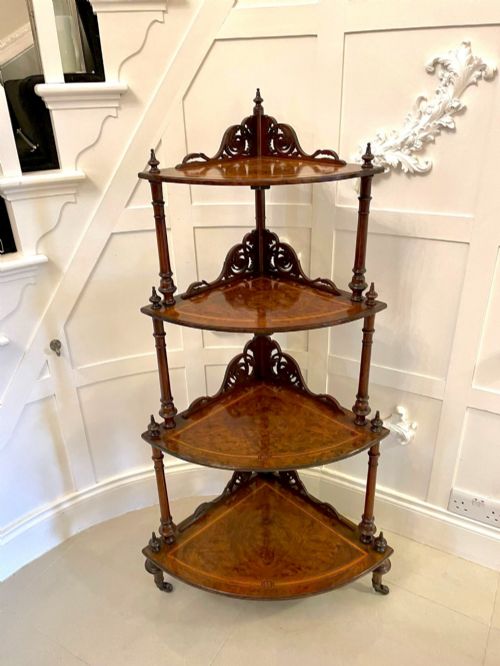
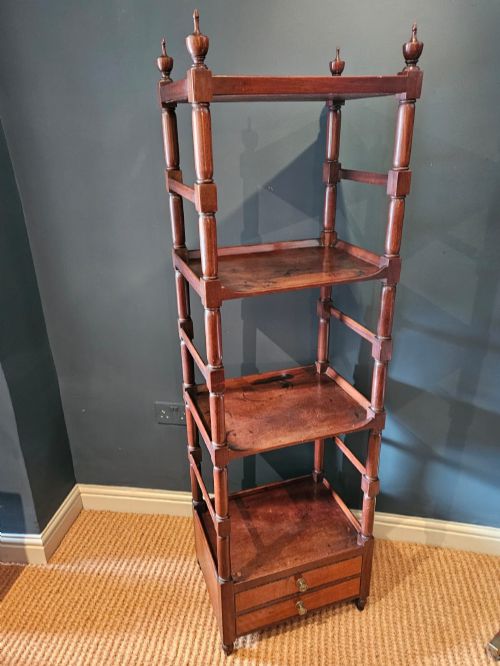
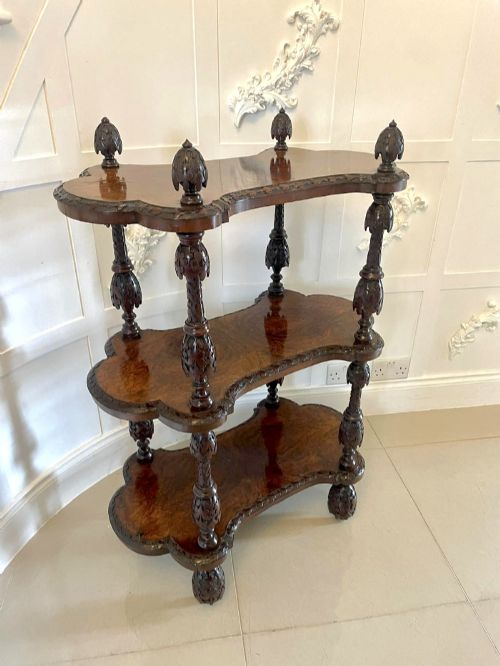
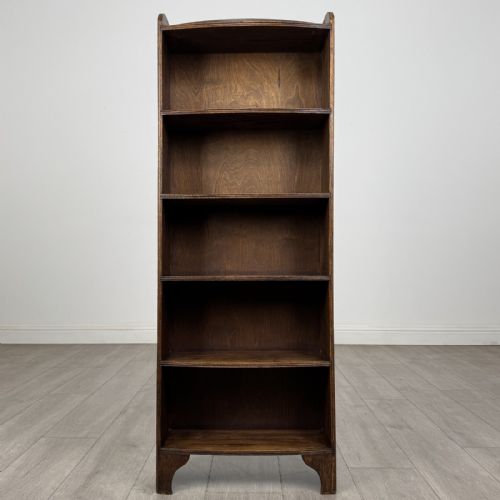
When you search for freestanding display shelves, you encounter an array of open bookcases, whatnots, baker racks, and corner units designed to stand away from walls. These pieces serve to organise books and display decorative objects in principal rooms.
The versions met most frequently on this page span the Victorian and Edwardian periods, alongside early twentieth-century examples. Oak and mahogany dominate the selection, appearing in forms ranging from slender pillar bookcases to multi-tiered corner whatnots.
Specialised variations also emerge, including French patisserie racks in iron and large Anglo-Indian padauk shelves. Each type brings a distinct structural silhouette, whether utilising open tiers, glass panels, or cupboard bases.
How they were made
Cabinet makers utilised dense hardwoods such as mahogany, walnut, oak, and kingwood for formal domestic bookcases and whatnots. These timbers were selected for their grain and structural stability, often finished with carved details, raised galleries, or inlaid veneers.
Industrial and commercial pieces relied on utilitarian metals like wrought iron, steel, and brass. Baker racks and patisserie units combined these durable frames with slatted or solid timber shelving to withstand heavy daily use in continental kitchens and shops.
Freestanding Display Shelves Retail Price Guide 2026
Typical asking prices for freestanding display shelves among the pieces listed under this phrase on Sellingantiques today, from the lower quarter to the upper quarter. They describe what is for sale here now, not the wider market.
French bread racks originally spent their mornings holding hot baguettes before retiring to living rooms as oversized bookcases.
What varies in quality
The grade of timber and the precision of the joinery define the upper tier of these pieces. Fine examples exhibit carefully matched burr walnut veneers, intricate scroll-work, or hand-carved edges rather than plain machine-cut mouldings.
Structural integrity also separates standard utility items from exhibition pieces. Superior items feature adjustable shelving mechanisms, robust corner pillars, and heavy gauge ironwork that maintain stability under substantial weight.
Dubois of Lyon
The Freestanding Display Shelves Glossary
- Whatnot
- A piece of furniture consisting of a set of open shelves for displaying small objects, popular in the nineteenth century. Corner versions were especially common for utilising awkward spaces.
- Baker rack
- A tall, open metal and wood shelving unit originally used in French bakeries for cooling bread. Contemporary versions utilise the same robust iron frames and slatted tiers.
- Padauk
- A heavy tropical hardwood with a reddish hue, utilised in fine nineteenth-century Anglo-Indian furniture. It offers exceptional durability and a striking natural grain.
- Gallery
- A raised decorative border around the top edge of a shelf or bookcase. This feature prevents items from sliding off the surface.
Freestanding Display Shelves: Frequently Asked Questions
What is a whatnot shelf?
A whatnot is a multi-tiered open shelving unit designed specifically for displaying ornaments and small decorative objects. These pieces became prominent in Victorian interiors.
They often feature slender supporting pillars and can fit into corners or stand flat against a room divider.
How do I style a baker rack?
Baker racks bring an industrial or rustic edge to modern rooms through their combination of iron framework and wooden shelves. Use the open sides to display trailing plants or heavy ceramics.
Because these units offer deep tiers, they also function well in kitchens for storing heavy cookware and dry goods.
Are these shelves adjustable?
Many nineteenth and early twentieth-century bookcases and shelving units incorporate adjustable shelf mechanisms. These usually rely on wooden ratchets or brass pins.
This adaptability allows the unit to accommodate books of varying heights without awkward gaps.
What wood was used for Edwardian bookcases?
Edwardian bookcases predominantly feature oak, mahogany, and occasionally walnut. Oak versions often display carved edges or open backs.
Mahogany pieces tend toward slender pillars and cleaner lines, reflecting lighter domestic tastes of the early twentieth century.