

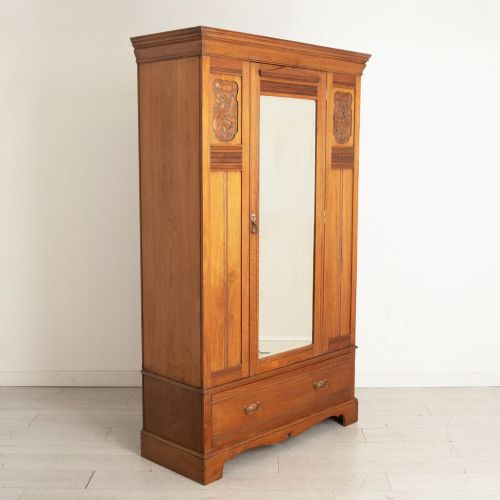
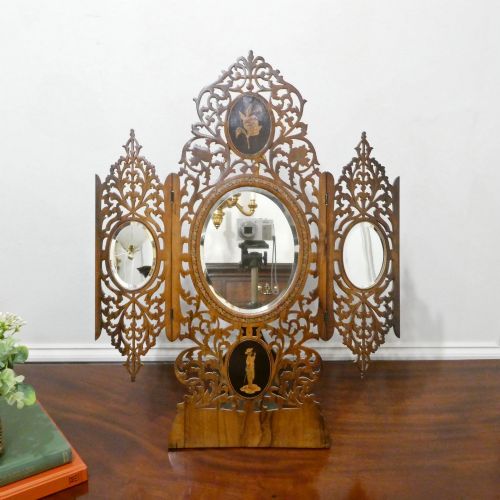
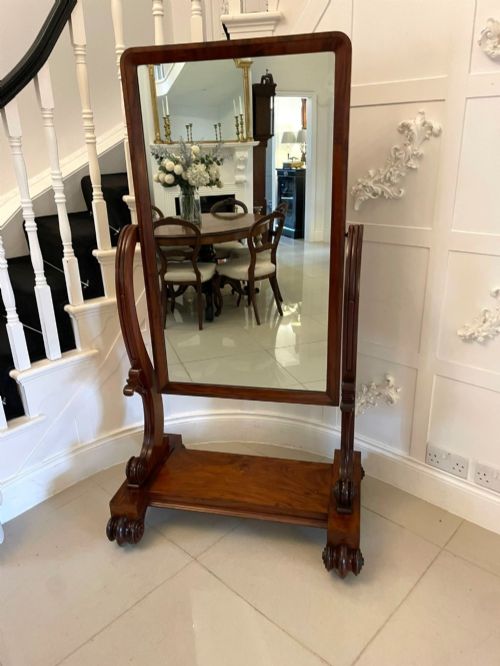
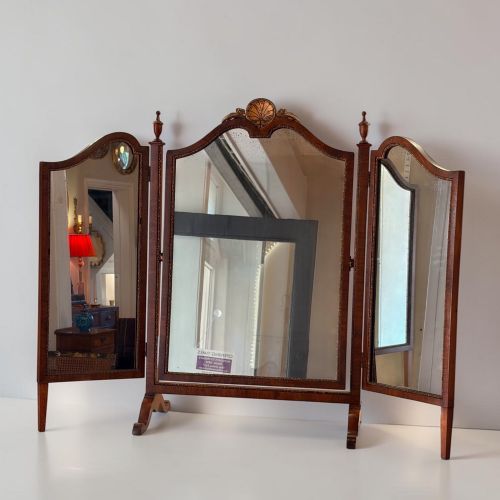



Freestanding Carved Mirror
A freestanding carved mirror gives you a moveable reflection framed in wood, brass or gilt, ready to stand on the floor or a surface.
Freestanding Carved Mirror
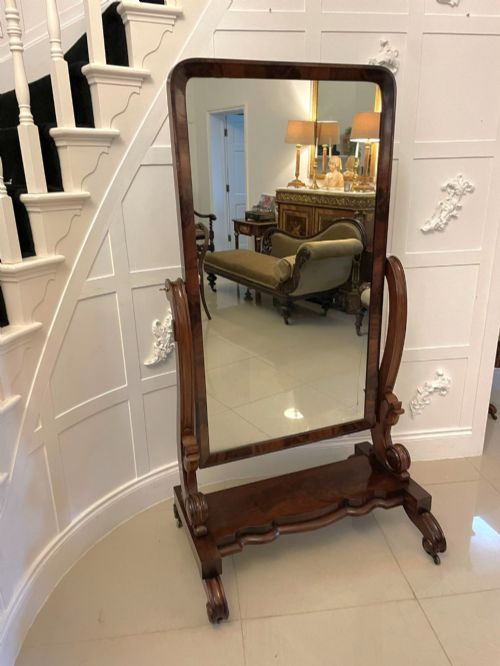
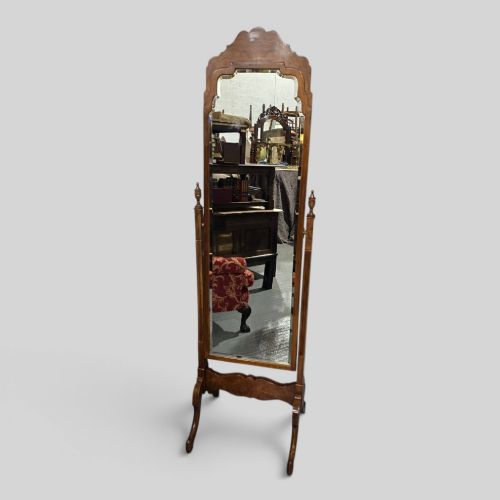
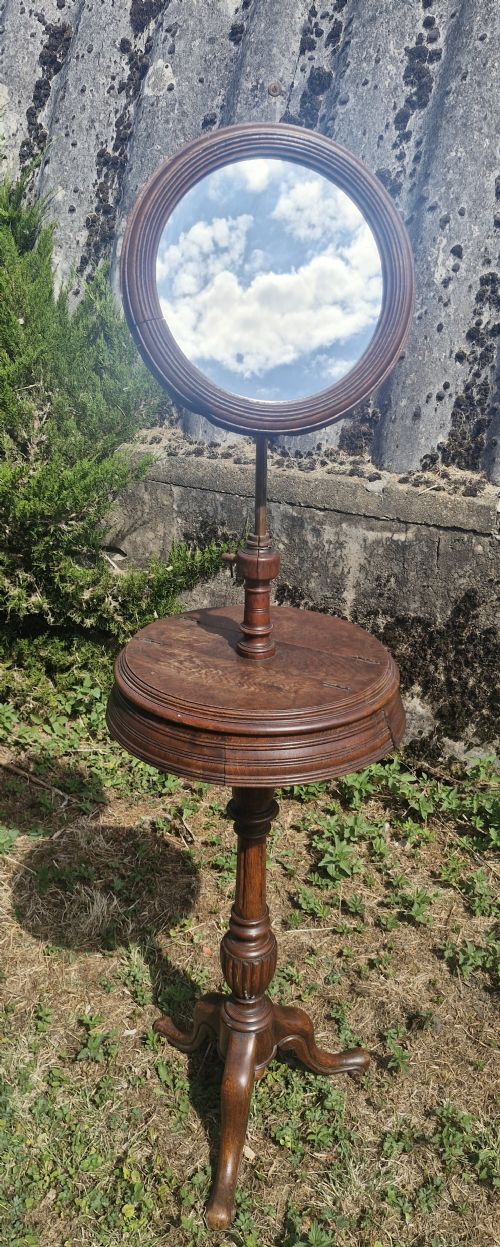
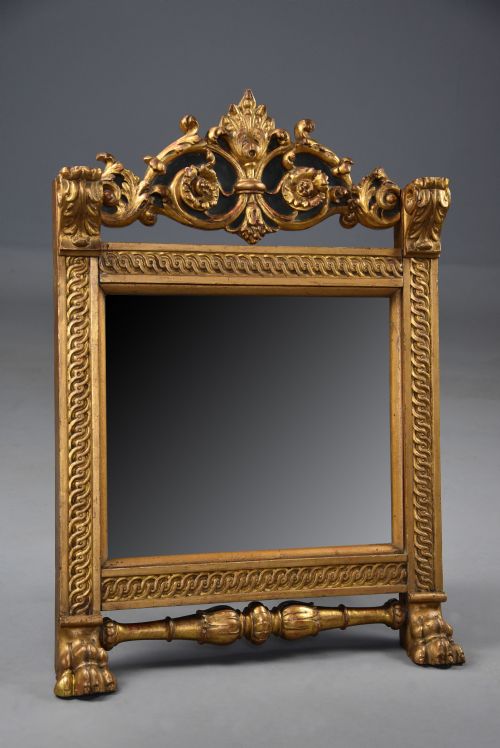
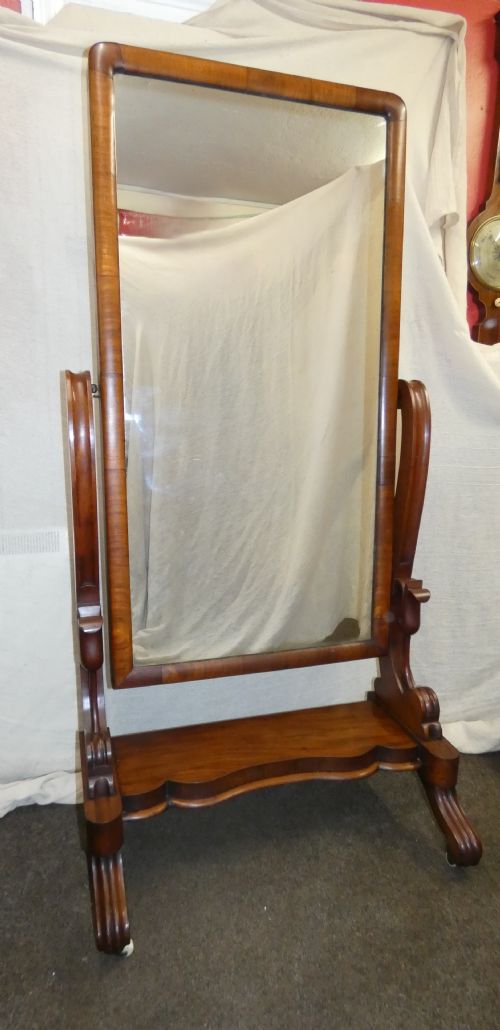
The floor-standing cheval mirror dominates the selection, swinging within a dedicated upright frame while smaller swing mirrors sit upon sturdy pedestals or tripod bases. Many examples take specific regional or stylistic forms, including French Rococo, Renaissance Revival, and Queen Anne style designs.
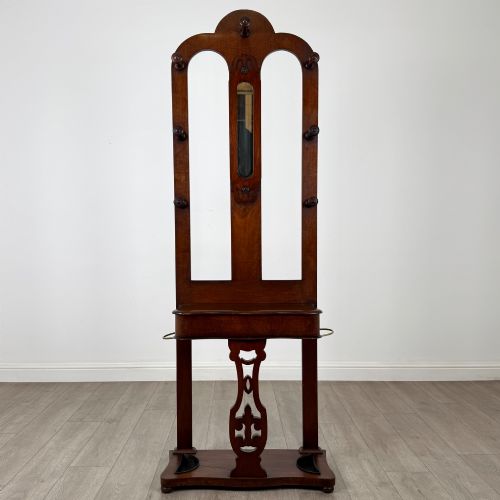
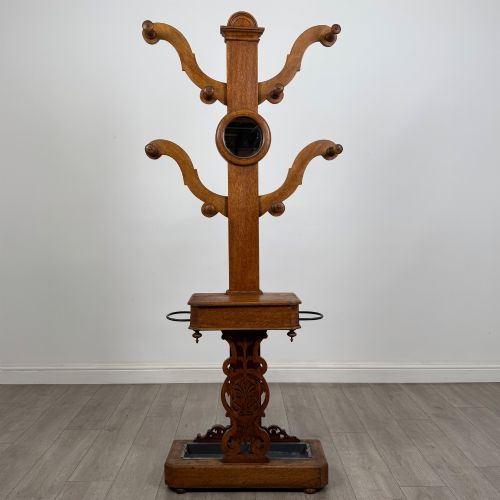
Makers and workshops construct these looking glasses from heavy hardwoods like mahogany, walnut, and oak, occasionally enriching the timber with giltwood, brass fittings, and cast iron supports. Hall stands and shaving stands also appear, integrating the pivoting mirror into a larger functional piece of furniture.
How they were made
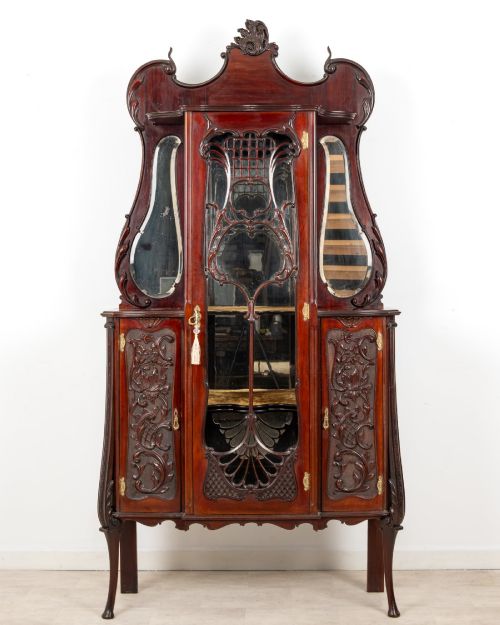
Cabinet makers constructed the primary frames of these mirrors using solid timbers such as mahogany, walnut, and oak, frequently selecting flame veneers to add depth to the polished surfaces. Artisans carved intricate decorative motifs directly into the wood of the crests and uprights, or applied moulded giltwood to create ornate frames.
The mirror glass itself pivots within side pivots or swing pins mounted to upright pillars, allowing the user to adjust the angle of the reflection. Brass hardware, including adjustable brackets, castors, and candle sconces, was commonly fitted to secure the swinging plate and assist mobility.
Freestanding Carved Mirror Retail Price Guide 2026
Typical asking prices for freestanding carved mirror among the pieces listed under this phrase on Sellingantiques today, from the lower quarter to the upper quarter. They describe what is for sale here now, not the wider market.
The listings feature mirrors constructed from mahogany, oak, walnut, giltwood, and cherrywood.
What varies in quality
The depth and crispness of the hand carving set individual frames apart, distinguishing plain structural mouldings from elaborate scrolls and floral work. Heavier, denser hardwoods like figured mahogany and burr walnut provide a more substantial presence than simpler utility woods.
The mechanical integrity of the pivot mechanism and the stability of the supporting legs determine how reliably the mirror holds its position during daily use. Original cast brass fittings and well-preserved mercury or bevelled mirror plates indicate a higher standard of original manufacture.
Waring and Gillow
The Freestanding Carved Mirror Glossary
- Cheval mirror
- A large floor-standing mirror that swings vertically within a surrounding wooden frame. The word derives from the French term for horse, owing to the four-legged support trestle.
- Swing mirror
- A smaller mirror plate mounted on pivots between two upright posts so it can tilt back and forth. These typically sit atop dressing tables, chests, or companion stands.
- Giltwood
- Timber that has been coated with a thin layer of gold leaf or gesso and gold paint. It appears on decorative frames to catch and reflect candlelight.
- Flame mahogany
- A distinct grain pattern obtained from the fork of the mahogany tree where the branches join the trunk. It creates a flamelike figured appearance on polished veneer surfaces.
Freestanding Carved Mirror: Frequently Asked Questions
What is a cheval mirror?
A cheval mirror is a tall, freestanding looking glass designed to show the full figure, suspended on vertical pivots within a sturdy wooden frame.
This design allows the glass to swing freely so you can tilt the angle of the reflection to suit your height.
How do I date an antique mirror?
Dating relies on observing the wood species, construction joints, backboards, and the style of the carved ornamentation on the frame.
Earlier Victorian and nineteenth-century pieces often feature hand-turned pillars, dense mahogany timbers, and heavy brass pivot hardware.
Where should I place a freestanding mirror?
These mirrors suit bedrooms, dressing rooms, and large hallways where their weight and height can be accommodated safely on the floor.
Positioning them near a window helps bounce natural light deeper into the room while providing a practical daily reflection.
Are these mirrors heavy to move?
Most examples possess substantial weight due to the solid hardwood frames and thick glass plates fitted within them.
Many floor-standing versions include original brass castors on the feet to help roll the frame across carpets or floorboards.