


Framed Woolwork Tapestry
A framed woolwork tapestry brings tactile warmth and historic narrative to a room, presenting stitched scenes under glass.
Framed Woolwork Tapestry
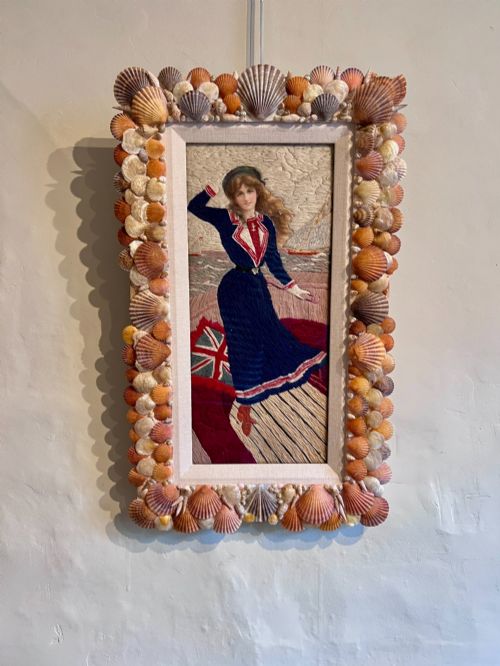
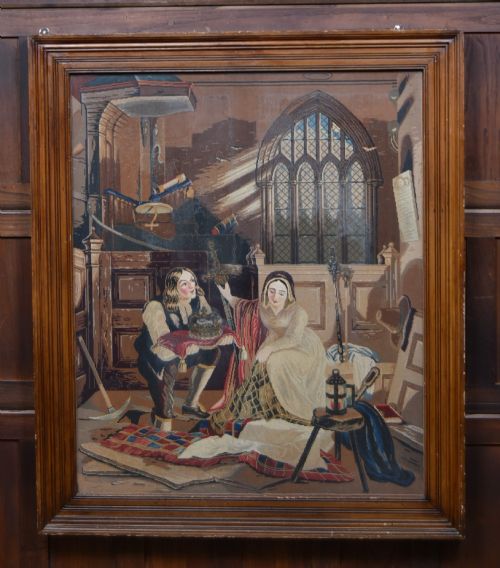
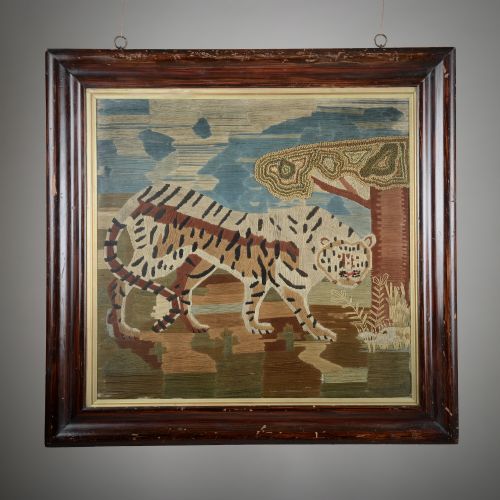
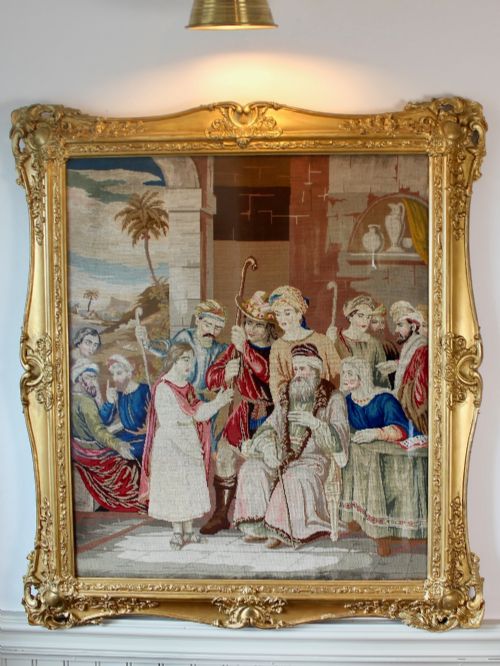
When you search for a framed woolwork tapestry, you find textile pictures worked in wool, silk, and canvas, preserved behind glass within period wood frames. These wall hangings and pictures span the Victorian era, the nineteenth century, and the Regency period, capturing subjects from domestic animals and portraits to religious scenes and commemorative military pieces.
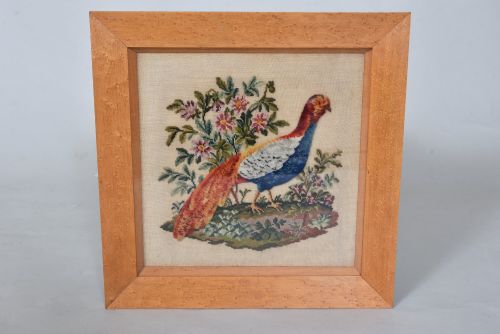
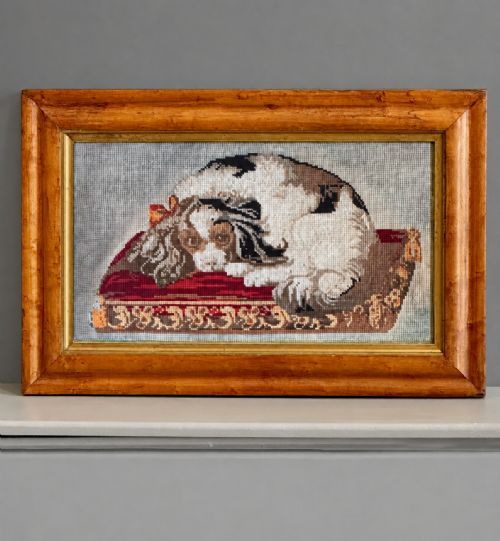
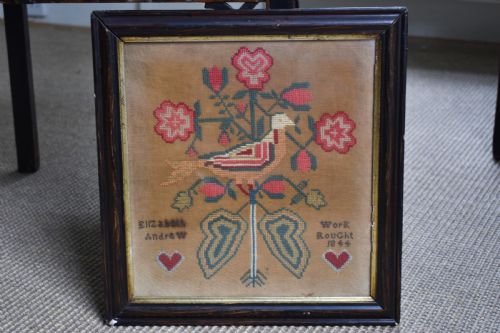
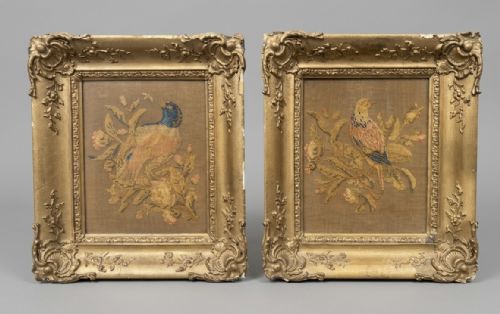
The version you meet most often on this page is the nineteenth century Berlin wool work picture, frequently depicting birds, spaniels, or figures in landscapes. Alongside these, the listings include samplers, plushwork panels, carpet mosaic pictures, and medieval style wall hangings housed in original giltwood, burr maple, or rosewood frames.
Materials and construction
Makers worked wool and silk threads onto woven canvas grounds, employing stitches such as gros point, petit point, and plushwork to build dense pictorial surfaces. Some panels combine felt and wool work to create varied textures within the stitched design.
The finished textile art sits secured inside wooden surrounds made from mahogany, oak, rosewood, or gessoed giltwood. Many examples retain glass protection, occasionally featuring decorative verre églomisé borders around the oval or rectangular window.
Listings feature wool, silk, and canvas mounted within wood, giltwood, and rosewood frames from the Victorian and Regency eras.
What separates the fine examples
The distinction rests in the precision of the needlework and the depth of the pictorial composition. Complex figure work, such as portraits of courtly maidens or biblical scenes, demands superior draughtsmanship and a wider tonal range of dyed wools compared to repetitive floral patterns.
Framing forms another pillar of distinction. Original burr maple, rosewood, or deep giltwood frames that have remained with the textile since creation elevate the piece far above later replacements.
The Framed Woolwork Tapestry Glossary
- Berlin work
- A type of needlepoint embroidered in wool on canvas using charted patterns printed in Germany during the nineteenth century. These kits allowed makers to produce elaborate pictorial designs with shaded colour.
- Gros point
- A coarse counted-thread embroidery stitch used to cover the background or main areas of a canvas tapestry quickly. It provides a durable, textured surface.
- Plushwork
- A textile technique utilising cut loops of wool to create a raised, velvety pile that stands proud of the canvas surface. This method was often applied to depict animal coats and bird plumage.
- Verre églomisé
- A process of applying gold or silver leaf to glass and etching a design into the metal before backing it with pigment. It creates a reflective, decorative border on picture frames.
Framed Woolwork Tapestry: Frequently Asked Questions
How do I hang a tapestry securely?
Use sturdy picture hooks rated for the weight of the timber frame and glass. Hang the piece away from direct sunlight to prevent the wool and silk threads from fading.
Ensure the wall has adequate ventilation behind the frame to protect the historic canvas and backing materials from trapped moisture.
Are these works original Victorian pieces?
The majority originate from the nineteenth century, encompassing Victorian and Regency periods. Makers created these decorative pictures using period wools, canvases, and traditional hand-stitching techniques.
Examination of the reverse and the timber frame often reveals construction details consistent with nineteenth-century workshop practices.
How should I clean the glass?
Apply standard glass cleaner to a soft cloth rather than spraying directly onto the frame. This prevents liquid from seeping past the rebate and damaging the delicate wool embroidery inside.
Keep moisture entirely away from the exposed textile elements and the antique wood surface during the cleaning process.
What frames are original?
Original frames typically show age-appropriate wear to the giltwood, rosewood, or burr maple surfaces matching the period of the textile. Joinery techniques and fixings on the reverse should correspond to the nineteenth century.
Replaced frames often fit too snugly or display modern fixings and clean timber that does not align with the age of the needlework.