





Framed Woodland Art
Framed woodland art brings the quiet depth of trees and shaded paths indoors, offering enduring calm through historical oils, watercolours, and prints.
Framed Woodland Art
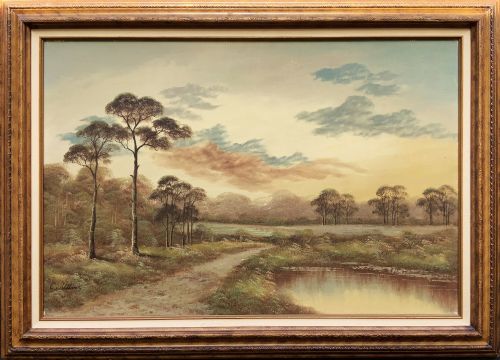
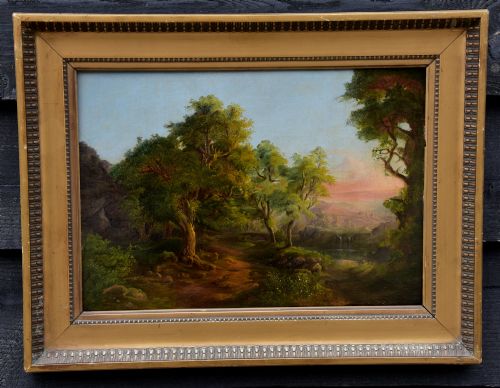
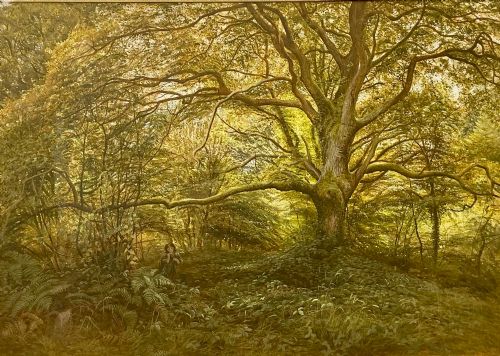
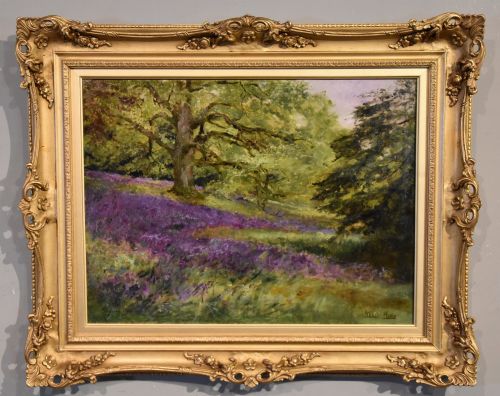
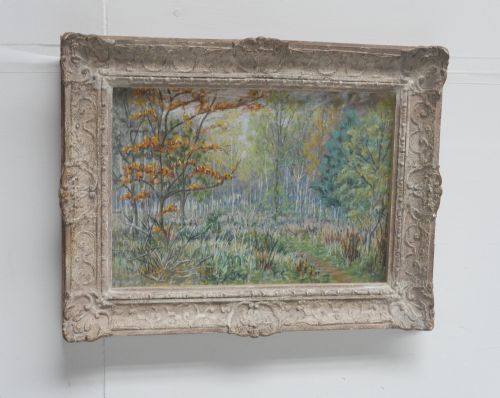
Framed woodland art encompasses landscape paintings, watercolours, and illustrated prints focusing on trees, shaded paths, and forest glades. You encounter pieces spanning from the nineteenth century through the mid-twentieth century, capturing changing seasons in oils and watercolours.
The selection ranges from intimate nineteenth-century watercolours to large Victorian and Edwardian oil paintings on canvas and board. Artists across these periods render forest scenes under varying light, from bright summer leaves to deep autumn tones.
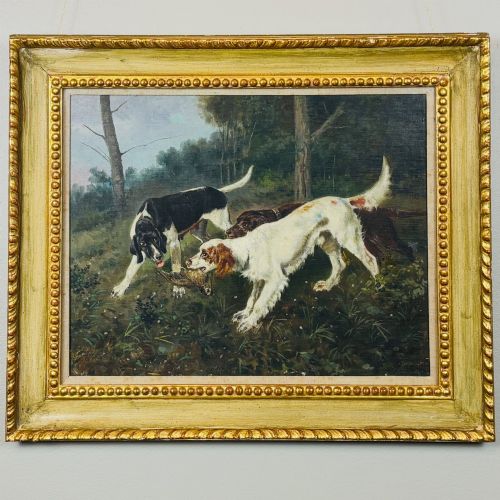
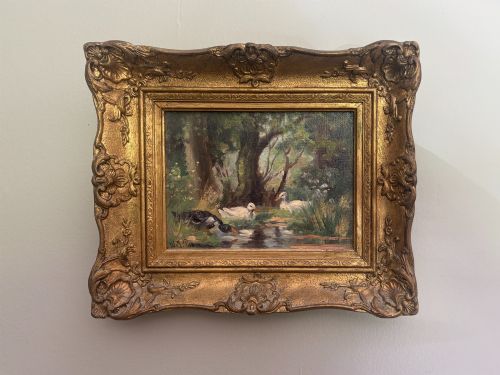
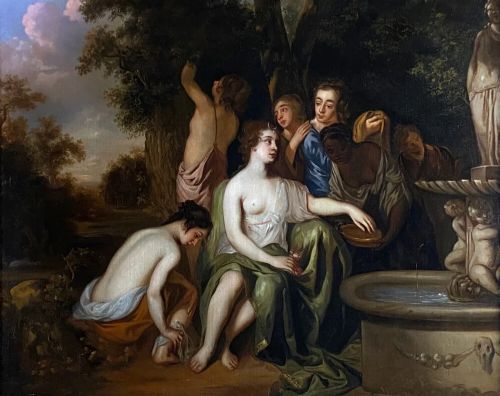
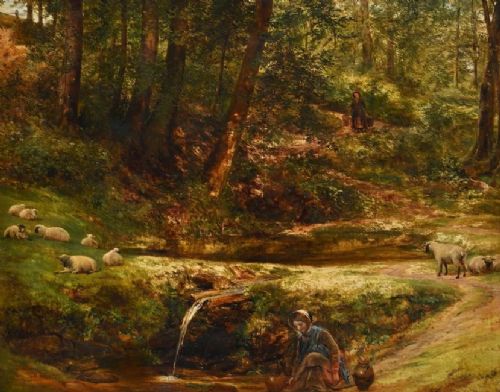
British landscapes and pastoral scenes dominate the selection, often featuring figures, cattle, or forest pools framed in period wood and gilt surrounds. These works reflect shifting artistic movements, moving from traditional topographical views toward impressionistic treatments of light and shadow.
How they were made
Artists painted primarily in oil on canvas or board, and in watercolour on paper, utilising traditional brushes to build texture and depth. Oil pigments capture the dense canopy and rich earth tones, while watercolours rely on the luminosity of the paper beneath.
Many works incorporate pastel, ink, or print techniques, particularly in Victorian and early twentieth-century illustrations. Canvases are stretched over wooden frames and housed in period wood or gilt mouldings that complete the piece.
Framed Woodland Art Retail Price Guide 2026
Typical asking prices for framed woodland art among the pieces listed under this phrase on Sellingantiques today, from the lower quarter to the upper quarter. They describe what is for sale here now, not the wider market.
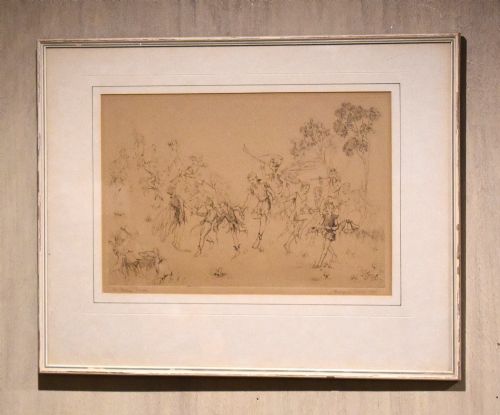
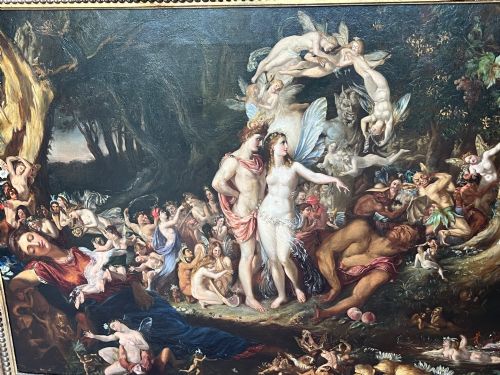
Several woodland scenes quietly hide fairies, elves, and fairytale revels deep beneath the painted canopy.
What varies in quality
The handling of light and atmospheric depth distinguishes superior compositions from standard decorative work. Masterful brushwork creates convincing texture in foliage and bark, whereas lesser pieces rely on formulaic repetition.
Original framing and medium stability contribute significantly to the standing of a piece. Works retaining their period gilt or wooden frames alongside stable paint layers represent the higher tier of the medium.
Marjorie L Davies·Willem J Palman·Sir Joseph Noel Paton·William H Myers·Sir Peter Lely·Richard Redgrave·Paul Désiré Trouillebert·Bonomi Edward Warren·Henry Yeen King·Arthur Herbert Rigg·Thomas Bromley Blacklock·William Hoggatt·Thomas Edward Roberts·James Mallard Bromley·Owen Bowen·Clarence Henry Roe·David Watts·William Mellor·Alfred Grey·Henri Joseph Harpignies·John Wright Oakes·Walter Follen Bishop·James Proudfoot·Rowland Henry Hill·Edmund George Warren
The Framed Woodland Art Glossary
- Oil on Canvas
- Pigment suspended in drying oil applied to stretched woven fabric. This medium allows for rich colour blending and impasto texture.
- Watercolour
- Pigment ground in a water-soluble binder applied to paper. It depends upon translucent washes to create light and atmosphere.
- Gilt Wood
- Wooden moulding coated with a thin layer of gold leaf or metallic gilt. It provides a reflective border that isolates the painting from the room.
- Barbizon School
- A nineteenth-century French art movement dedicated to naturalistic landscape painting. Artists painted directly from nature, focusing on real forest environments.
- Impressionism
- A style emphasising open brushwork and the depiction of shifting light. It prioritises the overall visual impression over meticulous detail.
Framed Woodland Art: Frequently Asked Questions
What periods do these pieces come from?
The works span from the seventeenth century through the Victorian era and into the mid-twentieth century.
Nineteenth-century and Edwardian pieces form the largest portion of the available selection.
How should I hang these artworks?
Hang them away from direct sunlight to protect delicate watercolours and oil pigments from fading over time.
Pair the frame with wall space that allows the natural tones of the woodland scene to breathe.
Are the frames original?
Many pieces retain their period wooden or gilt frames, which reflect the framing conventions of their respective eras.
Matching the frame style to the period of the artwork helps preserve the historical integrity of the piece.
What subjects appear besides trees?
Artists frequently integrated rivers, lakes, cattle, and figures gathering firewood or fishing within the forest settings.
These pastoral elements provide scale and narrative context to the natural landscape.