

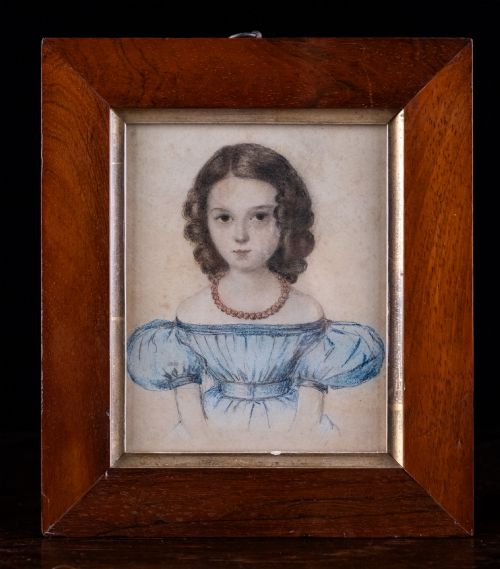

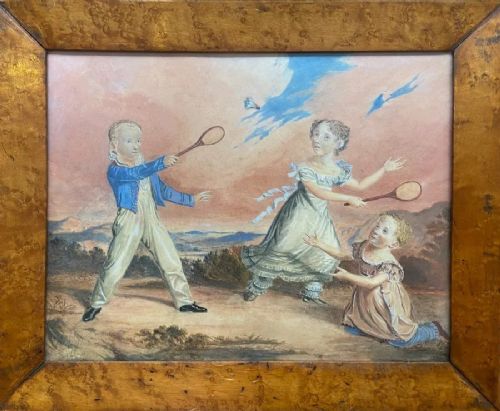
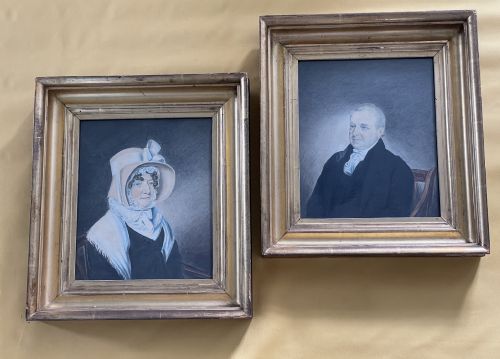
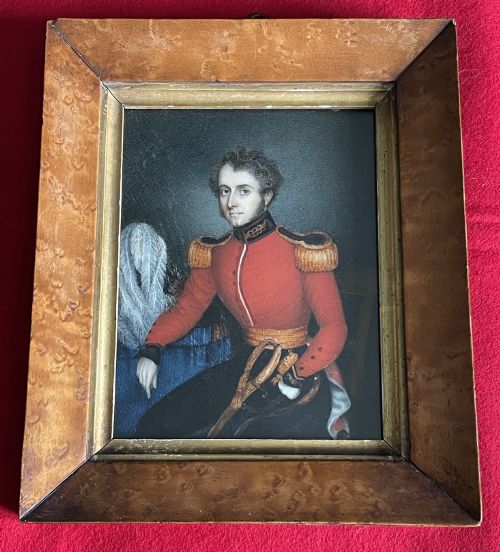


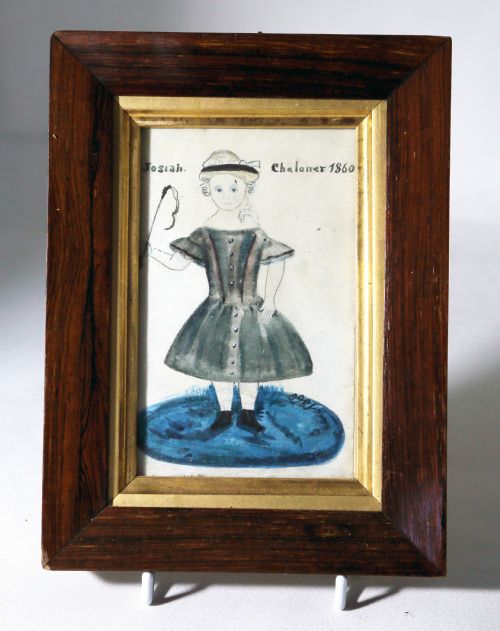


Framed Wood Watercolour Portrait
Framed wood watercolour portraits capture likenesses on paper using delicate pigments, preserved behind glass within timber surrounds.
Framed Wood Watercolour Portrait
A framed wood watercolour portrait presents a painted likeness on paper, secured within a timber frame and protected by glass. These works span the Georgian, Regency, and Victorian periods, alongside later twentieth-century examples.
Subjects range from individual gentlemen and military officers to children, families, and folk art pairs. The framing materials include wood alongside giltwood and rosewood.
Miniature paintings and standard watercolour portraits form the core of what appears here. Many pieces preserve historical annotations or artist signatures on the reverse.
How they were made
Artists applied watercolour and gouache onto paper supports, occasionally incorporating bodycolour for density. These pigments were mixed with water and bound to the sheet.
The assembled portraits sit inside wooden frames, frequently enhanced with gold leaf, giltwood, or brass accents. Glass covers the face of the painting to shield the delicate pigments from dust and moisture.
Framed Wood Watercolour Portrait Retail Price Guide 2026
Typical asking prices for framed wood watercolour portrait among the pieces listed under this phrase on Sellingantiques today, from the lower quarter to the upper quarter. They describe what is for sale here now, not the wider market.
Object types span paintings, portrait miniatures, miniature paintings, and framed watercolours.
What varies in quality
The refinement of the brushwork and the psychological depth of the subject define the upper tier of these portraits. Skilled hands capture character and proportion with precision.
The construction and material of the frame also set pieces apart. Original rosewood or gilded wood surrounds add substantial character compared to plain or later replacements.
Alexander Harwood·Robert Eadie RSW·Edward Smyth·William Powell Frith·Charles Edward Wilson
The Framed Wood Watercolour Portrait Glossary
- Watercolour
- A paint consisting of pigment suspended in a water-soluble binder. It is applied to paper in transparent washes.
- Gouache
- An opaque watercolour paint containing an added white pigment to create solid, heavier coverage. It is frequently paired with standard watercolour.
- Giltwood
- Wood carved and then covered with a thin layer of gold leaf or gold paint. It appears widely on nineteenth-century frames.
- Miniature portrait
- A small-scale painting executed with fine detail. These works were often carried or kept in intimate spaces.
- Folk art
- Artistic work produced from an untutored cultural tradition. These portraits display a charmingly direct and naive perspective.
Framed Wood Watercolour Portrait: Frequently Asked Questions
Are these portraits original or reproductions?
The pieces listed are period works created during the eighteenth, nineteenth, and early twentieth centuries. Each portrait uses traditional paper and pigment techniques appropriate to its era.
Original frames and historical annotations on the reverse often help confirm the age of the piece. Look for period framing materials and signs of natural ageing.
How do I identify the period of the frame?
Georgian and Regency frames often feature simpler timber mouldings or delicate gilt decoration. Victorian examples tend towards heavier rosewood or ornate moulded designs.
Examine the construction joints at the corners of the wood for handmade joinery clues. Backboards and old fixings also provide reliable dating evidence.
What is the difference between watercolour and gouache?
Watercolour uses transparent washes that allow the white of the paper to shine through the pigment. This creates a luminous and delicate finish.
Gouache includes added white pigment, making the paint opaque and solid. Artists often combined both mediums to highlight specific details in portraits.