




Framed Wood Inlay Art
Framed wood inlay art brings together intricate marquetry, Tunbridge ware and mosaic pictures, offering subtle tonal warmth and rich craftsmanship to any room.
Framed Wood Inlay Art
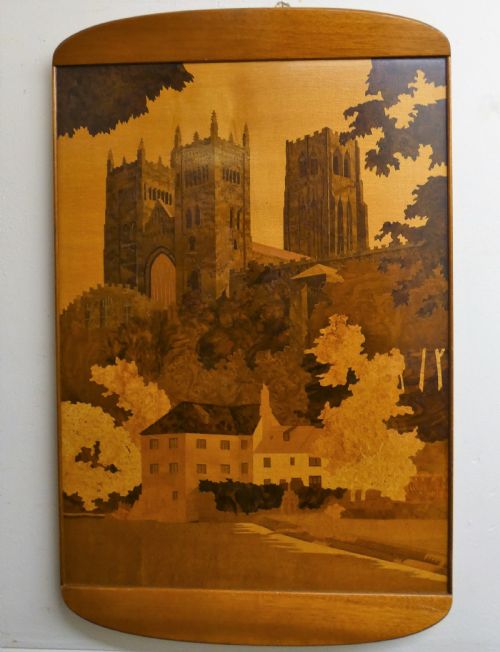
When you search for framed wood inlay art, you encounter a diverse group of wall plaques, mirrors and panels originating from the nineteenth and early twentieth centuries. These pieces utilise contrasting timbers to create pictorial scenes, geometric motifs and natural subjects.
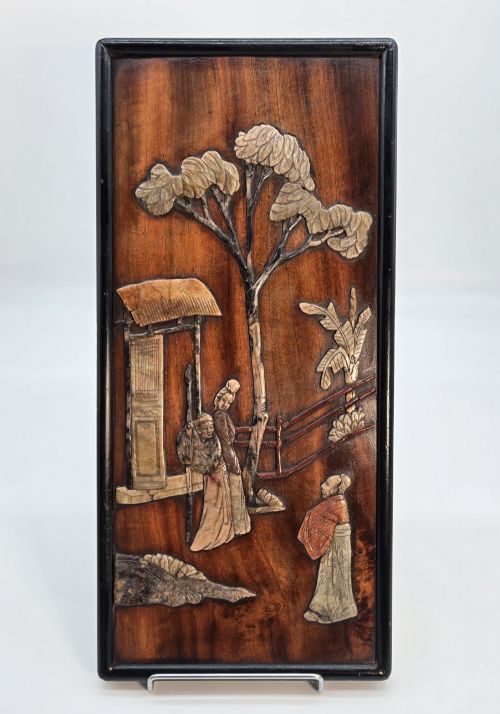
The selection on this page leans heavily toward wall plaques, mirrors and decorative panels from the Victorian, Edwardian and Art Nouveau periods. You also find Anglo-Indian marquetry and specialised Tunbridge ware alongside regional British works.
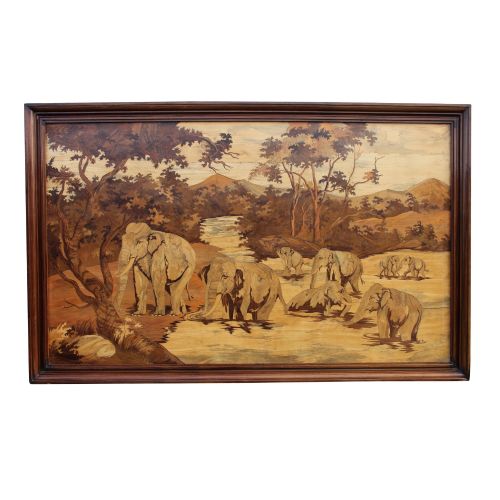
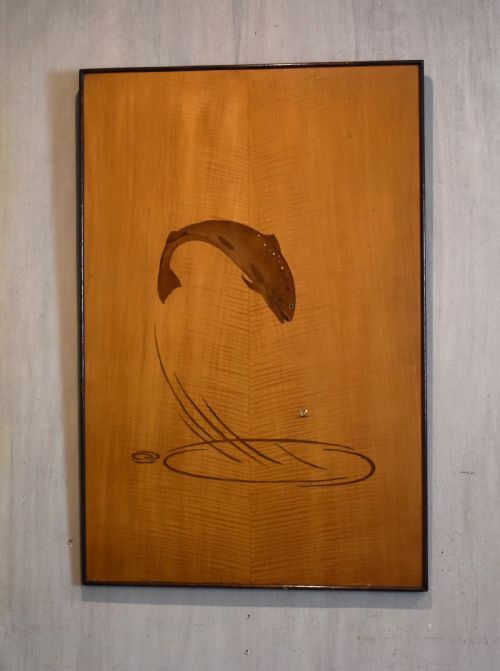
Makers ranged from individual craftsmen working in specialised workshops like the Rowley Gallery to anonymous makers producing large panels featuring elephants or leaping salmon. Each piece relies on the natural grain and colour of woods such as walnut, rosewood, satinwood and sycamore.
How they were made
These works depend upon the precise cutting and assembly of thin wood veneers, utilising natural tones without artificial staining. Woods like walnut, rosewood, satinwood and sycamore provide the palette for landscapes, animals and geometric borders.
Framing techniques vary from simple beech wood surrounds to elaborately carved stone frames or silver-gilt accents. Marquetry panels and wood mosaic pictures are secured beneath glass or set within sturdy oak and mahogany structures to protect the delicate veneer work.
One remarkably specific Victorian panel depicts a leaping salmon with surprising determination.
What varies in quality
Quality rests upon the precision of the veneer fitting and the variety of natural timbers employed within the design. Finer pieces demonstrate meticulous grain selection to convey shadow and depth without relying on paint or ink.
The sophistication of the subject matter and the reputation of the workshop also separate standard decorative items from superior examples. Well-documented makers and intricate pictorial compositions command greater attention from collectors.
Rowley Gallery·Scipione Pulzone
The Framed Wood Inlay Art Glossary
- Marquetry
- The art of applying pieces of veneer to a structure to form decorative patterns and pictorial designs. It relies on contrasting natural wood colours.
- Tunbridge Ware
- A form of woodwork characterised by tiny mosaic tiles made from different coloured natural woods. These form intricate geometric or pictorial scenes.
- Veneer
- A thin slice of fine wood applied to a coarser base material to provide a decorative surface. This technique allows intricate patterns while maintaining structural stability.
- Silver-gilt
- Silver that has been plated with a thin layer of gold. It appears occasionally on frames to highlight the woodwork.
- Pier wall mirror
- A tall mirror designed to hang on the wall between windows. These often feature inlaid frames or decorative wood panels.
Framed Wood Inlay Art: Frequently Asked Questions
How do I clean framed wood inlay art?
Dust the surface gently with a dry, soft cloth to prevent any buildup between the wood mosaic pieces.
Avoid liquid cleaners or direct sunlight, which can dry out the delicate veneers and fade the natural wood tones.
Where should I hang these wall pieces?
Select an interior wall away from direct heat sources and moisture to protect the fragile wood veneers and framing.
Position the art at eye level where the subtle grain variations and tonal contrasts can be appreciated closely.
How do I identify Tunbridge ware?
Look for a mosaic surface composed of thousands of minuscule wood squares forming a precise pictorial or geometric motif.
Most pieces incorporate numerous native and exotic timbers to achieve a wide spectrum of natural colours without pigment.
What woods were commonly used?
Craftsmen utilised walnut, rosewood, satinwood, sycamore and oak to provide a broad range of natural hues and textures.
Dark woods like walnut and rosewood create shadows, while lighter satinwood and sycamore highlight illuminated areas of the design.