



Vintage Scottish Landscape
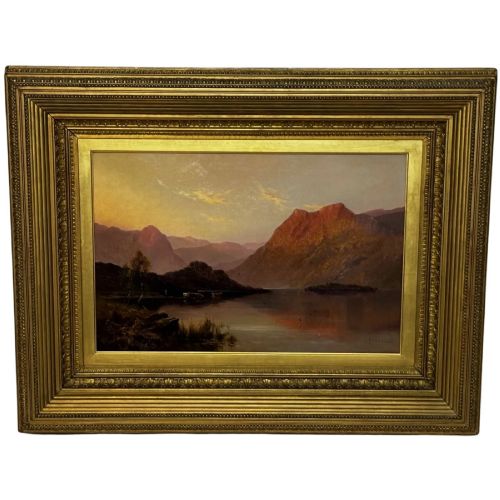
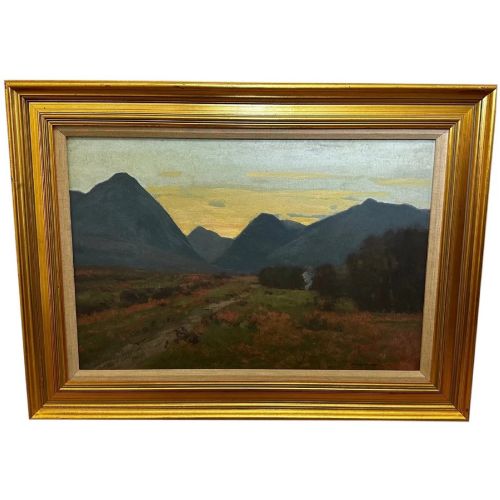
A vintage scottish landscape captures the rugged topography, misty lochs, and heather-clad moors of the north through the eyes of artists working across the nineteenth and twentieth centuries.
Vintage Scottish Landscape
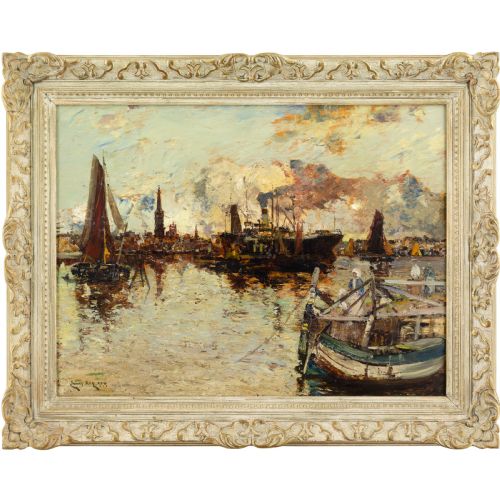
A vintage scottish landscape brings the scenery of the Highlands and Lowlands into an interior through framed paintings and works on paper. These pieces range from Victorian depictions of cattle by the loch to mid-century modernist interpretations.
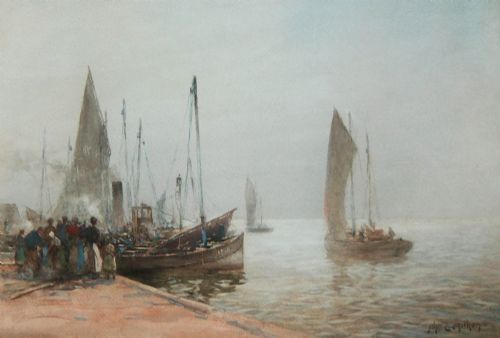
The version most commonly encountered on this page is the oil painting on canvas or wood panel, often dating from the early decades of the twentieth century. Watercolours and gouache works also appear, capturing specific locales from Fife to the Isle of Arran.
Materials and Technique
Artists relied primarily on oil paint applied to canvas, wood panel, or board, building texture with brushwork and sometimes impasto. Watercolours and gouache on paper represent the primary mediums used for works on paper.
Framing often involves gold leaf mouldings which complement the traditional oil paintings. Surfaces were protected by glass in the case of watercolours, whilst oil canvases were left unglazed to display the textured pigment.
Listings span from the 19th century through the mid-20th century, utilising oil on canvas, wood panel, paper, and gold leaf.
Evaluating Quality
The distinction between standard works and exceptional examples lies in the confidence of the brushwork and the atmosphere conveyed. Superior pieces capture light and weather conditions with immediacy, avoiding rigid or formulaic compositions.
Provenance and documentation also distinguish finer works, particularly when signed by recognised members of the Scottish Royal Academy or associated regional schools. The integration of material - such as the quality of the wood panel or the weave of the canvas - supports the longevity of the piece.
Tom Campbell·Alfred Fontville de Breanski Jr·James E Aitken·George Houston·James Kay·David Roberts·Archibald Kay·Henry Robinson Hall·Thomas Bromley Blacklock·William Littlejohn·Frank Hider·Donald McIntyre·William Grant Murray·John A Houston·John Douglas Perrett·Joseph Farquharson·James Bell Anderson·R P Noble·Stanley Orchart·John Charles Tunnard·Alfred Henry Vickers·Robert Russell MacNee·Sir David Murray·Robert Gemmell Hutchinson·George Melvin Rennie
The Vintage Scottish Landscape Glossary
- Impasto
- Paint applied thickly to a canvas or panel so that it stands out from the surface. This technique adds tactile depth and catches light across the painted landscape.
- Scottish School
- A loose grouping of artists influenced by national traditions and European movements. Their output spans traditional realism through to mid-century abstraction.
- Watercolour
- A paint consisting of water-soluble pigments used on paper. It allows for translucent washes that suit atmospheric depictions of weather and water.
- Wood Panel
- A rigid wooden support used instead of canvas for oil paintings. Panels offer a stable surface that resists the slackening common to stretched fabrics over time.
Vintage Scottish Landscape: Frequently Asked Questions
What subjects appear in these landscapes?
The compositions frequently feature Highland cattle, misty lochs, rugged mountain ranges, and rural farmyards. Coastal scenes and historic castles also feature prominently across the works.
Artists often focused on specific regions including the Isle of Arran, the Grampians, and the Lake District. The changing weather and dramatic light of these terrains dictate the mood of the paintings.
How do I date an oil painting?
Dating relies upon stylistic clues, framing methods, and signatures or inscriptions left by the artist. Victorian pieces typically exhibit tighter brushwork and narrative focus, whereas later works embrace broader impressionistic strokes.
Examine the reverse of the canvas or panel for old gallery labels, exhibition stamps, or handwritten annotations. These clues often provide precise years or locations.
How should I care for an oil painting?
Keep oil paintings away from direct sunlight and sources of intense heat to prevent the canvas from warping and the pigments from fading. Maintain a stable indoor climate free from excessive humidity.
Dust the surface gently with a soft, dry brush without applying pressure. Avoid using commercial cleaning sprays or damp cloths on the painted surface.
Are watercolours framed differently than oils?
Works on paper require glass protection and acid-free mounts to prevent moisture damage and paper degradation. The framing safeguards the delicate medium from airborne pollutants.
Oil paintings on canvas or panel are typically displayed unglazed, allowing the textured surface of the paint to interact directly with ambient room light.