


Framed Watercolour Cityscape Artwork
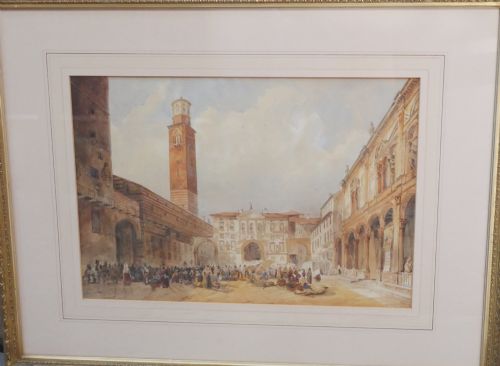
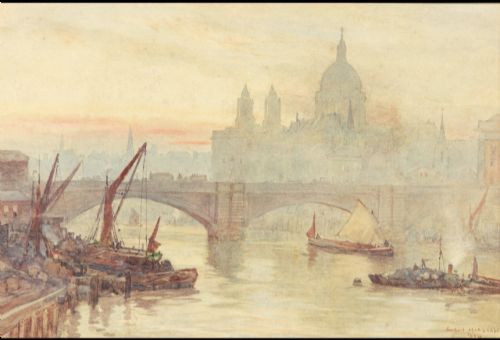
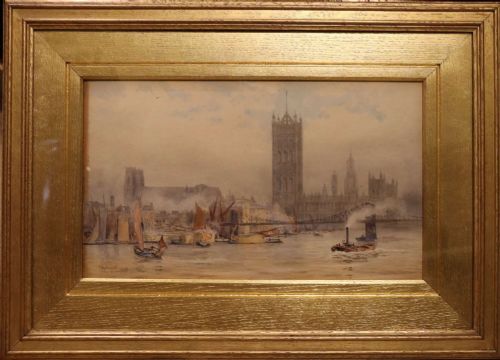
Framed watercolour cityscape artwork brings domestic and continental street scenes into focus through pigment on paper held beneath glass within wood.
Framed Watercolour Cityscape Artwork
Framed watercolour cityscape artwork captures urban views, architectural studies, and river scenes across the nineteenth and twentieth centuries. These paintings depict locations ranging from London and York to Venice, Paris, Rome, and Baghdad through the medium of watercolour paint on paper.
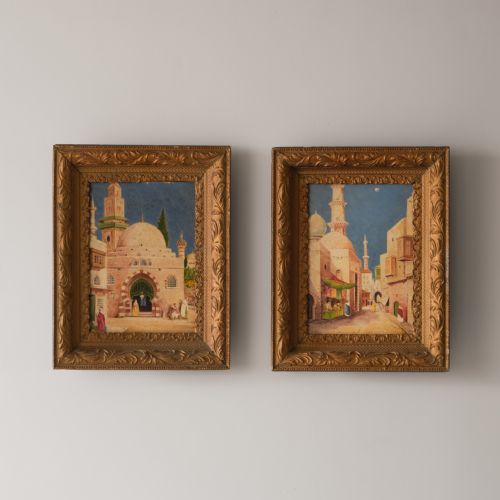
Buyers encounter British Impressionism, Victorian, Edwardian, and Naive Art movements executed in periods stretching from the 1880s through the 1940s. The selection includes individual depictions of monuments and street corners alongside pairs of topographical studies.
Grand Tour subjects and continental vistas feature alongside domestic landmarks, reflecting travel across Europe and the British Isles during the late nineteenth and early twentieth centuries. Each piece arrives set in wood or gilt wood frames paired with glass protection.
How these watercolours and frames were constructed
Artists applied watercolour paint, pigment, and pencil to paper supports, utilising washes to build architectural facades and atmospheric street conditions. Works often incorporate ink or pencil underdrawing beneath the pigment layers.
Framing utilised wood and gilt wood mouldings enclosing glass panes to protect the delicate paper surfaces from environmental exposure. Backings typically comprise historic wooden boards or paper seals appropriate to the period.
Listings span from the 1880s to the 1940s, featuring watercolours, paper, glass, and gilt wood frames across British and continental views.
What distinguishes finer examples from simpler works
Skill in handling perspective, architectural detail, and atmospheric light defines the execution of the painting. Finer watercolours demonstrate precise control over washes and line work when depicting complex structures such as bridges, canals, and classical columns.
The integration between the artwork and its period frame influences the complete object. Original gilt wood or timber surrounds that complement the palette and era of the painting elevate the presentation.
H. Medlycott·Fred Lawson·J W Hogley·George Whyatt·Vittore Zanetti Zilla·David Law·Noel Harry Leaver·Ettore Ascenzi·Henry Wimbush·Rowland Henry Hill·J. Tim Macdonald·John D. Walker·Matthew Hale·Helen Donald-Smith
The Framed Watercolour Cityscape Artwork Glossary
- Watercolour paint
- A medium consisting of finely ground pigment suspended in a water-soluble binder, applied to paper to create transparent washes.
- Grand Tour
- A cultural journey through Europe undertaken by travellers in the eighteenth and nineteenth centuries, often resulting in commissioned artworks.
- Gilt wood
- Timber frames coated with a thin layer of gold leaf or metallic gilt finish, standard for framing fine art in the nineteenth century.
- Naive art
- Work produced by artists without formal academic training, characterised by direct perspective and straightforward illustrative charm.
- Provenance
- The documented history of ownership or the known origin of an artwork, establishing authenticity and connection to a named artist.
Framed Watercolour Cityscape Artwork: Frequently Asked Questions
How should I hang framed watercolour cityscape artwork?
Keep watercolours away from direct sunlight to prevent the pigments from fading over time. Position them on interior walls where room temperature and humidity remain stable.
Ensure the hanging wire and fixings securely support the weight of the wood and glass frame. Professional picture hooks suited to your wall type provide the safest installation.
What subjects appear most frequently in these paintings?
Urban environments dominate the selection, featuring canals, bridges, iconic monuments, and bustling street scenes. Views frequently capture major European capitals and historic British cities during the nineteenth and early twentieth centuries.
Artists recorded architectural landmarks such as parliament buildings, arches, and ancient forums from direct observation. These compositions reflect both domestic travel and continental Grand Tour itineraries.
Are these watercolours original period pieces?
The listings span the late nineteenth century through the 1940s, encompassing Victorian, Edwardian, and mid-century movements. Each work is a unique, hand-painted piece on paper rather than a reproduction or print.
Signatures, dates, and historic framing materials help anchor the works to their respective eras. Documentation within the titles points to specific decades of creation.
How do I care for antique glass and frames?
Clean the glass sparingly using a soft cloth slightly dampened with water or standard glass cleaner, taking care not to let moisture seep beneath the frame edge. Avoid spraying liquids directly onto the glass.
Inspect the wood or gilt frame periodically for stability. Dust gently with a dry, soft brush to protect delicate surfaces.