
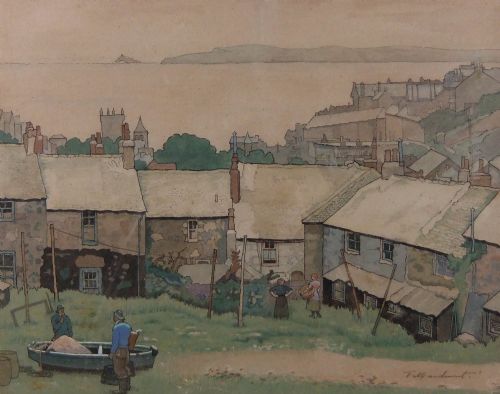


Framed Village Watercolour
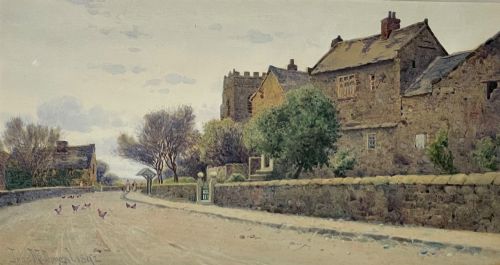
A framed village watercolour captures rural streets and cottages through fluid pigment on paper, bringing historical community life directly to your wall.
Framed Village Watercolour
A framed village watercolour represents original works on paper depicting rural settlements, country lanes, and village architecture. You meet these pieces in periods spanning the Victorian era through the mid-twentieth century.
The subjects range from English fishing ports and Yorkshire dales to French and Arabian settlements. Artists record specific localities, capturing community gatherings, historic inns, and rural trades.
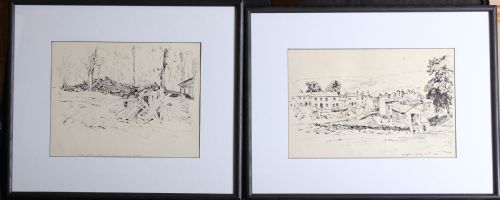
These works typically arrive behind protective glass within period wood frames. They document changing rural landscapes across the nineteenth and twentieth centuries through direct observation.
Materials and Technique
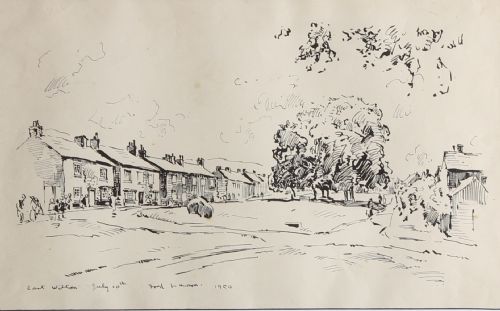
Artists apply water-soluble pigment onto paper sheets, sometimes combining watercolour with gouache for opaque highlights. Ink lines frequently provide structural definition to cottages and figures before colour washes are applied.
Framing utilises wood mouldings and glass to protect the absorbent paper surface from atmospheric moisture and handling. Gold leaf occasionally highlights select period frames.
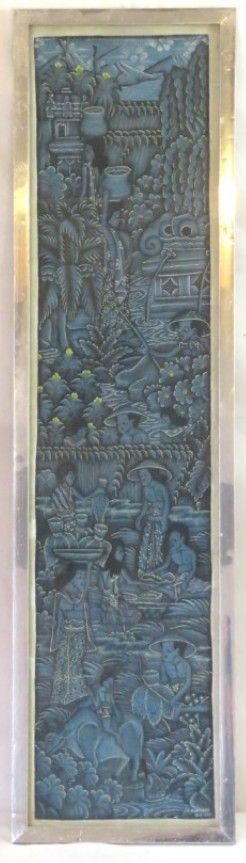
A youthful foal sneaks fruit from a basket while villagers go about their daily routines.
Standards of Execution
Quality rests upon the artist's handling of light, atmospheric depth, and structural precision within the composition. Stronger examples demonstrate confident brushwork and accurate perspective in architectural and landscape elements.
The integration of the framing materials also distinguishes the piece, as period frames matched to the date of the painting enhance the historical context and visual impact.
John McDougal·Fred Lawson·Thomas Maidment·Arthur Tucker·James Watson·Frank Wood·Frederick Mayor·David Woodlock·Frank Dadd·Alfred Leyman
The Framed Village Watercolour Glossary
- Watercolour
- A painting method where natural pigments are suspended in a water-based solution and applied to paper. This medium allows for transparent washes that create luminous effects of light and atmosphere.
- Gouache
- An opaque water-based paint containing pigment mixed with a binding agent and white filler. Artists utilise this material to add solid highlights and dense colour passages over watercolour.
- Victorian
- A historical period spanning the reign of Queen Victoria from 1837 to 1901. Works from this era often feature detailed realism and narrative focus.
- St Ives School
- An art movement associated with the Cornish coastal town where painters gathered to capture local maritime and village scenes. These works reflect regional Impressionist and modernist tendencies.
Framed Village Watercolour: Frequently Asked Questions
What periods do these watercolours date from?
The available selection spans from the Victorian era and late nineteenth century through the 1950s and 1960s.
Mid-twentieth-century pieces sit alongside earlier Victorian examples, reflecting changing British and European artistic styles.
How should I hang a paper watercolour?
Keep watercolours away from direct sunlight to prevent the pigments and paper from fading over time.
Display them on interior walls with stable humidity and temperature to protect the paper and frame.
Are these paintings original works?
Every listed piece is an original hand-painted artwork on paper rather than a reproduction or print.
Artists applied pigments directly by hand, making each village scene a unique historical record.
What subjects appear in these scenes?
Paintings depict English country lanes, Cornish fishing ports, Welsh harbours, and continental village squares.
Artists recorded daily community life, historic inns, local markets, and rural architecture.