
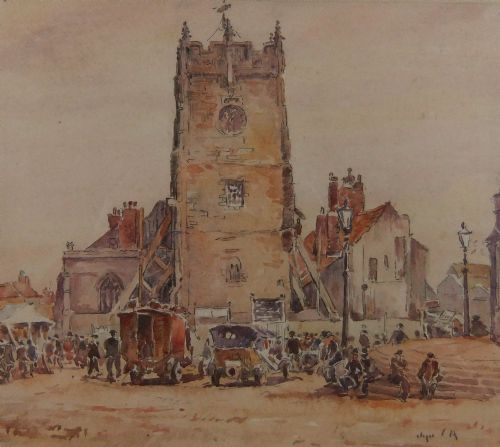


Brown Tone Watercolour Landscape
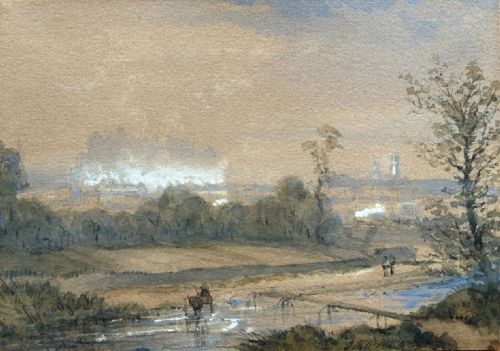
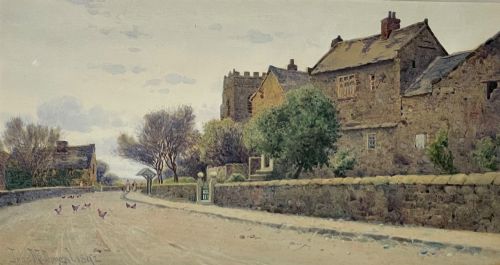
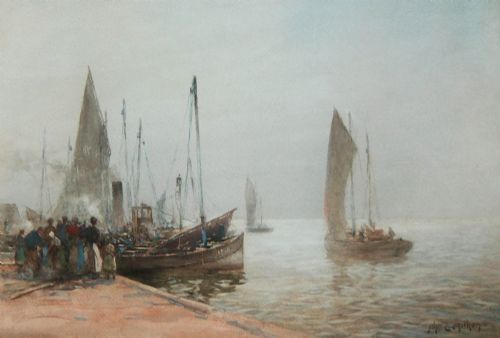
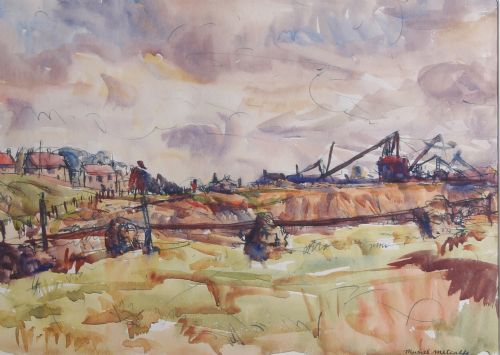
A brown tone watercolour landscape captures the quiet moods of the British countryside through monochrome pigment and ink on paper.
Brown Tone Watercolour Landscape
A brown tone watercolour landscape focuses on rural scenes, village streets, and coastal views rendered primarily in muted earth hues rather than a full polychromatic palette. When searching for this subject, a buyer encounters works spanning the nineteenth century through the mid-twentieth century, including Victorian and Edwardian examples as well as later British Impressionist and modern pieces. These works range from tightly detailed topographical views of Yorkshire and Scotland to looser impressionistic impressions executed on paper.
The material forms on this page consist largely of original paintings executed with watercolour pigment, often enhanced with ink or wash to deepen the monochromatic effect. Supports are invariably paper, frequently framed behind glass within wooden mouldings that protect the delicate pigment from moisture and light. The subjects span familiar rural motifs such as farmyards, bridges, and village cottages mapped across regions from the dales of Yorkshire to Welsh valleys.
Materials and execution
Artists create these watercolours by applying water-soluble pigments and ink onto paper supports, relying on the natural white or cream tone of the paper to provide highlights through transparent washes. The restricted palette of browns, sepias, and ochres requires careful control of water dilution to establish depth, shadow, and atmospheric perspective within the landscape.
Framing materials typically comprise wood and glass to preserve the paper from atmospheric degradation while securing the painting for display. The combination of fugitive pigments and paper supports means that handling relies on traditional conservation mounting techniques to maintain structural integrity over decades.
The listings span the nineteenth century through the nineteen-sixties, capturing shifts in British landscape representation on paper.
Distinguishing quality in works
Quality rests upon the artist's handling of tone and perspective, where confident brushwork and subtle tonal gradations create genuine atmospheric depth rather than flat, uniform washes. Works by established practitioners demonstrate a rigorous command of light and shadow, defining architectural details and natural foliage with economy and precision.
Condition plays a substantial role in distinguishing superior examples, specifically the absence of heavy foxing, fading, or acidic discolouration within the paper. Strong provenance and clear signatures by known artists elevate an individual painting above anonymous topographical sketches from the same period.
John R Prentice·John McDougal·James E. Aitken·Muriel Metcalfe·John Smith Atherton·Alfred George Morgan·John Atkinson·Louie Stanley Maurice Prince·John Syer·Henry Charles Fox·Percy Brooke·Rowland Henry Hill·Thomas Pyne·Sir William George Gillies·Edward Killingworth Johnson·Charles James Adams·William Manners·Frederick Tucker·Francis William Topham·Fred Lawson·Maurice Asselin·Cuthbert Crossley·Fred C. Jones·John D. Walker·A.G.Stevens
The Brown Tone Watercolour Landscape Glossary
- Watercolour paint
- A medium consisting of coloured pigments suspended in a water-soluble vehicle. It allows for transparent washes that reveal the texture of the underlying paper.
- Sepia
- A brown pigment historically derived from the ink sac of the cuttlefish. It forms the primary tone in many monochromatic landscape works.
- Wash
- A thin, fluid layer of diluted watercolour pigment applied across the paper to create smooth backgrounds or skies. It requires steady application to avoid streaking.
- Foxing
- The brown spots and patches that develop on older paper due to chemical reactions involving iron impurities or fungal growth. Proper storage behind glass helps mitigate this process.
- Provenance
- The documented history of ownership of an artwork. It establishes authenticity and traces the journey of a painting from its creation to the current collection.
Brown Tone Watercolour Landscape: Frequently Asked Questions
What defines a brown tone watercolour landscape?
These works rely on restricted earth palettes, focusing on sepias, ochres, and browns to render British rural and coastal scenery.
Artists utilise these tonal limitations to emphasise shadow, form, and atmospheric conditions without the distraction of bright primary colours.
How should I display watercolour paintings safely?
Watercolours require hanging away from direct sunlight to prevent the fugitive pigments from fading permanently over time.
Framing with acid-free mounts and protective glass shields the delicate paper support from ambient moisture and environmental pollutants.
How do I identify the period of a landscape?
Stylistic clues such as costume, architectural details, and framing methods often indicate whether a piece originates in the Victorian era or mid-century.
Signatures, artist biographies, and the specific composition of the paper stock provide further chronological markers for dating.
What subjects appear most frequently in these works?
Common subjects include rural farmyards, Yorkshire and Scottish village scenes, coastal harbours, and quiet river valleys.
Artists during the nineteenth and twentieth centuries regularly returned to these traditional British topographical motifs for inspiration.