
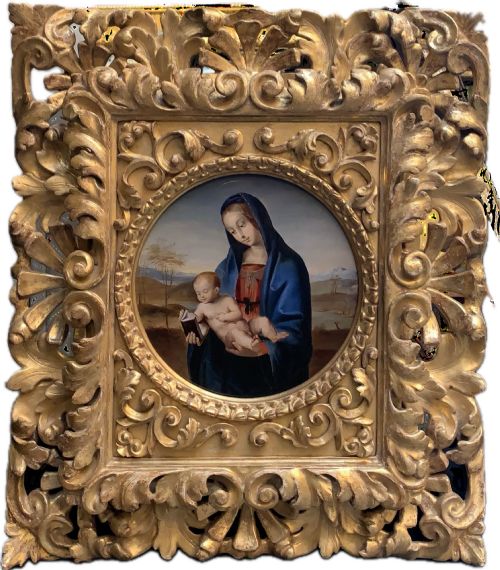
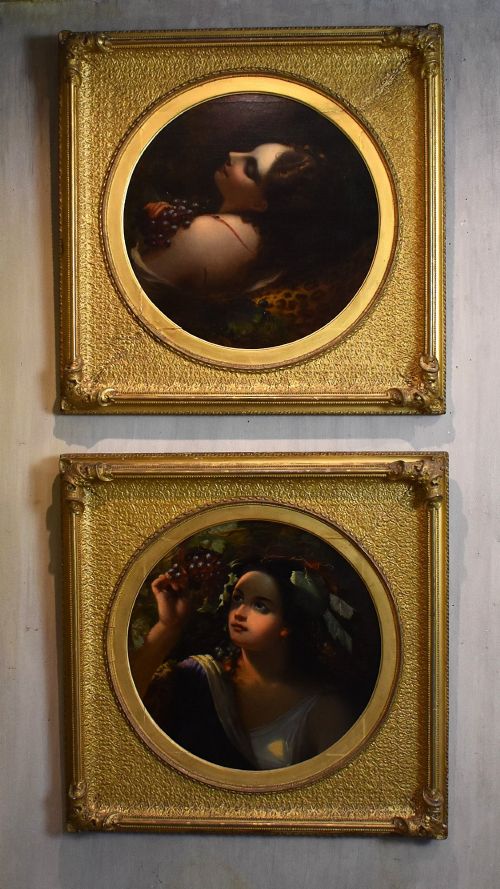


Framed Tondo Artwork
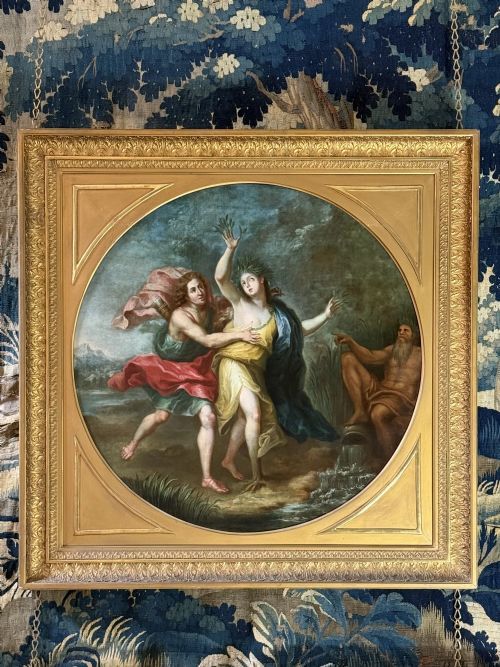
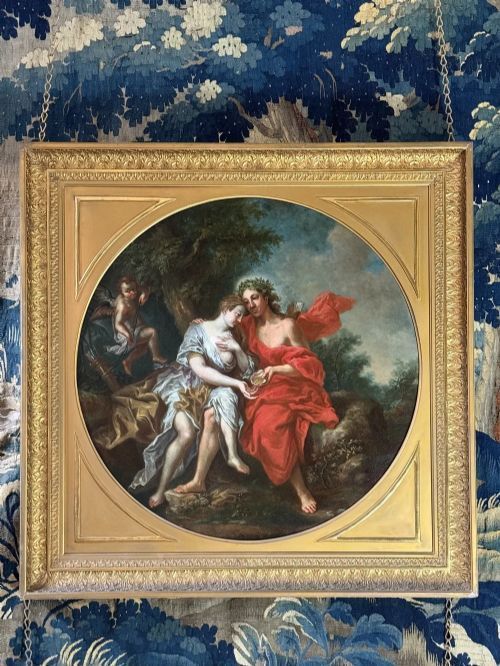
These framed tondo artwork pieces bring circular compositions into interiors, offering Renaissance subjects and landscape scenes captured within distinct rounded wooden borders.
Framed Tondo Artwork
When you search for framed tondo artwork, you encounter circular paintings, prints, watercolours and engravings housed in matching circular or fitted rectangular frames. The pieces on this page span several centuries, moving from the sixteenth century through to the mid-twentieth century.
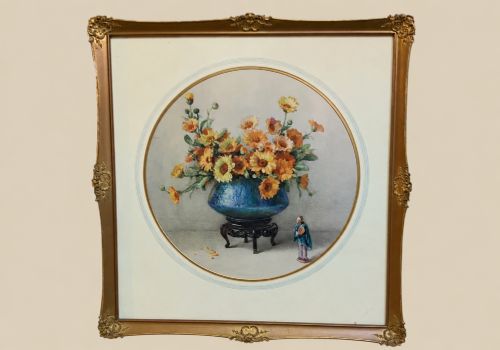
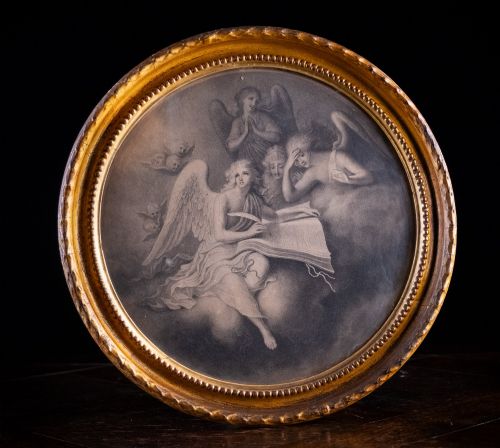
The dominant forms include classical oil paintings, religious subjects after Raphael, landscape scenes and still lifes. You will meet nineteenth-century oil paintings alongside eighteenth-century engravings and twentieth-century lithographs.
Continental schools and British makers both produced these circular works. Subjects range from mythological figures and weeping angels to coastal scenes and farmyard views with horses.
How they were made
Artists painted or drew directly onto prepared canvas, paper, board or wood shaped into a circle. Pigments applied in oil paint or watercolour created the central imagery.
Makers enclosed these circular works within gilded wood, giltwood or standard wooden frames built specifically to match the curved edge of the tondo.
Materials utilised across these works include oil paint, watercolour, canvas, paper, and gilded wood.
What varies in quality
The sophistication of the brushwork and the depth of the oil paint or watercolour application separate standard decorative items from masterworks. Hand-painted oil surfaces demonstrate greater nuance than printed reproductions.
The construction and original gilding of the wooden frame contribute substantially to the overall character of the piece. Period frames matched precisely to the circular format hold higher aesthetic value than later adaptations.
Charles-Antoine Coypel·Theodore Jensen·John Bell·Jean Hardy·John Frederick Herring
The Framed Tondo Artwork Glossary
- Tondo
- A circular work of art, either a painting or a sculpture. This format challenges the artist to compose within a round boundary rather than a traditional rectangle.
- Giltwood
- Wood that has been treated and covered with a thin layer of gold leaf or gold paint. It frequently appears on period frames surrounding these artworks.
- Lithograph
- A print made from a planographic process in which a drawing is made on stone or metal. It allows for the reproduction of fine pictorial works.
- Engraving
- A printmaking technique where an image is incised into a metal plate, holding ink within the grooves. Eighteenth-century examples utilise this method.
- Continental school
- A term used to describe artists trained and working in mainland Europe rather than Britain. These works often reflect French or Italian stylistic traditions.
Framed Tondo Artwork: Frequently Asked Questions
What is a tondo painting?
A tondo is a circular work of art, derived from the Italian word rotondo, meaning round. Artists have used this format since the Renaissance to create harmonious compositions that draw the eye toward a central focal point.
Unlike rectangular canvases, the circular boundary eliminates corners, requiring a distinct approach to perspective and balance. You find this shape utilised across oil paintings, watercolours, and prints throughout the centuries.
How do I hang a round frame?
Hanging a circular frame requires secure wall fixings positioned precisely behind the top centre point of the frame. Many round frames include an integrated metal ring or heavy-duty wire attached to the reverse.
Because circular pieces lack the natural levelling stability of rectangular frames, checking the alignment with a small spirit level ensures the artwork hangs straight.
Are all round artworks original oil paintings?
Round artworks include original oil paintings on canvas and board, alongside watercolours, engravings, lithographs, and printed reproductions. The materials vary widely depending on the period and the intended purpose of the piece.
Examining the surface under magnification reveals whether the image consists of applied brushstrokes or printed dots. The listings specify the exact medium used for each individual piece.
How do I identify the period of a framed tondo?
Dating a framed tondo involves examining the construction of the wooden frame, the materials used for the support, and the stylistic conventions of the imagery. Eighteenth-century and nineteenth-century works often exhibit hand-carved giltwood frames and specific ageing patterns on the canvas or paper.
Associated signatures, artist inscriptions, and historical subject matter provide additional clues. Comparing the technique to documented works from particular centuries clarifies the era of creation.