



Framed Spy Prints
Framed spy prints capture public figures through caricatures published in Vanity Fair, offering a witty record of Victorian and Edwardian society.
Framed Spy Prints
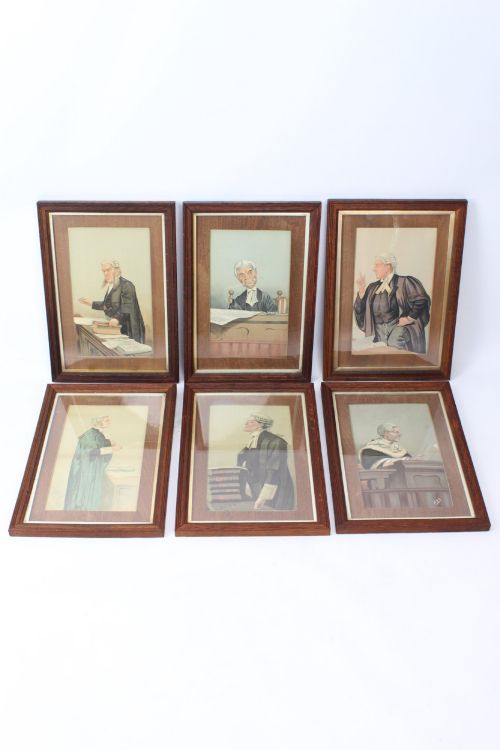
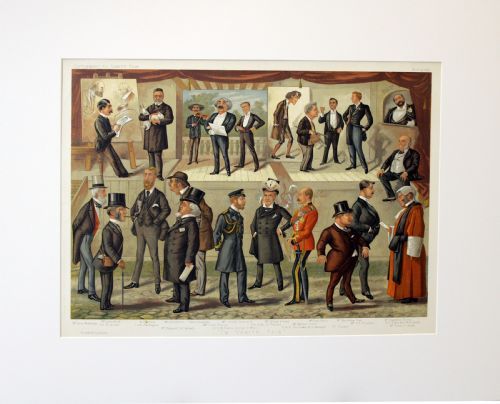
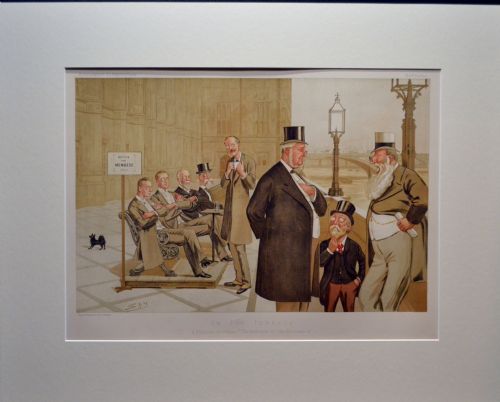
Framed spy prints are satirical portraits originating from the periodical Vanity Fair, capturing notable figures of the nineteenth and twentieth centuries. When searching for framed spy prints, buyers encounter single plates, double-page spreads, and sets depicting politicians, royalty, lawyers, and sportsmen.
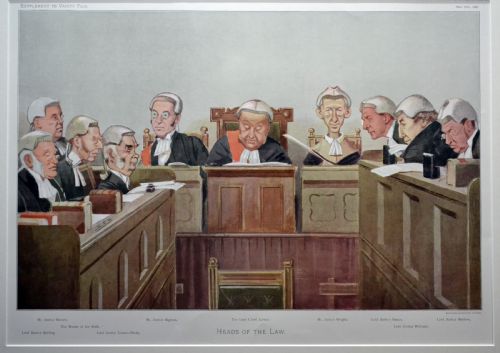
The selections on this page span the Victorian, Edwardian, and later periods up to nineteen-twenty. These pieces include individual caricatures as well as themed collections such as politicians of empire, hunting scenes, and legal figures.
How they were made
These works rely on ink applied to paper or cardboard support, frequently utilising chromolithography to achieve their characteristic colour palette. The resulting plates are protected beneath glass within wood frames, often accompanied by mount board.
Makers produced both single-page issues and unfolded double-page formats to accommodate larger group scenes and expansive caricatures.
The inventory includes themed sets depicting legal figures, politicians of empire, racing scenes, and society royalty.
What varies in quality
Quality rests on the preservation of the original ink and chromolithograph colours against fading from light exposure. Double-page formats and expansive group scenes generally demand closer attention to the centre fold and paper integrity.
The standard of the framing materials, including the condition of the wood and the stability of the glass and mount board, dictates the overall presentation of each piece.
The Framed Spy Prints Glossary
- Chromolithography
- A planographic printing technique used to produce multicoloured images through the application of multiple lithographic stones, one for each colour.
- Spy
- The pseudonym of the caricaturist Leslie Ward, whose contributions to Vanity Fair defined the visual style of these satirical portraits.
- Double page
- An expanded format featuring a central fold, allowing the publication to present larger group scenes and wider compositions.
- Mount board
- Heavy paperboard used to frame and support works on paper, creating space between the print and the glass.
Framed Spy Prints: Frequently Asked Questions
What periods do framed spy prints come from?
The pieces available span from the nineteenth century through the Victorian and Edwardian eras up to nineteen-twenty. This range covers the peak years of Vanity Fair publication and its distinctive caricatures.
Collectors encounter both single sheets and sets originating across these distinct chronological phases.
How were framed spy prints originally published?
These works appeared as plates within the periodical Vanity Fair, issued as single pages or unfolded double pages. Many feature caricatures signed by artists such as Spy.
Publishers distributed them to readers who subsequently had them framed for domestic display.
What themes do these prints feature?
Subjects range widely across Victorian and Edwardian society, capturing politicians, royalty, military figures, and legal professionals. The listings also include thematic groupings focused on hunting, racing, and public parks.
Sets often collect specific categories of public life together under titles like Men of the Day.
How do single and double prints differ?
Single prints present an individual portrait on one standard sheet of paper or cardboard. Double prints utilise an unfolded double-page format to show larger groups or wider scenes.
Both types appear mounted and framed behind glass in wood surrounds.