
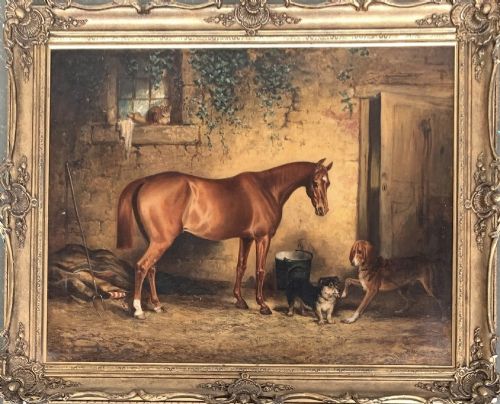
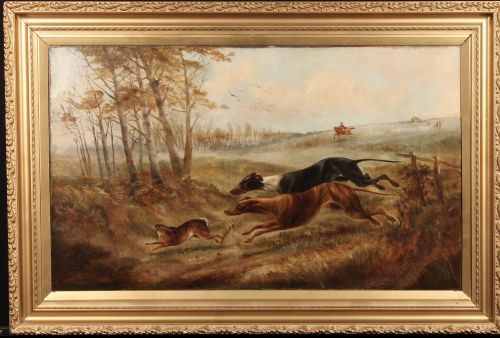
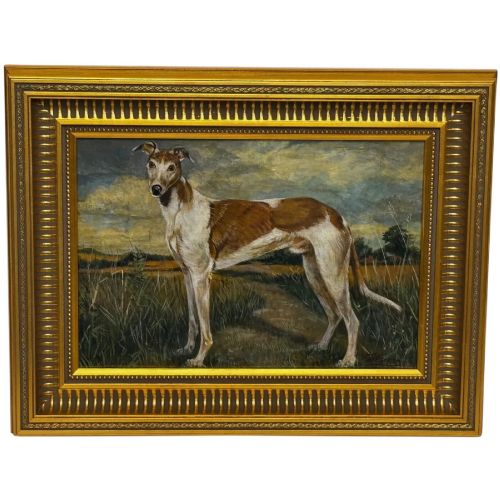
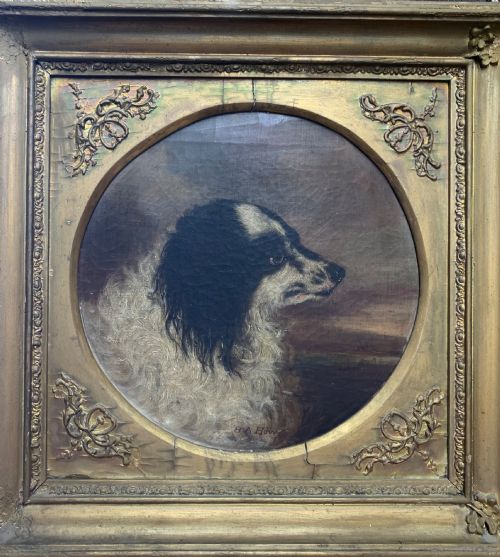

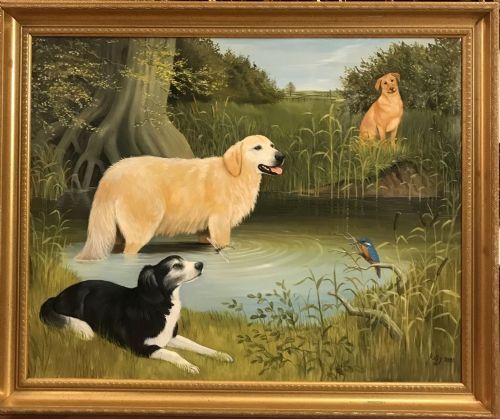


Framed Sporting Dog Painting
A framed sporting dog painting captures the distinct character and spirit of hounds, terriers, and gun dogs within traditional nineteenth-century and twentieth-century canine portraiture.
Framed Sporting Dog Painting
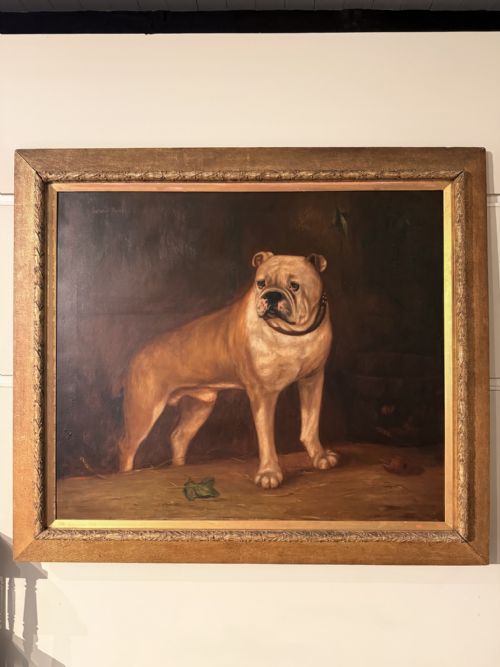
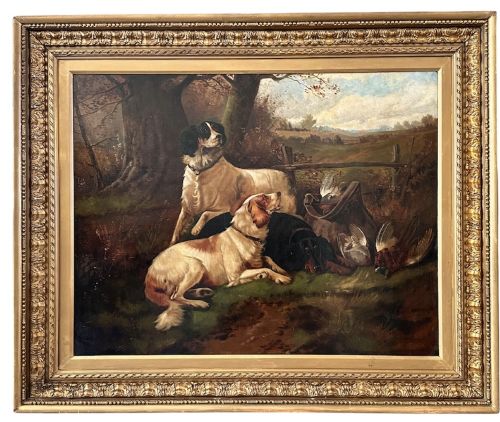
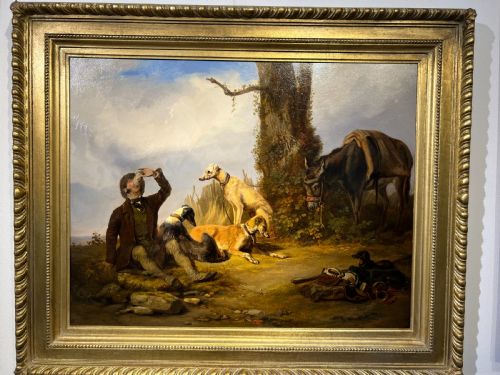
A framed sporting dog painting focuses on individual animals, packs, or hunting scenes set within landscapes. These works emerge predominantly from the nineteenth century, including Victorian and Georgian periods, alongside twentieth-century examples.
The subjects span specific breeds and working types, such as spaniels, setters, pointers, collies, and greyhounds, often recorded as individual portraits or paired compositions.
Most pieces on this page represent traditional British sporting art, reflecting country house tastes and the significant cultural role of working dogs.
How they were made
Artists painted primarily using oil on canvas or oil on board, building rich textures with oil paint to render animal coats and landscape backgrounds.
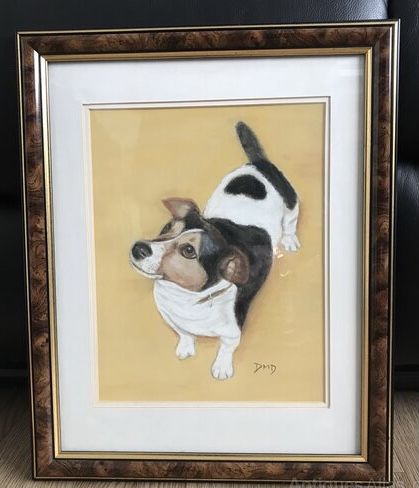
Watercolour and pastel works under glass also appear, particularly in pieces from later decades. Framing utilised wood, often enhanced with gold leaf and gilt finishes.
Techniques range from highly finished academic portraits by named animal painters to naive studies and watercolours produced across the Georgian, Victorian, and later eras.
Listings span the Georgian, Victorian, and mid-twentieth-century periods, utilising oil on canvas, watercolor, and wood framing.
What varies in quality
The distinction between works rests on the artist's anatomical precision, the expressiveness captured in the dog's eye, and the integration of the figure within the landscape.
Compositional balance and the handling of light distinguish skilled animal portraitists from standard decorative works of the period.
The integrity of the original framing, such as period giltwood surrounds, contributes to the overall cohesion of the piece.
Henry Barraud·George Armfield·John Sargent Noble·Sir Edwin Henry Landseer·John Emms·John Frederick Herring Senior·Arthur Wardle·William Barraud·Samuel Raven·George E Sharpe·Colin Graeme Roe·Valentine Thomas Garland·John Trivett Nettleship·Fannie moody·Edwin Frederic Holt·Robert cleminson·John Charles Tunnard·Alfred Duke·Michael Lyne·Henri Schouten
The Framed Sporting Dog Painting Glossary
- Oil on canvas
- A painting medium where pigments suspended in oil are applied to stretched fabric. This was the primary method for substantial portraits from the eighteenth century onwards.
- Giltwood
- Wood that has been covered with a thin layer of gold leaf or gilt. It is commonly found on traditional frames from the Georgian and Victorian periods.
- Sporting art
- A genre of painting dedicated to rural pursuits, horses, and working dogs. It gained significant patronage in British country houses during the nineteenth century.
- Lurcher
- A crossbreed dog traditionally used for hunting and coursing. These animals appear frequently in nineteenth-century sporting watercolours and oils.
- Canvas
- The woven fabric substrate used to support oil paintings. It is typically stretched over a wooden frame before painting begins.
Framed Sporting Dog Painting: Frequently Asked Questions
Are these works original period pieces?
The listings comprise authentic works spanning the Georgian, Victorian, and mid-twentieth-century eras.
Techniques and materials align directly with the production methods of those historical periods.
How should I display them?
These works suit traditional interior settings such as studies, libraries, and living rooms, echoing their original country house contexts.
Pairing them with period giltwood frames enhances their visual presence on the wall.
How do I identify the period?
Dating relies on stylistic markers, framing methods, and signatures or attributions recorded on the canvas or board.
Nineteenth-century examples often demonstrate characteristic Victorian approaches to animal anatomy and landscape backgrounds.