


Framed Silhouette Wall Art
These framed silhouette wall art pieces capture profile likenesses in paper, ink, and glass, offering a direct window into historical domestic life.
Framed Silhouette Wall Art
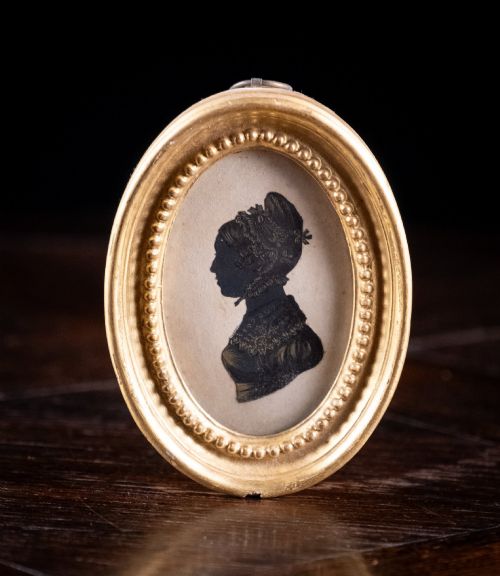
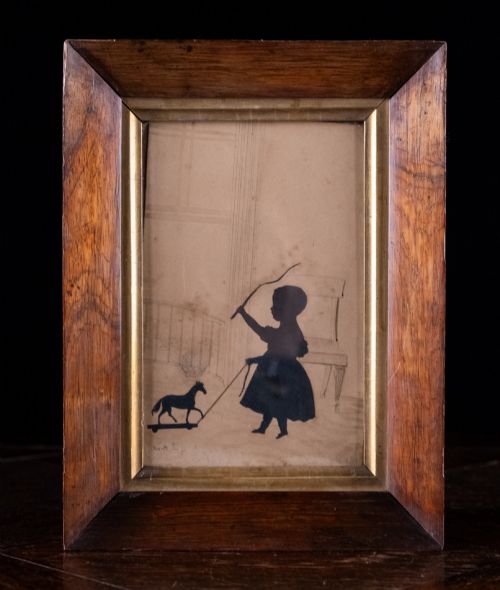
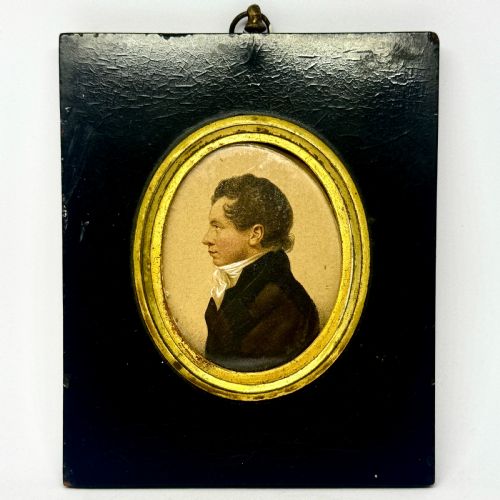
Framed silhouette wall art encompasses profile portraits and cut paper pictures executed across the eighteenth, nineteenth, and twentieth centuries. The selection on this page relies heavily on nineteenth-century pieces, including Regency examples and Victorian works depicting ladies, gentlemen, children, and animals.
The objects take several forms, ranging from single portrait miniatures and cut silhouettes in ebonised wood or rosewood frames to reverse glass paintings and multi-figure scenes. Alongside human portraits, the groupings feature animal studies such as dogs, horses, and jockeys, framed for wall display.
How they were made
Maker techniques combine paper cutting, ink painting, and reverse glass painting, often finished with delicate gold leaf or gilding applied to the profile details. Frames are constructed from wood such as ebonised timber or rosewood, frequently paired with protective glass.
What varies in quality
Quality rests upon the precision of the cutting or brushwork, where deft lines capture recognizable posture and costume detail within a miniature scale. Pieces featuring contemporary gilding or preserved maker signatures display greater artistry.
The condition of the original frame and backing paper influences overall merit, alongside the clarity of the glass protecting the delicate paper surfaces.
Augustin Edouart·Frederick Frith·Alfred Darbyshire·George Atkinson·John Smith of Edinburgh
The Framed Silhouette Wall Art Glossary
- Silhouette
- A portrait representation blocked out in a solid colour, usually black on a pale background, showing a profile view. This technique flourished before the widespread adoption of photography.
- Reverse glass painting
- An artwork created by applying pigment directly to the reverse side of a glass panel so the image is viewed through the front. This method protects the paint layer from environmental damage.
- Ebonised wood
- Timber treated to resemble ebony, typically through staining or finishing a dense hardwood dark black. It provides a sharp, contrasting border for light-coloured portrait backgrounds.
- Portrait miniature
- A small-scale painting or silhouette executed with fine detail. These works were designed for intimate viewing and domestic display.
Framed Silhouette Wall Art: Frequently Asked Questions
How do I date a framed silhouette?
Dating relies heavily on costume details, hair styles, and the framing materials used in the construction. Regency pieces often display specific headwear like turban caps, while Victorian examples show distinct framing proportions.
Paper types and backing materials also offer clues to the period of creation. Examining any inscribed handwriting on the reverse can confirm dates and sitters.
Were silhouettes painted or cut?
Makers employed both methods, sometimes combining paper cutting with ink washes and painted highlights. Cut paper pieces involve snipping black paper to form the profile, while painted versions use dark ink directly onto card or plaster.
Some examples also feature gilded highlights applied over the dark silhouette to accentuate clothing details.
How should I hang these on the wall?
These framed pieces suit small wall spaces or grouped gallery arrangements alongside other nineteenth-century works. Due to their delicate paper and glass construction, placement should avoid direct sunlight to prevent fading.
Stable indoor humidity helps preserve the historic wood frames and paper integrity over time.
What subjects besides portraits appear in these collections?
While human portraits dominate, the selection includes narrative scenes, literary subjects, and animal studies. Equestrian themes, dogs, and sporting jockeys frequently appear within nineteenth-century groupings.
Folk art interpretations and floral cut paper pictures also form part of the broader wall art category.