



Framed Ship Prints
Framed ship prints bring maritime history onto your walls, spanning nineteenth-century watercolours and delicate woodblock prints of traditional vessels.
Framed Ship Prints
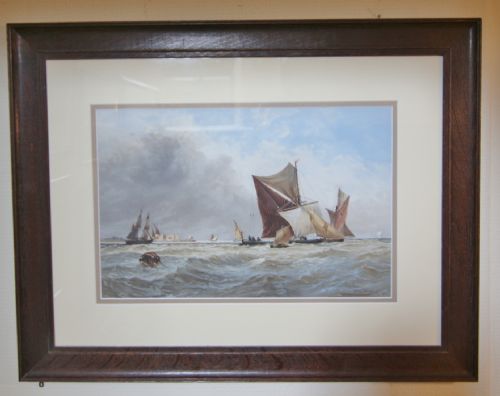
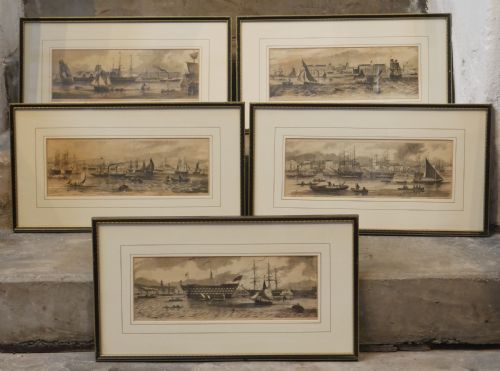
When you search for framed ship prints, you encounter a diverse collection of maritime works on paper spanning the eighteenth, nineteenth, and early twentieth centuries. These pieces encompass hand-coloured engravings, aquatints, lithographs, and Japanese woodblock prints alongside original watercolours and period photographs.
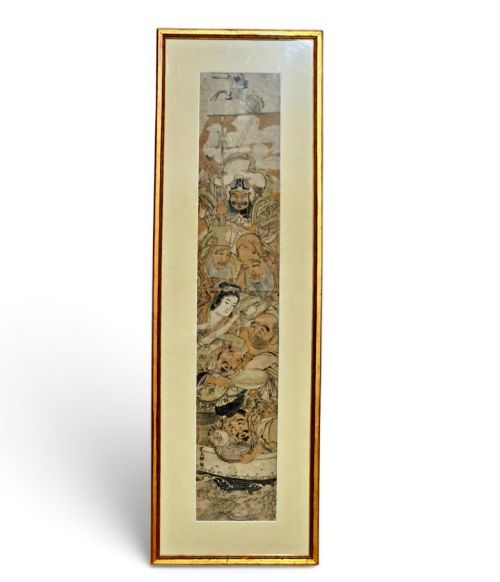
The selection ranges from detailed depictions of naval vessels and steamships to Japanese depictions of the Seven Lucky Gods in the Takarabune. You will find works originating from the Victorian and Edwardian eras, framed in period materials such as oak and giltwood.
Judging Quality and Condition
Quality rests upon the clarity of the printed line, the preservation of the paper, and the originality of the framing. Early works retain sharper impression details in the engraving or woodblock carving.
The authenticity of the period frame contributes significantly to the integrity of the piece. Watercolour paintings and photographs demonstrate varying degrees of tonal retention and pigment stability over time.
Framed Ship Prints Retail Price Guide 2026
Typical asking prices for framed ship prints among the pieces listed under this phrase on Sellingantiques today, from the lower quarter to the upper quarter. They describe what is for sale here now, not the wider market.
Sailors occasionally commissioned oversized photographs of their vessels to ensure their pride remained visible from across the room.
Katsukawa Shunshō·F Corpuz·TB Hardy·W Collard·Frank Wood·WF Mitchell·John Scott Russell
The Framed Ship Prints Glossary
- Aquatint
- An intaglio printmaking technique that produces tonal effects similar to watercolour washes. It was frequently used for topographical and marine prints in the nineteenth century.
- Lithography
- A planographic printing method using a stone or metal plate. It allowed publishers to produce detailed multi-coloured ship prints.
- Giltwood
- Wood carved and coated with gold leaf or gold paint. It provides a reflective, ornate border for traditional marine frames.
- Woodblock print
- A relief printing technique originating in East Asia where an image is carved into a block of wood. The Edo period examples utilise this method for cultural and maritime subjects.
- Engraving
- A method of cutting a design into a hard surface, traditionally metal, to hold ink for printing. It produces fine, crisp lines characteristic of early naval and dockyard scenes.
Framed Ship Prints: Frequently Asked Questions
How do I date an antique ship print?
Examine the paper type, printing technique, and framing style to establish an approximate period. Victorian and Edwardian pieces often display specific publication details or photographic formats.
Compare the vessel type depicted against historical naval records for additional chronological context.
Are these prints original or reproductions?
The inventory comprises original period works, including nineteenth-century engravings, watercolours, and early photographs. Each piece reflects the production methods of its specific era.
Close inspection under magnification reveals the ink application and paper texture characteristic of authentic period printing.
How should I care for framed paper art?
Keep framed pieces away from direct sunlight to prevent fading of watercolours and photographic sepia tones. Maintain stable room temperatures to protect fragile paper and wooden frames.
Ensure the glass is cleaned gently with a dry or minimally damp cloth without spraying liquid directly onto the frame.
What framing styles match these marine works?
Period pieces often feature original oak or giltwood frames that complement the nautical subject matter. These frames reflect the aesthetic standards of the Victorian and Edwardian periods.
Retaining the original frame preserves the historical integrity and presentation of the artwork.