



Framed Sheep Landscape Art
Framed sheep landscape art captures rural life through pastoral scenes rendered in oil and watercolour during the nineteenth and early twentieth centuries.
Framed Sheep Landscape Art
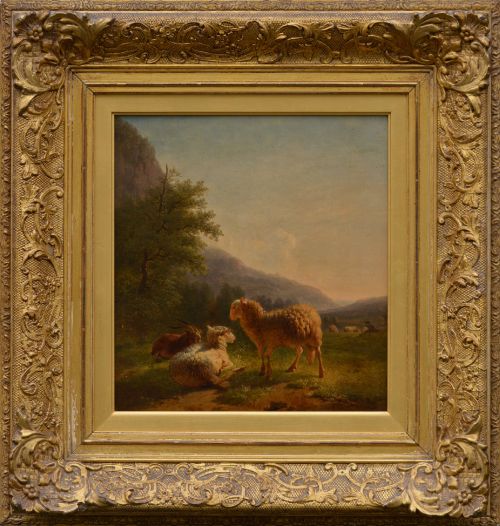
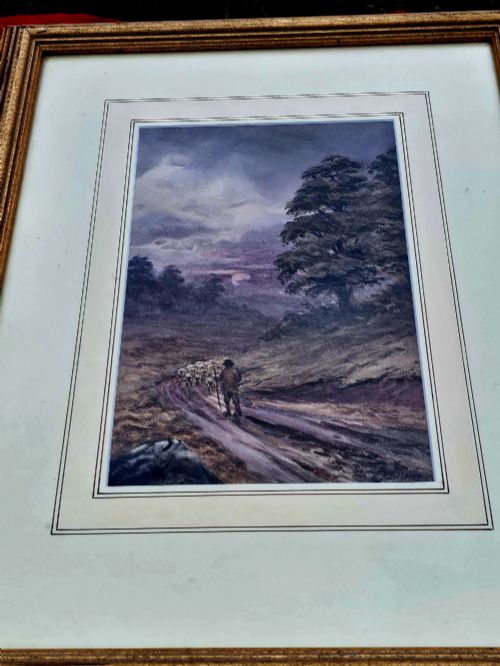
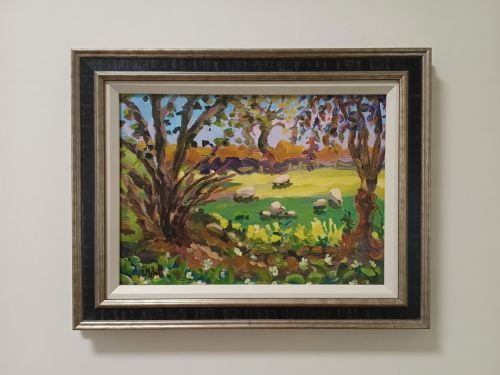
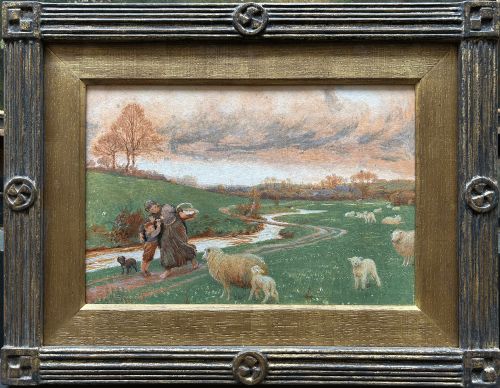
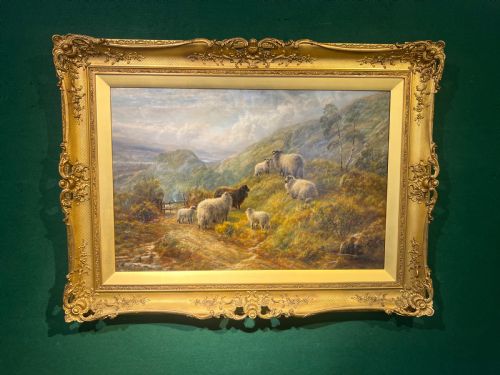
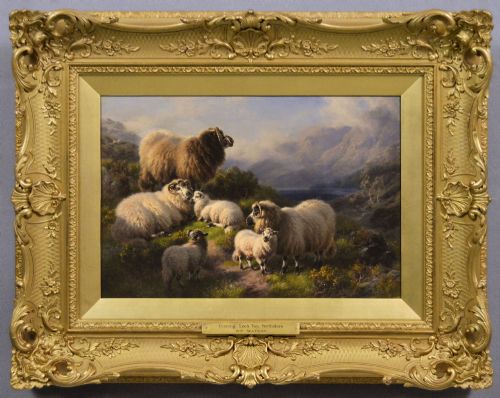
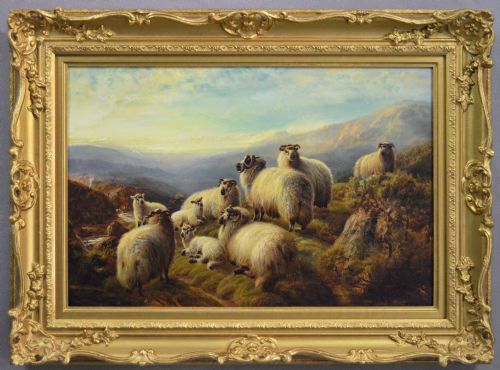
Framed sheep landscape art encompasses pastoral paintings and watercolours depicting flocks grazing in moorlands, valleys, and country lanes. These pieces typically date from the Victorian and Edwardian periods, reflecting a strong artistic interest in rural life and agricultural scenes.
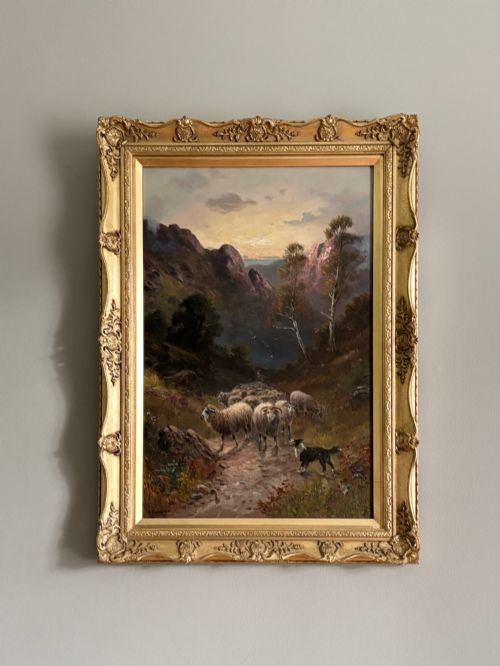
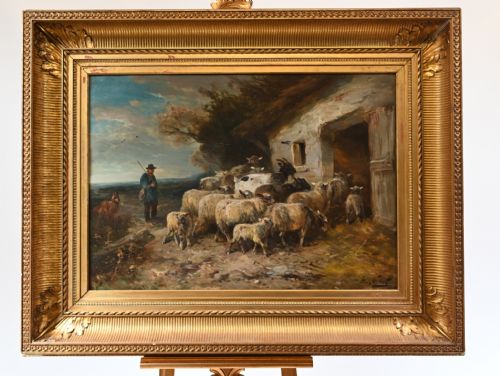
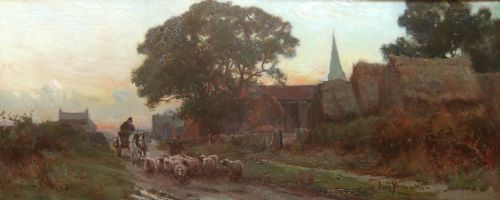
Buyers encounter oil on canvas works alongside paper watercolours, often housed in period giltwood and gesso frames. Common subjects include Highland flocks, shepherds driving animals to market, and tranquil meadows captured by British and European artists.
The aesthetic leans towards nineteenth-century realism and pastoral romanticism, portraying rural scenery with considerable attention to light and atmosphere. Most examples originate from British, Scottish, and continental European traditions active between eighteen-sixty and nineteen-twenty.
Materials and technique
Artists relied primarily on oil paints applied to stretched canvas or watercolour pigments worked on paper. These mediums allowed creators to build rich textures in the fleece of the animals and capture the shifting light of open moorlands and valleys.
Surviving works are typically presented in decorative wooden frames finished with gesso and gilt. These frames often feature moulding details that complement the pastoral subject matter and protect the delicate painted surfaces beneath glass or in open air.
Frame construction relies heavily on wood, gesso, and giltwood components surrounding glass and canvas surfaces.
Evaluating quality and execution
Quality in these pastoral scenes rests upon the artist's ability to render the anatomy and movement of the animals convincingly within a balanced landscape composition. Superior works display confident brushwork in the depiction of wool, weather, and terrain rather than stiff or formulaic repetitions.
The integration of the flock into the wider topography distinguishes finer examples from simpler decorative pieces. The treatment of atmospheric light, whether in an evening glow or an overcast moorland sky, elevates the emotional resonance of the entire composition.
Eugène Verboeckhoven·Thomas Sidney Cooper·Robert Watson·Owen Bowen·Henry Charles Fox
The Framed Sheep Landscape Art Glossary
- Giltwood
- Wood that has been coated with a thin layer of gold leaf. This finish was commonly applied to decorative Victorian and Edwardian picture frames.
- Gesso
- A plaster-like mixture applied to wooden frames before gilding. It provides a smooth surface that can be moulded into intricate decorative patterns.
- Pastoral
- A genre of art depicting rural life and agricultural scenes. These works romanticise the countryside, featuring shepherds, flocks, and open pastures.
- Watercolour
- A painting method where pigment is suspended in a water-based solution and applied to paper. It yields translucent washes of colour well suited to atmospheric landscapes.
Framed Sheep Landscape Art: Frequently Asked Questions
What periods do these sheep paintings come from?
The available works primarily date from the nineteenth century through to the early twentieth century, spanning the Victorian and Edwardian eras. Artists during this period produced numerous pastoral scenes in response to a cultural appreciation for rural and agricultural life.
Specific dates within listings range from eighteen-sixty through the nineteen-twenties, capturing shifts in British and European landscape painting styles over several decades.
How were these artworks originally displayed?
These paintings were framed in wood, often finished with decorative gesso and gilt ornamentation to suit domestic interiors of the Victorian and Edwardian periods. Watercolours were typically placed behind protective glass within fitted frames.
The frames themselves form an integral part of the piece, often featuring period mouldings that reflect the aesthetic tastes of the original artist or owner.
What subjects typically appear alongside the sheep?
Compositions frequently incorporate shepherds, sheepdogs, drovers, and other livestock such as cattle or horses within expansive natural settings. Landscapes range from Scottish highlands and Welsh valleys to southern English lanes and moorlands.
Artists also set their flocks within seasonal contexts, depicting winter snow scenes, spring blossom, or the warm light of rural evening gatherings.
How can I tell watercolour works from oil paintings?
Oil paintings utilise heavy pigments applied to canvas, creating textured surfaces that do not require protective glass covers. Watercolours employ translucent washes on paper, which necessitates framing under glass to prevent environmental damage.
Examining the surface texture under adequate light reveals the woven fabric of canvas versus the flat, absorbent quality of paper.