

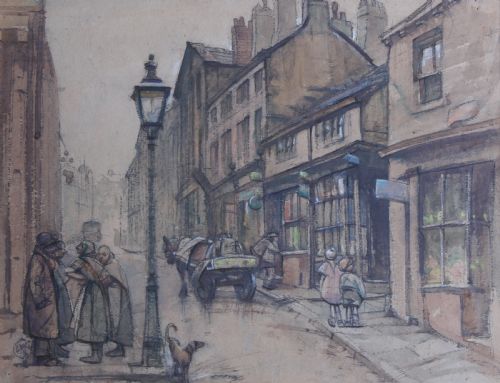


Framed Sepia Watercolour Picture
A framed sepia watercolour picture offers subtle tonal depth, bringing muted monochromatic washes and delicate ink linework into focus.
Framed Sepia Watercolour Picture
A framed sepia watercolour picture captures historical scenes across paper surfaces using monochrome and earth-toned pigments. You encounter various subjects including architectural studies, coastal views, and pastoral landscapes.
The selection spans from the Georgian era through the Victorian period and into the mid-twentieth century. Works frequently incorporate ink and gouache alongside watercolour washes, preserved behind protective glass.
Framing materials range from simple timber mouldings to burr wood frames, occasionally supplemented by gold leaf accents. These pieces originate from distinct periods such as the nineteenth century, Edwardian era, and nineteen-forties.
How they were made
Artists applied water-soluble pigments and ink directly onto paper sheets to build up tone and perspective. Monochrome washes provided shadow and depth, often defined by precise pencil or pen underdrawing.
Finished works were secured within wooden frames beneath glass to protect the delicate paper surface from atmospheric moisture and handling.
Framed Sepia Watercolour Picture Retail Price Guide 2026
Typical asking prices for framed sepia watercolour picture among the pieces listed under this phrase on Sellingantiques today, from the lower quarter to the upper quarter. They describe what is for sale here now, not the wider market.
Listings feature works executed on paper using watercolour, ink, gouache, and pencil across the nineteenth and early twentieth centuries.
What varies in quality
The refinement of brushwork and control over tonal gradients distinguish accomplished examples from simpler student or amateur efforts. Masterly handling of sepia washes creates atmospheric perspective without relying on bright colour.
The preservation of the paper support and the clarity of the underlying ink lines determine the visual impact of the painting. Original period frames, such as burr wood or moulded timber with gold leaf, enhance the integrity of the piece.
George Arthur Fripp·Hercules Brabazon Brabazon·Tom Dudley·Fred Lawson·George Cattermole·Thomas Lound
The Framed Sepia Watercolour Picture Glossary
- Sepia
- A brownish pigment originally derived from the ink sac of the cuttlefish, widely used for monochromatic drawing and painting. It yields warm, durable tones ranging from dark brown to reddish-brown.
- Gouache
- An opaque water-based paint consisting of pigment, water, and a binding agent such as gum arabic, often mixed with watercolour to create solid highlights. It provides heavier coverage than traditional transparent watercolour.
- Wash
- A thin, fluid layer of watercolour or ink spread evenly across paper to create smooth backgrounds or shadow areas. Artists use washes to establish the primary tonal values of a composition.
- Burr wood
- Timber harvested from tree growths containing distorted grain patterns, highly prized for decorative veneer on picture frames. It introduces complex, swirling figures to the wood surface.
Framed Sepia Watercolour Picture: Frequently Asked Questions
How do I date a watercolour picture?
Dating relies upon stylistic clues, paper characteristics, and framing methods typical of specific eras like the Georgian or Victorian periods. Inscribed dates, artist signatures, or archival labels on the reverse also help establish the timeline.
Changes in pigment composition and mount styles provide additional physical evidence for narrowing down the decade of creation.
How should I hang these pictures?
Hang these artworks away from direct sunlight to prevent the sepia pigments and paper supports from fading over time. Maintaining a stable indoor humidity protects both the antique paper and the wooden frame.
Use picture wire and appropriate wall fixings suited to the weight of the timber frame and glass.
Are all these works signed?
Many pieces bear artist signatures, initials, or contemporary inscriptions on the front or reverse of the paper. Other works remain entirely unsigned, representing the output of regional English schools or anonymous practitioners.
Attribution for unsigned works often rests on stylistic comparison, subject matter, and historical provenance.
What subjects are most common?
Landscape and architectural subjects dominate, ranging from Continental street scenes and canals to British coastal views and woodland ruins. Maritime scenes featuring moored sailing yachts and rural pastoral views also appear frequently.
These subjects reflect the observational interests of artists working throughout the nineteenth and early twentieth centuries.