





Framed Seaside Watercolour
These framed seaside watercolour paintings capture coastal harbours and shores on paper, offering buyers a window into maritime history.
Framed Seaside Watercolour
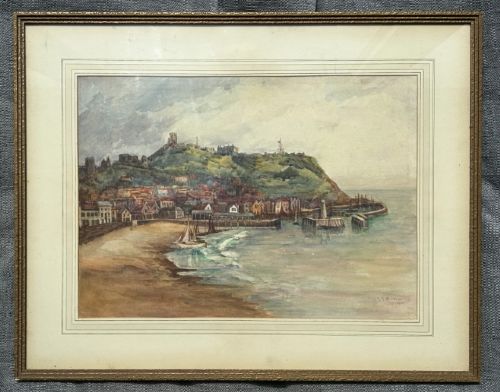
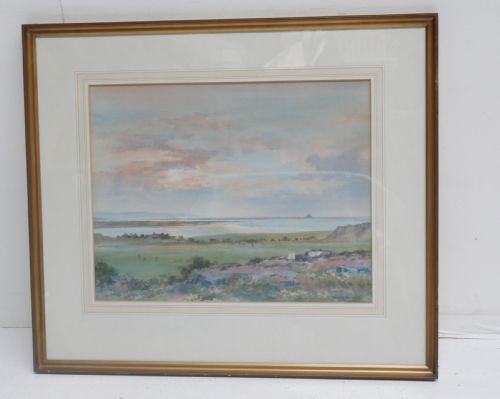
A framed seaside watercolour presents maritime scenes, coastal harbours, and shorelines rendered through pigment on paper. These works capture specific geographies ranging from Cornish fishing ports to Yorkshire bays and Scottish coasts.
The selections span distinct historical periods including the Victorian era, Edwardian times, and mid-century British movements. Buyers encounter framed pieces embodying traditional English landscapes, Scottish school compositions, and modern British coastal views.
Most examples portray familiar coastal activities and locations, such as Dorset cliffs, Normandy houses by the sea, and figures along the shore. Each painting preserves a particular stretch of coastline through the specific lens of its period style.
How they were made
Artists applied watercolour paint onto paper supports, often building translucent washes to capture light and atmosphere over coastal waters. Pigments interact directly with the paper surface to define sea, sky, and shore without heavy impasto.
Finished works received protective glazing behind glass and were secured within wood frames, sometimes enhanced with gilt wood or gold leaf accents. This traditional framing protects the delicate paper medium from atmospheric moisture and handling.
Some coastal scenes still trap tiny grains of sand behind the glass, left behind by Victorian artists working out in the sea air.
What varies in quality
Quality rests on the artist's handling of light, atmospheric depth, and the precision of topographical detail within the coastal setting. Superior examples demonstrate confident brushwork that brings movement to water and sky rather than relying on stiff convention.
The preservation of the paper support and the vibrancy of the original watercolour pigments determine the overall standard of surviving pieces. Original period framing, particularly gold leaf or gilt wood surrounds, adds significantly to the integrity of the piece.
William Banks Fortescue·F A Roylance·Lionel Horsnell·John Bedloe Goddard·Sir William Russell Flint·Frank Wood·Alfred Robert Quinton·James George Bingley·John Abernethy Lynas-Gray·James Kinnear·Yves Brayer·Henry Valter
The Framed Seaside Watercolour Glossary
- Watercolour paint
- A water-based medium composed of colour pigments suspended in a water-soluble binder. It is applied to paper in thin, translucent washes to create luminous effects.
- Gilt wood
- Wood that has been coated with a thin layer of gold leaf or metallic gilt finish. It frequently surrounds Victorian and Edwardian picture frames to provide a decorative border.
- Victorian Fine Art
- A classification denoting works produced during the reign of Queen Victoria that adhere to academic standards. These paintings often display meticulous attention to detail and traditional subject matter.
- Scottish School
- A grouping of artists working in Scotland whose output shares regional subjects and stylistic tendencies. Their landscapes and coastal views reflect northern light and distinct topographical traditions.
Framed Seaside Watercolour: Frequently Asked Questions
How should I hang a seaside watercolour?
Keep framed watercolours away from direct sunlight to prevent the pigments from fading over time. Direct exposure to strong daylight damages the paper and washes out delicate tones.
Position the painting at eye level on an interior wall where room temperature remains relatively stable. Avoid damp spaces like unheated coastal cottages where moisture can affect the paper and frame.
How do I identify a Victorian watercolour?
Look for paper supports, muted earth palettes, and traditional subject matter typical of nineteenth-century aesthetics. Signatures and dates, when present, often confirm the period of execution.
Check the reverse of the frame for old framer labels, inscriptions, or exhibition stamps that provide historical context. Original gilt wood frames also indicate the likely period of the artwork.
What subjects appear in these paintings?
Common subjects include bustling fishing harbours, sandy bays, dramatic cliffs, and quiet coastal cottages. Artists frequently recorded specific locations such as St Ives, Scarborough, and the Jurassic Coast.
Scenes often incorporate maritime life, including sailing vessels, fishermen with children, and figures walking along the shore. Each work documents the topography and human activity of its specific coastal setting.
Are these watercolours original artworks?
The selections consist of original paintings created by hand on paper rather than modern mass-produced prints. Each piece represents a unique application of watercolour pigment by the individual artist.
Individual brushstrokes and pigment variations distinguish these hand-painted works from mechanical reproductions. Signatures and inscriptions further attest to their status as original primary source art.