

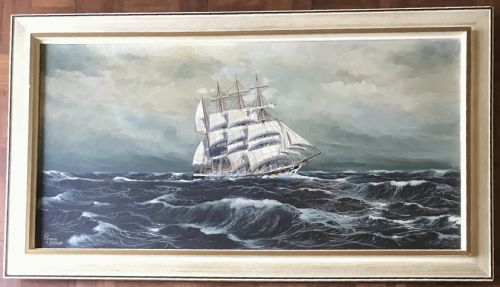
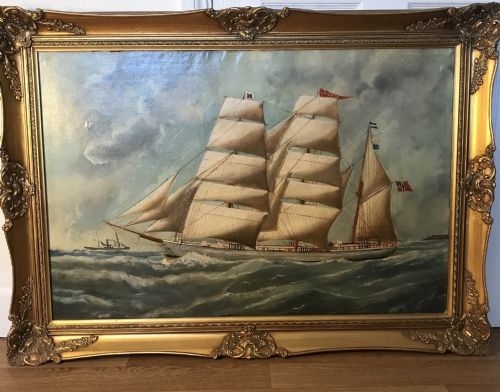
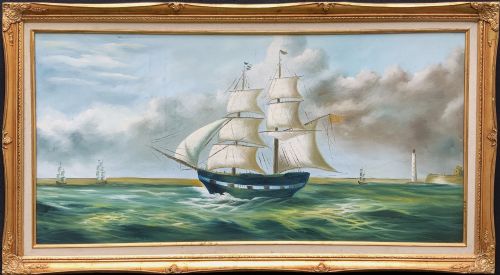
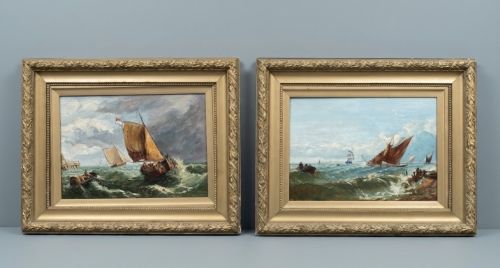


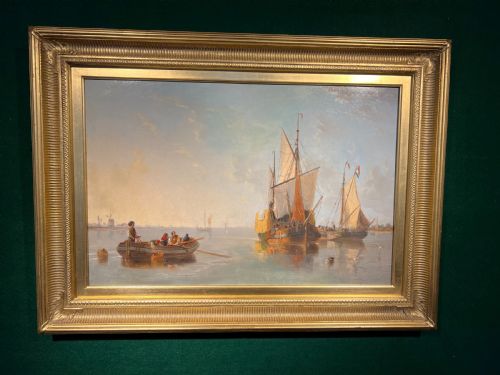

Framed Sailing Ship
A framed sailing ship captures the historic reach of maritime trade and naval warfare through oil on canvas, watercolour, and dimensional dioramas.
Framed Sailing Ship
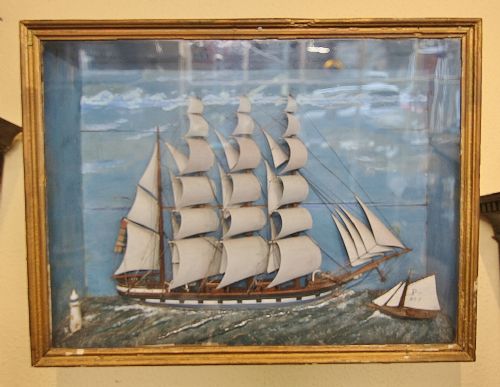
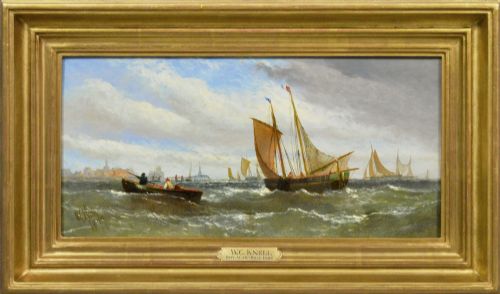
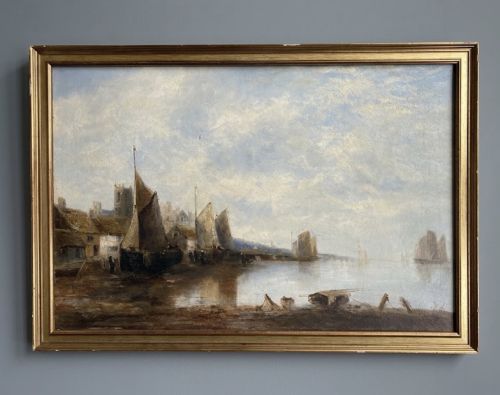
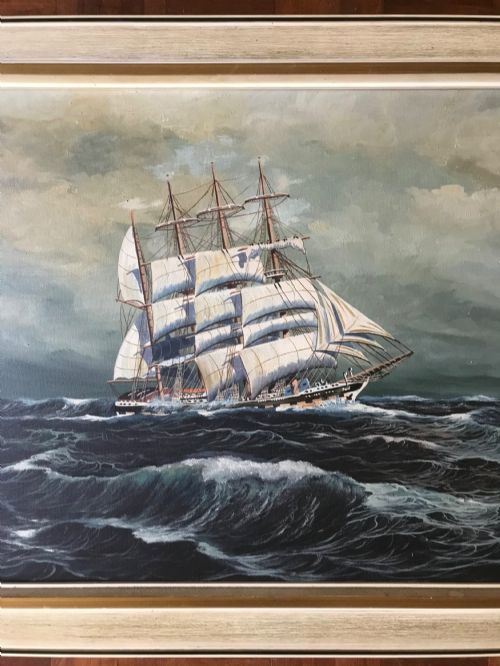
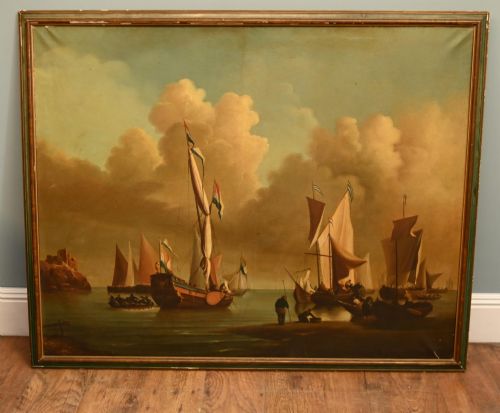
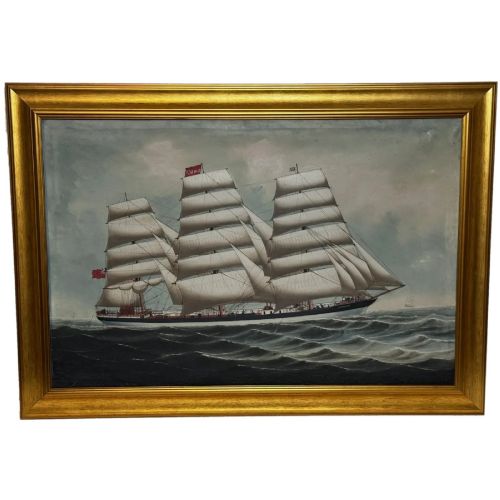
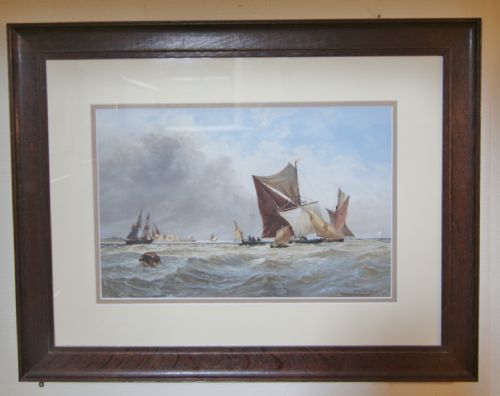
A framed sailing ship takes the form of oil paintings on canvas, panel, or board, alongside watercolours and shadow box dioramas. These works span from the eighteenth century through the nineteenth century and into the mid-twentieth century.
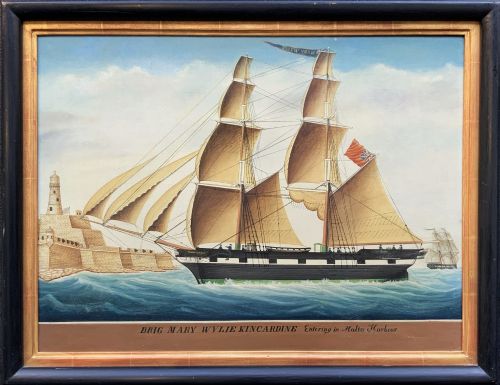
The most frequent encounter on this page is the nineteenth-century oil painting or diorama depicting named vessels, naval engagements, or coastal scenes. Works range from British and Dutch school canvases to folk art interpretations of specific barques and schooners.
Materials and construction
Paintings utilise oil on canvas, panel, board, or card, alongside watercolour on paper, framed behind glass. Dioramas incorporate handmade wooden boat models housed within glazed shadow boxes.
Framing materials consist primarily of wood, supporting both fine art canvases and three-dimensional maritime folk art assemblies.
Framed Sailing Ship Retail Price Guide 2026
Typical asking prices for framed sailing ship among the pieces listed under this phrase on Sellingantiques today, from the lower quarter to the upper quarter. They describe what is for sale here now, not the wider market.
Several shadow boxes contain tiny wooden sailors who have been standing at attention on deck since the reign of Victoria.
Distinctions in quality
Quality rests on the precision of rigging and vessel architecture, separating generalized seascapes from accurate portraits of specific ships like the Brig Mary Wylie or the Cutty Sark. Contemporary documentation of the subject matter elevates a piece.
The handling of light, water movement, and atmospheric conditions by named artists or established schools distinguishes works of deeper artistic merit from standard decorative pieces.
James Hardy·Hans Harlander·Reginald Arthur Borstel·Bernard Gribble·John Wilson Carmichael·Lai Fong·Abraham Hulk I·Charles William Adderton·Ernest Dade·Daniel Sherrin·George Shaw
The Framed Sailing Ship Glossary
- Diorama
- A three-dimensional scene enclosed in a box, often featuring a handmade model ship set against a painted background behind glass.
- Barque
- A sailing vessel with three or more masts having the fore- and mainmasts square-rigged and the mizzenmast fore-and-aft rigged.
- School
- A group of artists working in a similar style or region during a specific period, such as the Dutch School.
- Panel
- A rigid flat surface, typically wood, used as a support for oil paintings instead of canvas.
Framed Sailing Ship: Frequently Asked Questions
How do I identify the age of a framed sailing ship?
Dating relies on the materials of the stretcher and frame, the style of the canvas preparation, and any inscriptions naming specific historical vessels or events.
Period costumes, naval uniforms, and the riggings of the depicted ships also provide secure chronological markers.
What is the difference between an oil painting and a diorama?
An oil painting applies pigments to a two-dimensional surface like canvas or wood panel, rendering light and water through brushwork.
A diorama constructs a physical three-dimensional model of a vessel within a shadow box, incorporating carved wood and rigging.
Where should I hang a maritime painting?
These works require placement away from direct sunlight and excessive humidity to protect the canvas, paper, and wooden frames.
Wall spaces with stable ambient temperatures allow the details of the rigging and sea states to remain clear.
How do I care for antique maritime watercolours?
Watercolour paintings benefit from mounting behind UV-protective glass to prevent fading of the pigments on paper.
Keeping them in rooms with controlled humidity prevents moisture damage to both the paper and the wooden frame.