
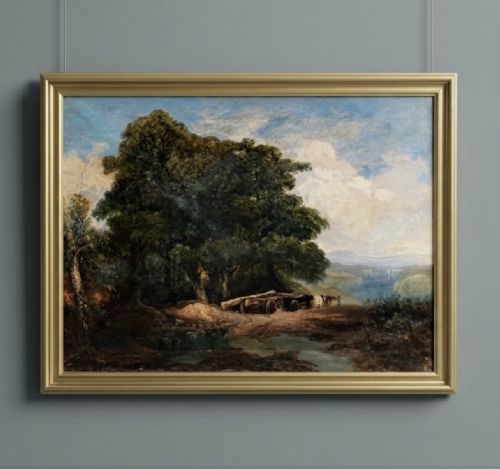
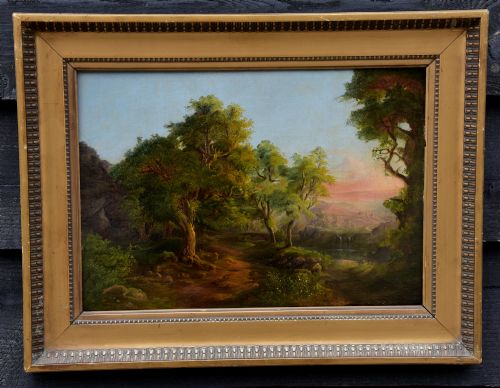
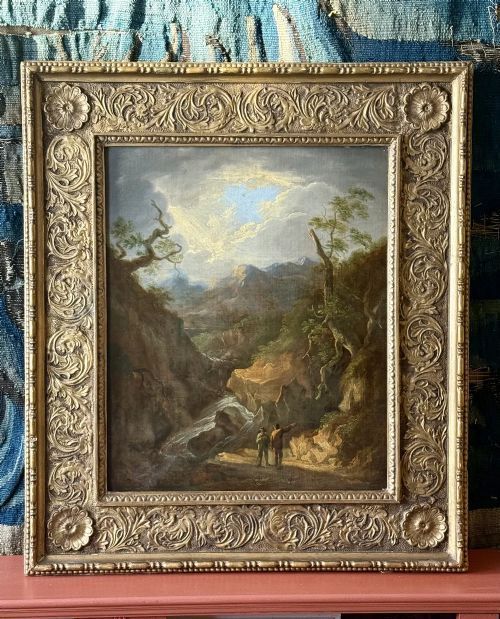
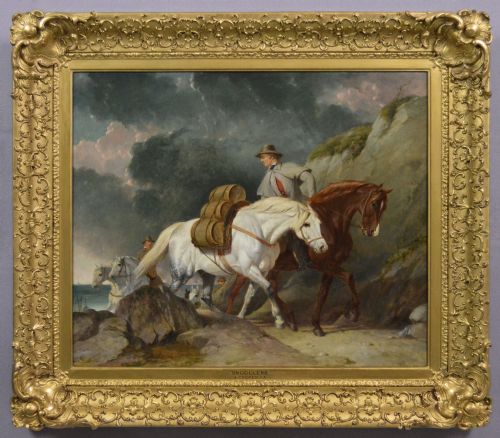
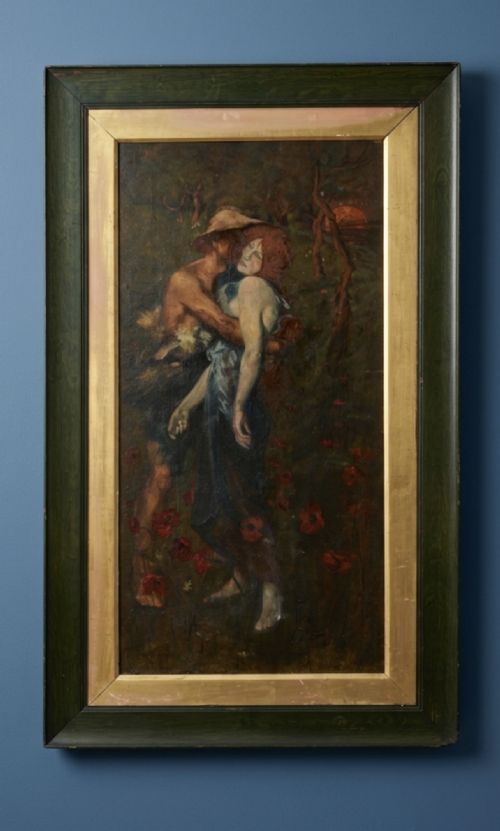
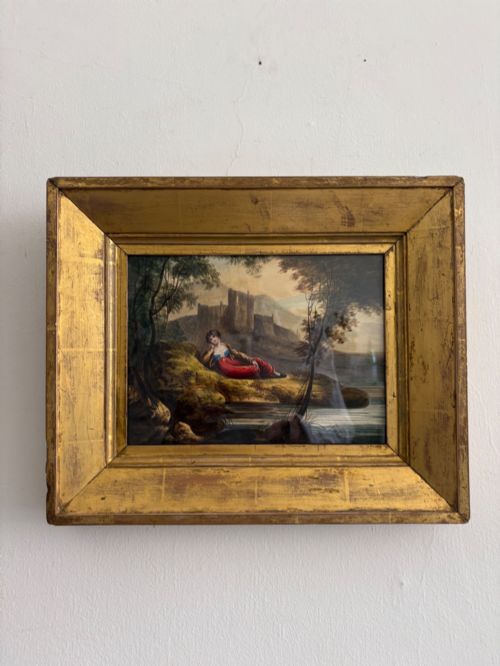
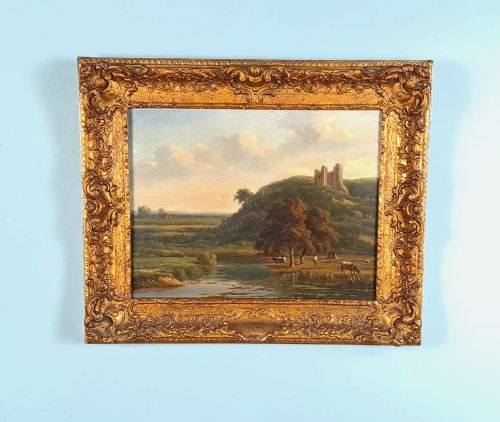
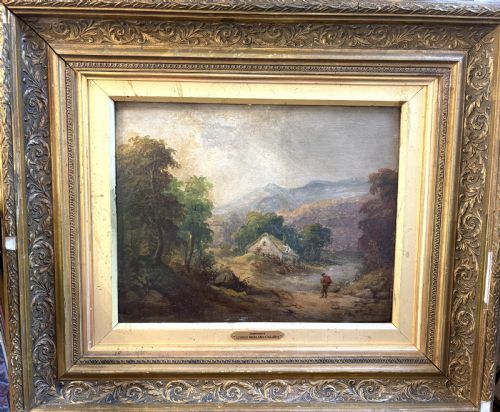
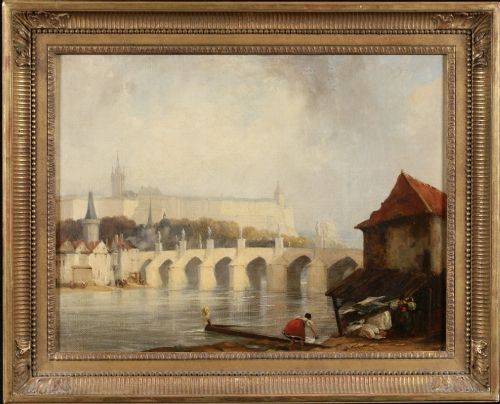


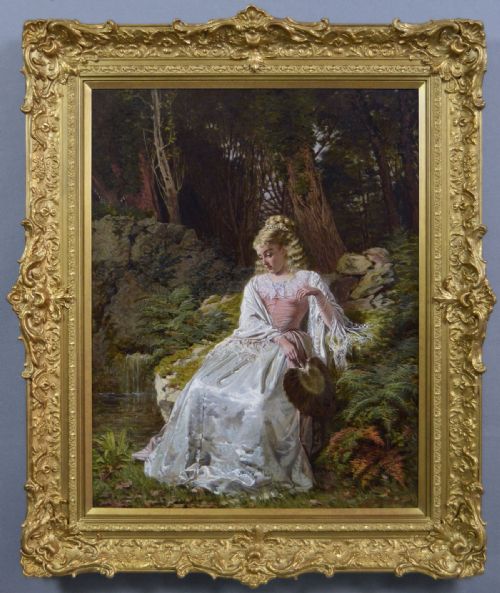


Framed Romantic Landscape Painting
These framed romantic landscape painting works capture pastoral scenes, coastal views and dramatic mountains from the Georgian, Victorian and nineteenth-century periods.
Framed Romantic Landscape Painting
A framed romantic landscape painting draws the eye across sweeping vistas, mountainous terrain, quiet rivers and dramatic coastal paths. These works stem predominantly from the nineteenth century, encompassing Georgian, Regency and Victorian interpretations of pastoral and wild scenery.
Buyers frequently encounter oil on canvas, oil on board and watercolour paintings housed in their original surrounds. Subjects range from tranquil woodland pools and Dutch seascapes to towering alpine peaks and ancient ruins.
Works appear from named British, French, German, Dutch and Austrian artists alongside regional continental schools. Pieces frequently pair sweeping natural horizons with intimate figures, animals or rustic architecture.
Materials and Construction
Painters utilised oil on canvas, oil on board, and delicate watercolours on paper to render atmospheric skies and textured terrain. Canvas supports provide scale for expansive mountain views, whilst boards offer rigidity for smaller coastal and woodland studies.
Frames rely upon wood, gesso and gilt finishes to complement the depth of the canvas within. Ornate gilding and moulded wooden profiles protect the pigment while enhancing the visual warmth of the pastoral subject matter.
Listings feature works from British, French, German, Dutch and Austrian schools spanning the eighteenth to twentieth centuries.
Quality Variations
Quality rests upon the subtlety of light handling, the precision of brushwork in distant horizons, and the preservation of the original surface. Superior examples display confident command over atmospheric perspective, rendering mist, water and shadow with striking depth.
The integrity and period appropriateness of the surrounding frame heavily influence the overall character of the piece. Hand-carved or deeply moulded giltwood frames that match the age of the canvas elevate the presentation significantly.
Richard Sebastian Bond·Benjamin Barker of Bath·Abraham Cooper RA·T C Hofland·George Morland·Carl Johan Fahlcrantz·Thomas Edward Roberts·Eugene Joseph Verboeckhoven·Abraham Hulk Snr·James de Rijk·Hendricus Joseph Dillens·Alphonse Robert·James Bell Anderson·Samuel Palmer·Andreas Schelfhout·James Ward RA·Ludwig Hermann
The Framed Romantic Landscape Painting Glossary
- Oil on Canvas
- Pigment mixed with drying oil applied to stretched fabric. This medium allows for rich blending of tone and texture.
- Giltwood
- Timber coated with a thin layer of gold leaf or metallic powder. It provides a luminous border to nineteenth-century works.
- Gesso
- A plaster-like mixture applied to wooden frames before gilding. It creates a smooth base for intricate moulded decoration.
- Watercolour Painting
- Pigments suspended in a water-soluble binder applied to paper. This technique yields translucent washes of colour.
- Provincial School
- Art produced by regional practitioners outside major metropolitan centres. These works often capture local topography with distinct character.
Framed Romantic Landscape Painting: Frequently Asked Questions
How do I date a framed landscape painting?
Examine the stretcher bars, canvas weave and framing style for period markers. Handwritten inscriptions on the reverse often provide specific dates or artist attributions.
Compare the clothing of any figures or the architectural details within the scene against known historical periods. Stylistic cues such as Romanticism or Regency aesthetics also narrow down the creation era.
Are these paintings in original frames?
Many nineteenth-century works retain their period giltwood or gesso frames, showing appropriate signs of age. Original surrounds complement the proportions and aesthetic of the canvas.
Replacement frames do occur, particularly when earlier pieces required conservation or updated presentation. Inspect the fit between the painting and the rebate to gauge originality.
How should I hang and light an oil painting?
Position the painting away from direct sunlight and fluctuating heat sources to protect the canvas and pigments. Stable indoor humidity prevents warping in both the wooden stretcher and the frame.
Utilise dedicated picture lights with low-heat LED bulbs to illuminate the canvas evenly. Hang the work securely at eye level using appropriate wall fixings suited to the weight of the frame.
What is the difference between oil and watercolour?
Oil paintings utilise pigment bound in oil on canvas or board, offering rich textures and deep colour layering. Watercolours employ water-soluble media on paper, producing lighter, translucent effects.
Oils are typically framed behind glass less frequently than watercolours, which require glazing for protection against moisture and dust. Both formats were widely practiced during the romantic landscape tradition.