


Framed River Valley Art
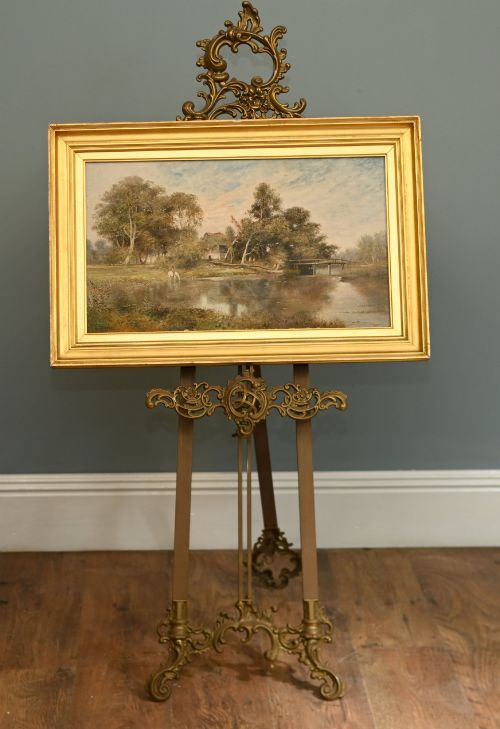
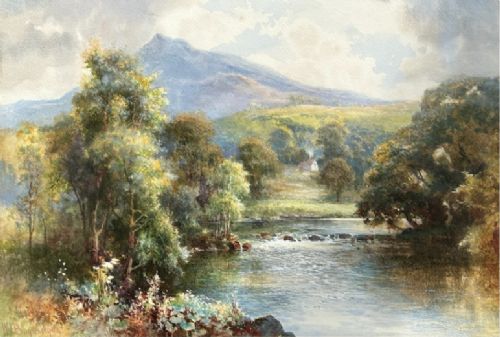
Framed river valley art captures the quiet topography of rural waterways through nineteenth and early twentieth century oils and watercolours.
Framed River Valley Art
Framed river valley art encompasses traditional paintings and prints depicting rural waterways, Welsh landscapes, and Scottish glens. Buyers seeking framed river valley art encounter works from the Georgian period through to the nineteen-thirties.
The material record on this page leans heavily towards oil paintings on canvas or panel alongside traditional watercolours on paper. Many compositions feature specific locations such as the River Llugwy, North Wales, or the River Loire in France.
Stylistically, these pieces range from Victorian naturalism and British impressionism to Scottish school landscapes. Most examples arrive housed in period wooden frames, frequently finished in gilt.
How they were made
Painters utilised oil paint or watercolour applied to canvas, wood panels, or heavy paper sheets. Artists often worked plein air to capture natural light along riverbanks before studio mounting.
The framing process involved traditional timber mouldings, frequently highlighted with gilt wood finishes to complement the artwork. Prints from the Georgian era relied on hand-coloured aquatint copperplate engraving techniques.
Listings feature works from the Georgian, Victorian, and Edwardian periods, extending into the nineteen-thirties.
What varies in quality
Quality rests upon the artist's ability to render natural topography and atmospheric light convincingly across the river valley. Documented signatures and attributed hands distinguish regional works from anonymous topographical output.
The preservation of the original paper or canvas surface dictates visual strength, alongside the condition of the accompanying gilt wood frame. Finer examples retain their initial colour saturation without excessive fading or pigment degradation.
William Joseph Boyes·William George Tennick·Clarence Henry Roe·William Mellor·Joseph Farrington RA·Joseph Constantine Stadler·George Melvin Rennie·Reginald Grange Brundrit·Edmond Defonte·Henry Sykes·Cornelius Pearson·Charles Branwhite
The Framed River Valley Art Glossary
- Aquatint
- An intaglio printmaking technique that produces tonal effects resembling watercolour washes. It was often hand-coloured after printing during the Georgian period.
- Plein air
- The practice of painting outdoors to directly capture the natural effects of light and atmosphere upon a river landscape. This approach defined much of the impressionist work seen here.
- Gilt wood
- Timber frames coated in a thin layer of gold leaf or metallic gilt paint. These frames enhance the visual depth of nineteenth-century oil paintings.
- Watercolour
- A painting method where fine pigments are suspended in a water-based solution on paper. It forms the medium for several Welsh and Thameside river scenes on this page.
Framed River Valley Art: Frequently Asked Questions
Are these river paintings original artworks?
The listings comprise original oil paintings and period watercolours created by named and regional artists. Each piece reflects the specific handling of the landscape by the painter.
Prints are explicitly identified in their titles, such as the hand-coloured aquatint engravings from the Georgian era.
What periods do these landscapes cover?
The selection spans from the Georgian era through Victorian naturalism and Edwardian works into the nineteen-thirties. Pieces often reflect the shifting stylistic approaches of the British and French impressionist schools.
Dates are determined by the recorded periods of the artists and the material evidence of the framing and canvas support.
How should I hang a framed watercolour?
Watercolours on paper require placement away from direct sunlight to prevent the fading of delicate pigments. Stable indoor humidity levels protect both the paper support and the historical wooden frame.
Glazed watercolours benefit from secure wall fixings that support the weight of the timber framing.
Where do these valley scenes typically depict?
Geographical subjects focus heavily on British waterways including Welsh river valleys, Scottish glens, and Thameside villages. Occasional continental examples record French river locations such as the Loire.
Artists frequently inscribed titles or locations directly onto the work or the reverse of the frame.