




Framed Pencil Landscape
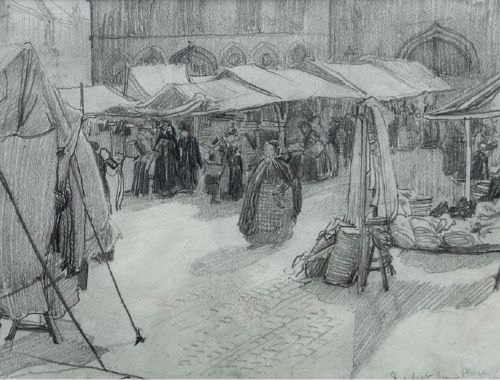
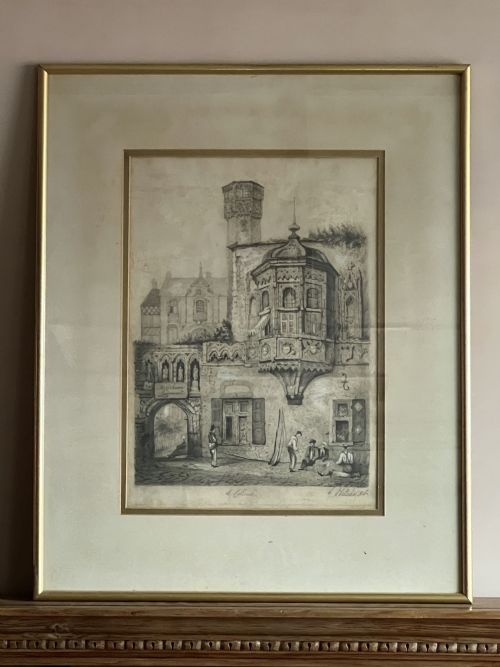
A framed pencil landscape offers a direct window into topographical draughtsmanship, capturing natural and architectural views through delicate graphite lines.
Framed Pencil Landscape
A framed pencil landscape presents original drawings and sketches focusing on scenery, buildings, and towns executed in graphite and pencil.
Buyers encountering this search phrase find works spanning the 19th Century, Edwardian era, and through to 1930 and 1940.
These framed pencil landscape pieces include architectural studies, townscapes, and country views originating from British and European hands.
How they were made
Artists drew upon paper using pencil and graphite, sometimes combining wash, ink, or watercolour to build tonal depth in the landscape.
Finished works received protection beneath glass and were secured within wood or gilt wood frames suitable for wall display.
Listings span the 19th Century, Edwardian period, and the 1920s to 1940s, utilising paper, pencil, ink, and watercolour.
What varies in quality
The precision of the draughtsmanship and the artist's ability to render light and perspective across architectural or natural elements distinguish finer works.
The integrity of the original paper, combined with the suitability and condition of the period wood or gilt framing, shapes the overall standard.
Henry Percy Huggill·J W Hogley·William Russell Flint·Sir Francis Leggatt Chantrey·Fred Lawson·Irene Lagut
The Framed Pencil Landscape Glossary
- Graphite
- A form of carbon used in pencils to create monochrome drawings. It provides varying degrees of hardness and tonal density.
- Wash
- A thin, transparent layer of diluted watercolour or ink applied to paper. It creates atmospheric skies and shadows behind pencil lines.
- Gilt Wood
- Wood treated with gold leaf or metallic paint for framing. This finish was commonly applied to antique artwork displays.
- Topographical
- Representing specific real-world places and buildings accurately. Many early drawings document actual towns and structures.
Framed Pencil Landscape: Frequently Asked Questions
How do I date a pencil drawing?
Dating relies on stylistic evidence, artist signatures, framing materials, and accompanying gallery labels or stamps.
Paper stocks and historical subject matter also offer chronological markers for these artworks.
Are these drawings original works?
The selection includes original hand-drawn graphite and pencil studies created directly by the artist.
Each piece represents a unique historical drawing rather than a modern reproduction.
How should I display framed drawings?
Keep framed paper works away from direct sunlight to prevent fading of the graphite, ink, and watercolour washes.
Stable indoor humidity helps preserve both the antique paper and the wooden frames.
What subjects appear in these landscapes?
Artists recorded country scenes, woodland views, European towns, and specific architectural landmarks.
These varied compositions capture both British locations and continental buildings.