
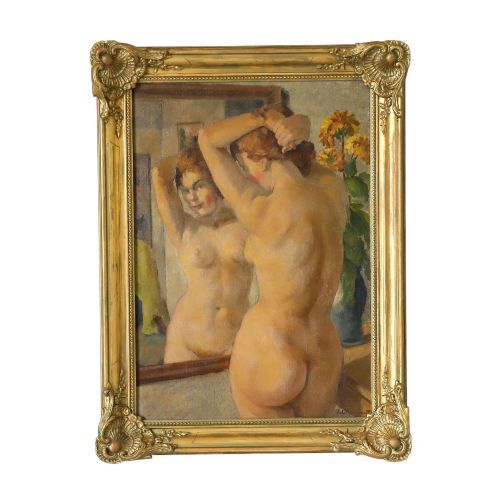
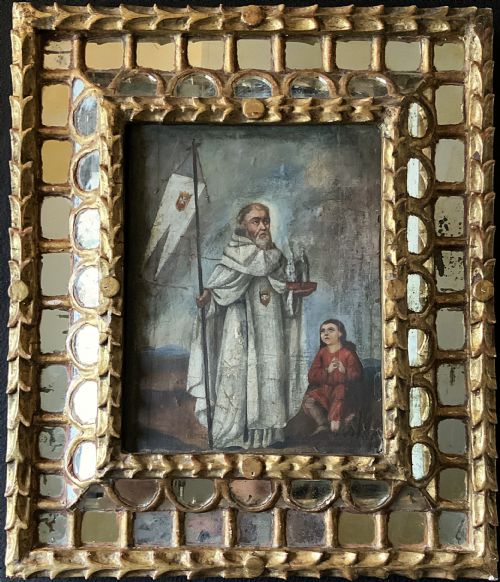


Framed Oil Painting Mirror
A framed oil painting mirror combines decorative glass with original fine art, bringing dual function and period charm into a room.
Framed Oil Painting Mirror
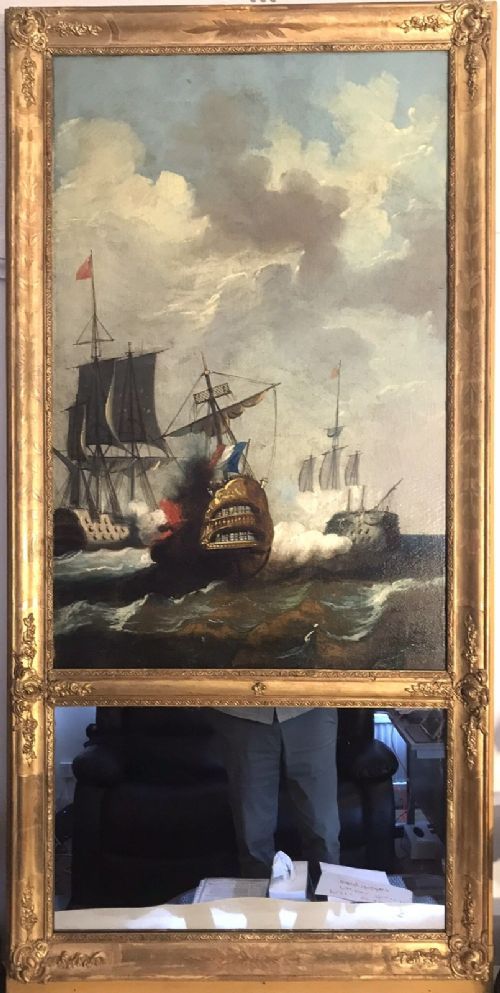
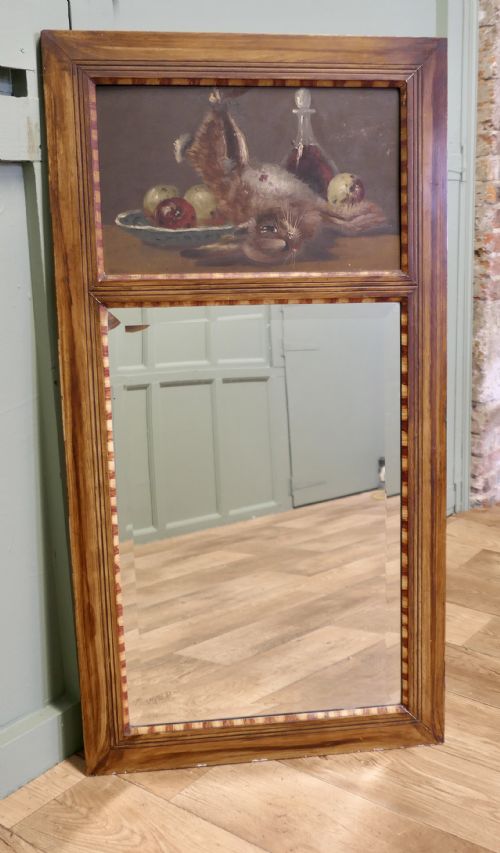
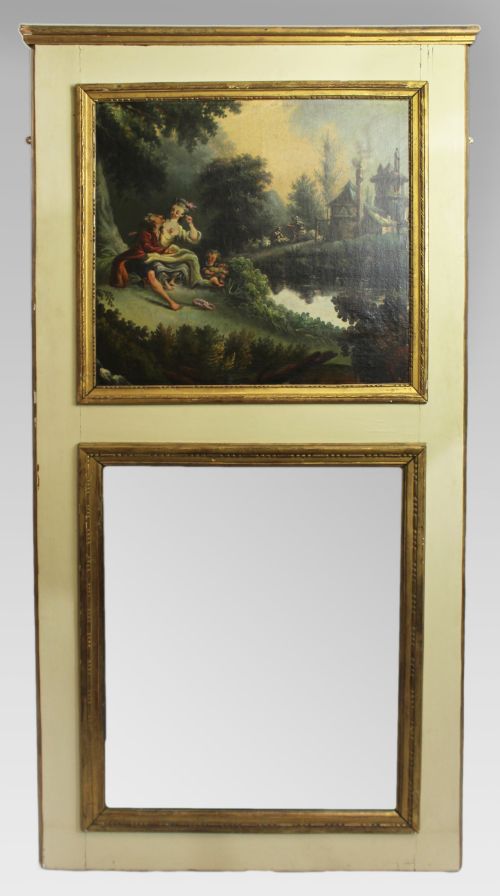
A framed oil painting mirror unites a reflective glass plate with an integrated canvas work, serving simultaneously as wall art and a functional looking glass. The selection ranges from grand overmantel pier mirrors to intimate portrait compositions and landscape trumeau pieces.
The most common formats on this page are French trumeau mirrors featuring pastoral or maritime scenes set above the glass plate. These items span periods from the seventeenth century through to the mid-twentieth century, encompassing Victorian and revival styles alongside Continental country pieces.
How they were made
Carved wooden frames provide the structural foundation, frequently embellished with applied gesso and finished in gold leaf or paint. Artisans built these surrounds to house both the canvas and the glass securely within a unified decorative scheme.
Oil paint on canvas or wood panel forms the pictorial element, created using traditional pigments and techniques appropriate to each period. Glass plates are set alongside or above these artworks, held within deep mouldings characteristic of nineteenth-century and earlier framing practices.
Listings feature items spanning the seventeenth to the twentieth centuries, utilising oil paint, giltwood, gesso, and glass.
What varies in quality
The sophistication of the carved detail and the depth of the gilding set superior examples apart from standard workshop production. Hand-carved gesso work displays crisp relief and careful layering of gold leaf rather than flat, uniform surfaces.
The artistic merit and condition of the accompanying oil painting significantly influence the character of the piece. Integrated works executed with confident brushwork and well-preserved pigments elevate the status of the entire assembly above simple decorative items.
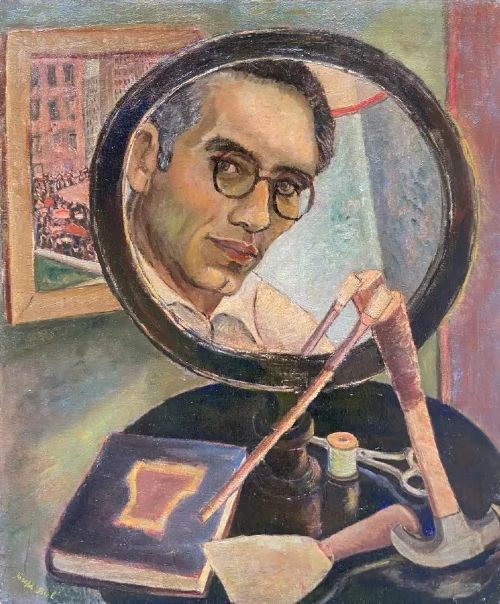
Joseph Biel·Philippe de Rougemont
The Framed Oil Painting Mirror Glossary
- Trumeau
- A decorative wall mirror featuring an upper panel containing a painting or carving above the glass plate. This form originated in eighteenth-century France and remained popular through the nineteenth century.
- Gesso
- A plaster-like mixture applied to wooden frames as a smooth base for gilding or painting. Skilled application ensures sharp relief in moulded decorative motifs.
- Pier mirror
- A tall looking glass designed to hang on the wall space between windows. These pieces often incorporate lower consoles or upper art panels to maximise light and decoration.
- Giltwood
- Timber that has been coated with thin sheets of gold leaf over a prepared ground. This finish provides a warm, reflective surface suited to formal reception rooms.
Framed Oil Painting Mirror: Frequently Asked Questions
What is a trumeau mirror?
A trumeau mirror is a traditional wall hanging that combines a looking glass with an integrated decorative panel, usually positioned above the glass. In these pieces, that panel houses an original oil painting rather than a carving.
Such items were designed to draw light into period interiors while serving as a primary focal point on a chimney breast or between windows.
How do I hang a heavy framed mirror?
Heavy framed mirrors require secure fixings anchored directly into wall studs or masonry using appropriate weight-rated hardware. Due to the combined mass of the timber frame, glass plate, and canvas, standard picture hooks are generally insufficient.
Professional installation is recommended to ensure the piece remains stable and safe against the wall.
How do I clean the oil painting?
Dust the oil painting gently with a soft, dry brush to remove loose surface particles without disturbing the canvas. Avoid using water, damp cloths, or chemical solvents on the paint layer.
Professional conservation is required if the surface shows signs of cracking, grime accumulation, or varnish discoloration.
Where should I place these in a room?
These pieces suit positions above mantelpieces, console tables, or in entrance hallways where their dual function as art and mirror can be appreciated. Placing them opposite a window helps amplify natural light within the space.
Keep them away from direct sunlight and damp walls to protect both the wooden frame and the oil painting.