
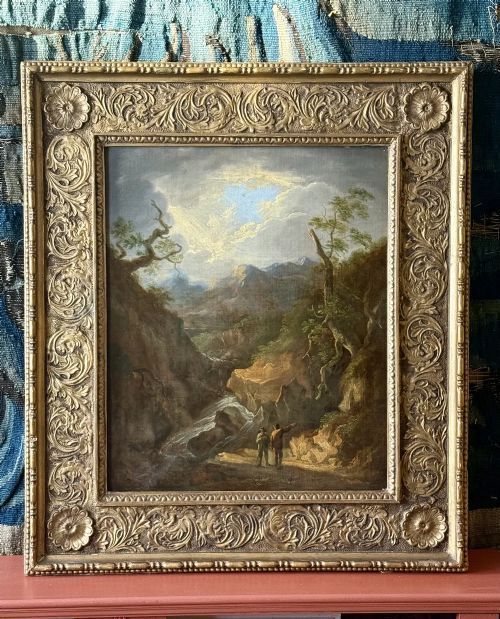

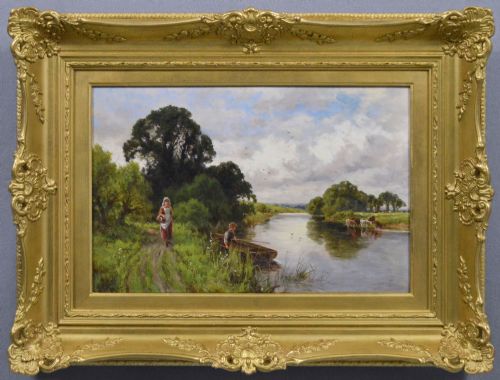


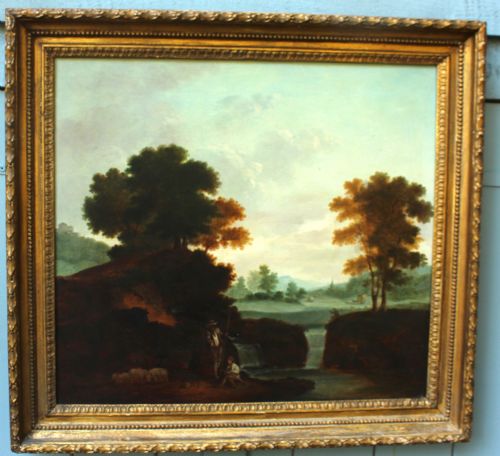


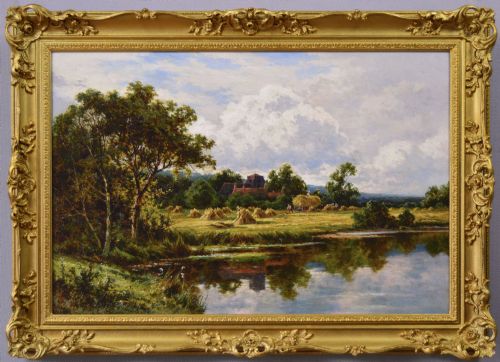


Framed Oil Painting Figures River
A framed oil painting figures river brings pastoral calm and human narrative into a room through water and brushwork.
Framed Oil Painting Figures River
A framed oil painting figures river captures human activity beside waterways across multiple centuries and aesthetic movements. These works range from seventeenth-century Dutch scenes to British Victorian pastoral views and mid-century impressionist canvases.
The subjects on this page typically show people engaged in daily rural tasks, from harvesting and fishing to crossing bridges and stepping stones. Buyers encounter both British regional landscapes and continental views framed in period wood and gesso.
How they were made
Artists built these works using oil paint on stretched canvas or wooden panels, applying layers of pigment to achieve depth in the water and sky. Painters worked with brushes and knives to render figures, foliage and architectural elements with varying degrees of texture.
The supporting frames consist of carved wood, often finished with gesso and gold leaf to create ornate giltwood surrounds. These frames protect the edges of the canvas and complement the tones within the painted river scene.
The selection includes works from the seventeenth century, the Victorian era, British Impressionism and mid-century modern movements.
What varies in quality
The sophistication of the brushwork and the handling of light define the upper tier of these paintings. Master painters manage atmospheric perspective and the reflection of water with precise control, whereas lesser works rely on formulaic foliage and stiff figures.
Original framing adds significantly to the integrity of the piece, particularly where period giltwood and gesso surrounds remain intact. The harmony between the canvas and its contemporary frame distinguishes superior examples from those with later replacements.
Florence Adelina Hess·Henry H Parker·Thomas Baker of Leamington·E A Minardo·Robert Thorne Waite·Frederick Waters Watts·Richard Wilson·George Turner·David Bates·Louis Smets·Robert John Hammond·Thomas Thomas
The Framed Oil Painting Figures River Glossary
- Giltwood
- Wood that has been coated with a thin layer of gold leaf or gold paint. This finish provides the bright, reflective borders common on nineteenth-century frames.
- Gesso
- A plaster-like mixture applied to wooden frames as a base for gilding. It allows artisans to carve intricate relief patterns before applying gold leaf.
- Oil on Canvas
- Pigment mixed with drying oil and applied to a woven fabric support. This combination allows for rich blending of colour and enduring flexibility.
- Pastoral
- A genre of art depicting rural life in an idealized, peaceful manner. These scenes frequently feature figures tending livestock or gathering near rivers.
- Dutch Golden Age
- A period in seventeenth-century art marked by naturalistic landscapes and everyday domestic scenes. Paintings from this era often emphasise subtle lighting over dramatic grandeur.
Framed Oil Painting Figures River: Frequently Asked Questions
What periods do these paintings cover?
The selections span from the seventeenth century through the nineteenth century and into the mid-twentieth century. Works reflect distinct regional movements including British Impressionism, the French Barbizon style and the Dutch Golden Age.
Buyers find dates ranging from early nineteenth-century watercolours to mid-century impressionist canvases. Each era brings specific framing choices and handling of light to the river subject.
How were these artworks framed originally?
Frames typically consist of wood treated with gesso and finished in giltwood or gold leaf. These surrounds were built to complement the depth and palette of the oil painting.
Many pieces retain their period frames, which feature decorative moulding designed to enhance the perspective of the river landscape.
What subjects appear alongside the river?
Figures feature prominently in every work, shown fishing, harvesting, crossing bridges or managing boats and cattle. These human elements provide scale and narrative to the natural waterways.
Scenes range from tranquil pastoral riverbanks in Britain to continental city bridges and winter Dutch lakes with skaters.
Are these works painted on canvas or panel?
Artists utilised both stretched canvas and solid wood panels as supports for their oil paint. The choice of medium often aligns with the period and the artist's preferred technique.
Panels tend to appear in earlier works, while canvas dominates nineteenth and twentieth-century pastoral compositions.