




Framed Nude Portrait Canvas
A framed nude portrait canvas brings a direct, human presence into a room, spanning academic restraint and bold modernist expression.
Framed Nude Portrait Canvas
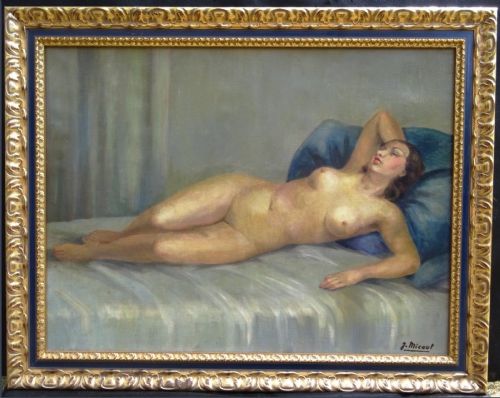
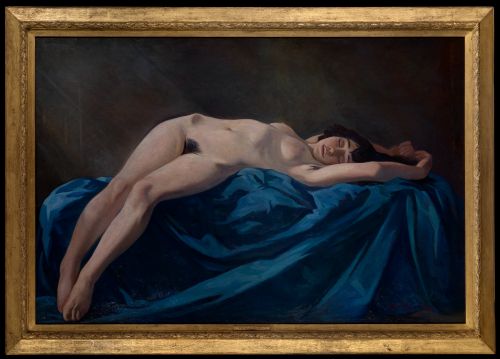
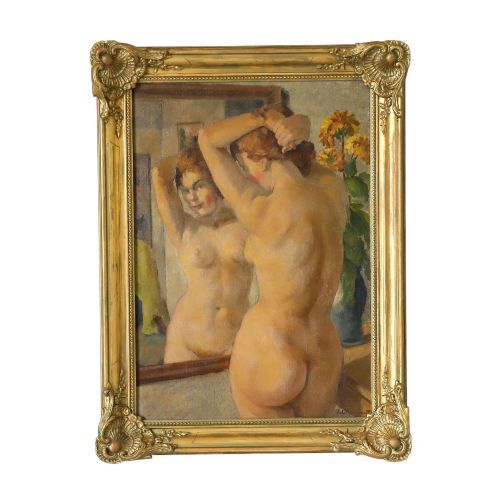
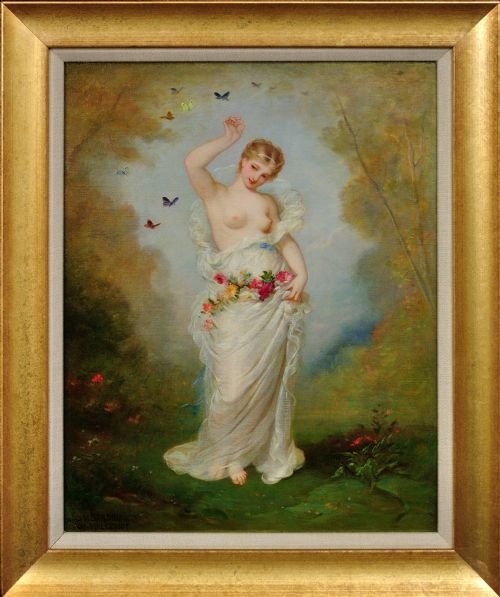
When searching for a framed nude portrait canvas, collectors encounter original paintings executed in oil on canvas, housed within period surrounds such as giltwood or simple wood frames. These works span from the nineteenth century through the mid-twentieth century, capturing shifting attitudes toward the human form across various European schools.
The selections available range from French academic and post-impressionist studies to art deco and mid-century modern interpretations. Buyers frequently meet works originating from French, British, and Swedish studios, reflecting diverse regional approaches to portraiture and the figure.
Subjects include reclining figures, mirror reflections, and studio interiors executed by named artists and circle painters alike. Each framed piece represents a distinct movement, connecting academic tradition with early twentieth-century avant-garde developments.
How They Were Made
These works rely primarily on oil paint applied to woven canvas supports, occasionally laid onto board for additional stability. Artists built up flesh tones and backgrounds through layered brushwork, capturing light and shadow across the human form.
Canvases are secured within wood frames, often finished with gilt or constructed entirely as giltwood surrounds. These frames complement the period aesthetic of the painting, ranging from ornate nineteenth-century moulding to clean modernist profiles.
Several ladies sunbathe on cliffs, while others contend with cats and mirrors.
What Varies in Quality
Handling of anatomy and brushwork distinguishes academic precision from expressive abstraction. Superior works demonstrate a confident command of light upon skin and volume within the composition.
The relationship between the canvas and its frame impacts the overall integrity of the piece. Period-appropriate gilt wood frames that harmonise with the era of the painting elevate the presentation considerably compared to later replacements.
Eric Robertson·Philippe de Rougemont·Raymond Moritz·Tony Giles·André Charles Voillemot·Henri Vincent-Anglade·Alexandre-Louis Martin·Gaetan Dumas·James Clark·Fernand Jean Barbier·William Edward Frost·Peter Paul Rubens·Jean Hippolyte Marchand·Pinchus Krémègne·Yetta Kane·Raymond Arthur Roadnight
The Framed Nude Portrait Canvas Glossary
- Oil on Canvas
- A traditional painting medium where pigments suspended in oil are applied to a stretched canvas support. This combination allows for rich colour blending and lasting durability.
- Giltwood
- Wood that has been treated with a thin layer of gold leaf or gilt finish. It is commonly found on frames designed to complement nineteenth and early twentieth-century fine art.
- French Academic
- A style of painting stemming from the rigorous standards of French academies, prioritising classical themes, idealised proportions, and polished brush techniques.
- Post-Impressionism
- An artistic movement following impressionism that explored emotional depth and structural form rather than purely optical effects. Practitioners emphasised bold colours and distinct brushstrokes.
- Art Deco
- A design style popular during the nineteen-twenties and thirties characterised by stylised geometric forms and streamlined elegance. In painting, it manifests in sleek contours and decorative backgrounds.
Framed Nude Portrait Canvas: Frequently Asked Questions
How do I date a framed nude portrait canvas?
Dating relies on stylistic markers within the painting, such as art deco geometry or post-impressionist brushwork, combined with the construction of the canvas and frame. Signatures, artist biographical dates, and exhibition labels provide further chronological anchors.
Examination of the stretcher bars and framing materials helps confirm whether the surround is original to the period of creation.
Where should I hang a framed nude portrait canvas?
These works suit drawing rooms, studies, and private living spaces where adequate wall space allows the composition to breathe. Position them away from direct sunlight and moisture to protect the oil paint and canvas support.
Pairing the piece with subdued lighting enhances the tonal qualities of the flesh tones and the texture of the gilt frame.
What is the difference between academic and modernist nudes?
Academic nudes follow strict nineteenth-century rules of proportion, smooth blending, and mythological or classical context. Modernist examples from the twentieth century abandon these conventions in favour of expressive distortion and flattened perspectives.
Understanding this shift helps collectors appreciate the specific artistic intent behind each individual canvas.
Are these frames original to the paintings?
Many pieces retain their original wood or giltwood frames, which reflect the framing conventions of the artist's era. Others may feature period-appropriate replacements selected to complement the aesthetic of the artwork.
Inspect the joinery and finish of the frame to understand its relationship to the canvas.