




Framed Mountain Scene Art
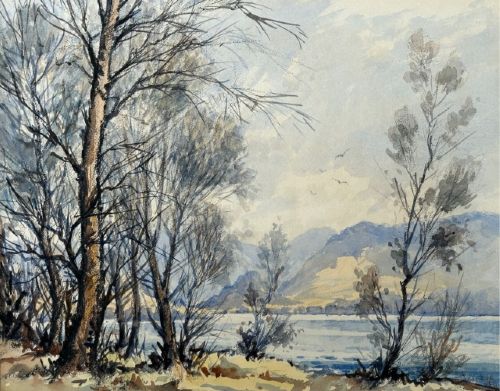
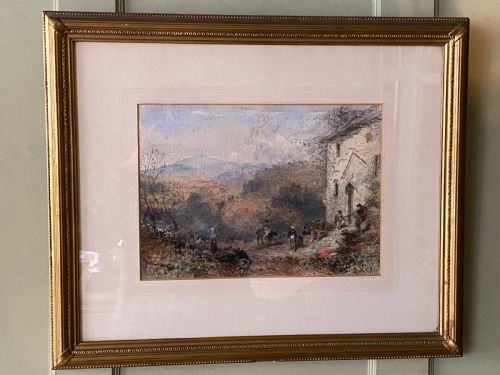
Framed mountain scene art captures towering peaks and quiet lakes through nineteenth-century oils and watercolours framed in giltwood and wood.
Framed Mountain Scene Art
Buyers seeking framed mountain scene art encounter landscapes depicting Scottish highlands, Welsh rivers, and alpine lakes created during the Victorian, Edwardian, and mid-century periods. These works capture vast topography, dramatic weather, and pastoral valleys through traditional oil and watercolour mediums.
The selections available here lean heavily toward nineteenth-century European oil paintings on canvas and early twentieth-century watercolours on paper. Most examples arrive secured behind glass or within original moulded frames.
Subjects range from snow-capped Austrian peaks to quiet Cumbrian lakes and misty Scottish lochs. Painters utilised specific regional topography to structure light across canvas and paper.
How they were made
Makers built these pieces using oil paint on stretched canvas or gouache and watercolour on paper, supported by wooden strainers and heavy gesso frames. Gilding and carved wood mouldings finished the presentation.
Artists applied pigment with brushes and palette knives to build texture in cloud formations and mountain crags. Paper works utilised washes and fine ink or gouache detailing to render distant ridges.
Listings feature works spanning the nineteenth century through the nineteen-fifties, utilising oil on canvas, gouache, and watercolour.
What varies in quality
Quality rests in the handling of light and atmosphere across the canvas, distinguishing skilled academic brushwork from mechanical regional output. Superior works capture changing weather and distance with controlled pigment layers.
The integrity of the original frame influences the overall standing of the piece. Hand-carved giltwood mouldings matched to the period carry greater weight than later replacements.
William Beattie-Brown RSA·Robert Leslie Howey·Thomas Spinks·Walter J Watson·Benjamin Williams Leader·Alfred de Breanski·Sidney Richard Percy
The Framed Mountain Scene Art Glossary
- Gesso
- A plaster-like mixture applied to wood frames to create a smooth surface for gilding. It is carved or moulded into decorative patterns.
- Giltwood
- Wood that has been coated with thin gold leaf or gilt paint. This finish enhances the profile of Victorian and Edwardian frames.
- Gouache
- An opaque watercolour paint mixed with a binding agent. It creates solid areas of colour in nineteenth-century paper works.
- Strainer
- A rigid wooden frame used to keep canvas taut without corner keys. Older paintings rely on these fixed wooden supports.
Framed Mountain Scene Art: Frequently Asked Questions
How do I hang a heavy oil painting?
Heavy oil paintings require steel picture wire fixed securely to the wooden stretcher bars rather than the frame alone. Anchor the wall fixing directly into a stud or utilise heavy-duty wall plugs.
Ensure the weight is distributed evenly across two hooks to keep the large gesso frame level and secure against the wall.
Should watercolours hang in direct sunlight?
Watercolours on paper are sensitive to ultraviolet light and fading. Position these pieces away from direct sunlight and windows to preserve the original pigments.
Protective glass with UV-filtering properties helps safeguard nineteenth-century watercolours from environmental degradation over time.
How do I clean an antique gilt frame?
Dust giltwood frames gently using a soft, dry ostrich feather duster or a clean artist brush. Avoid moisture, solvents, or chemical cleaners which strip the delicate gold leaf.
Flaking gesso requires professional conservation rather than domestic cleaning to prevent further loss of the decorative moulding.
What is the difference between oil and watercolour?
Oil paint uses a drying oil binder on canvas, allowing thick impasto textures and deep colour blending. Watercolour uses water-soluble binders on paper, creating translucent washes and bright paper highlights.
Oils are traditionally housed in heavy frames without glass, while watercolours require glass protection to shield the paper surface.