


Framed Mountain Lake Art
Framed mountain lake art captures sweeping expanses of water set against high peaks, offering timeless window views into dramatic alpine scenery.
Framed Mountain Lake Art
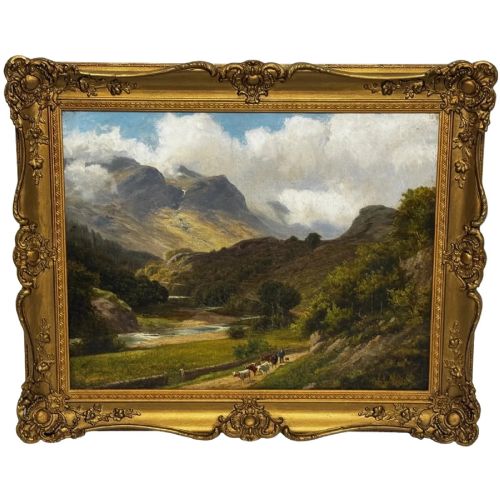
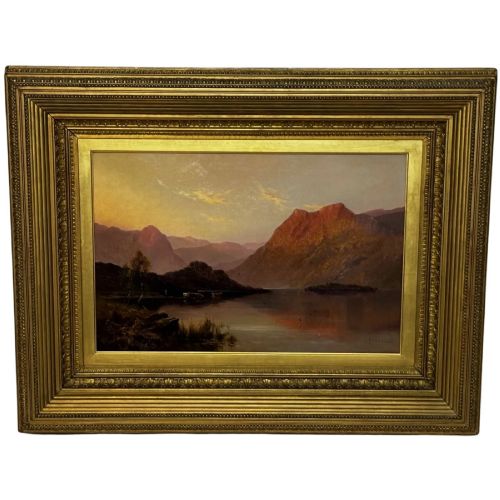
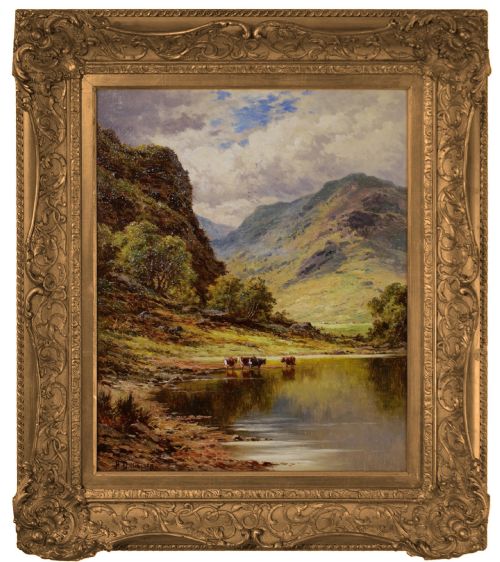
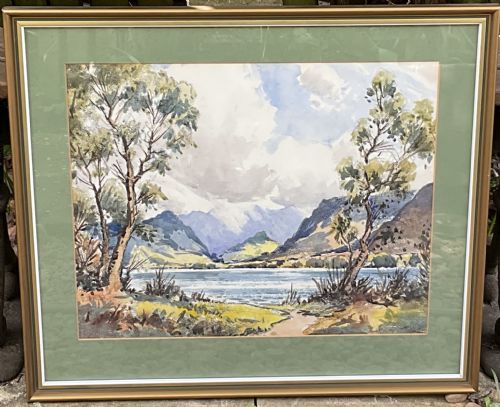
Framed mountain lake art encompasses traditional oil paintings and watercolours depicting serene bodies of water bordered by dramatic peaks and highlands. These works frequently record specific British and European locations such as the Lake District, Scotland, and the Alps.
The most common examples on this page are nineteenth-century and early twentieth-century oil on canvas works housed in ornate wooden or giltwood frames. Artists render these scenes with careful attention to atmospheric weather and reflective water surfaces.
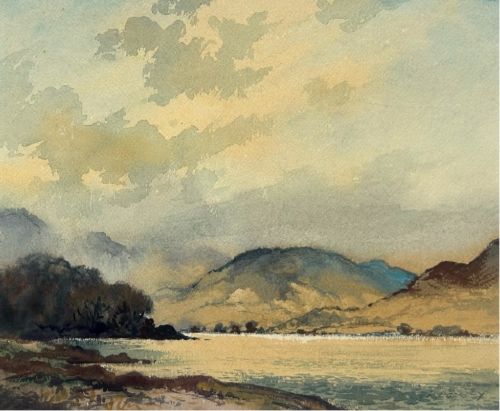
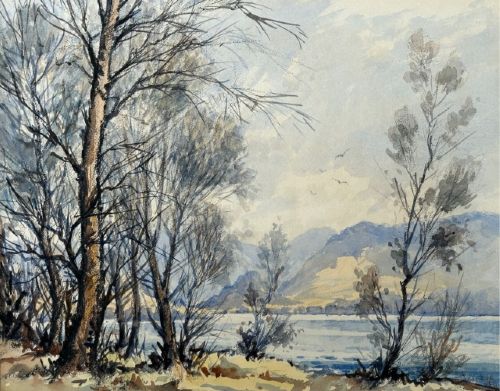
Buyers encounter everything from intimate watercolours behind glass to large landscape canvases featuring towering mountain ranges. Many pieces capture specific topography, including identifiable fells, tarns, and lochs.
How these artworks were produced
Painters utilised oil on canvas or applied watercolour and gouache to paper, often mounting finished works within heavy wood and gesso frames. Giltwood surrounds were frequently employed to enhance the luminous quality of the pigments within domestic interiors.
Canvases were stretched across wooden frames and secured within decorative moulded surrounds, sometimes protected behind glass depending on the medium used. Artisans built robust wooden frames designed to support and display substantial landscape compositions.
Cattle occasionally wander into the lower corners of these dramatic alpine views, seemingly unimpressed by the towering peaks.
What distinguishes finer examples
Quality rests in the handling of light across water and the convincing depth of distant mountain ranges, where confident brushwork separates accomplished hands from standard studio production. Master painters capture atmospheric changes like passing storms and mist with subtle colour transitions.
The sophistication of the original frame also influences the overall character of the piece, with deep mouldings and intricate gesso ornament enhancing the presentation of the canvas.
Alfred Fontville de Breanski Jr·Robert Leslie Howey·Henry H Parker·Charles Leslie·Giulio Cecchini·John Douglas Perrett·Edward Horace Thompson·Stephen Enoch Hogley·Alfred de Breanski·Alfred de Breanski Snr·Benjamin Williams Leader·Sidney Richard Percy·Milton Drinkwater·Gustave De Breanski·William Mellor·Samuel Hart Turpin·Percy Lancaster·Charles Pettitt
The Framed Mountain Lake Art Glossary
- Oil on canvas
- A painting technique using pigments suspended in a drying oil applied to a stretched fabric support. This medium allowed artists to build rich textures and deep tonal ranges.
- Giltwood
- Wood that has been coated with a thin layer of gold leaf or gilt finish. This material was standard for framing significant nineteenth-century landscape paintings.
- Gesso
- A plaster-like mixture applied to wooden frames as a base for moulding ornamental details. It provided a smooth surface capable of taking fine gilding.
- Watercolour
- A painting method where water-soluble pigments are applied to paper. These works require protective glazing to prevent moisture damage over time.
- Gouache
- An opaque water-based paint that includes a white pigment filler, producing a heavier finish than standard watercolour. It appears frequently in mid-period landscape works.
Framed Mountain Lake Art: Frequently Asked Questions
What subjects appear in framed mountain lake art?
These works depict natural bodies of water surrounded by elevated terrain, including Scottish highlands, Cumbrian fells, and alpine peaks. Scenes frequently incorporate atmospheric elements such as passing storms, morning sunrises, or quiet evening light over water.
Many compositions record specific geographical viewpoints like the Lake District or the Austrian Alps. Figures such as cattle or local residents occasionally populate the foreground to establish scale.
How do I care for antique painted watercolours?
Works on paper require protection from direct sunlight to prevent the fading of delicate watercolours and gouache pigments. Maintaining a stable indoor humidity level prevents warping of the paper and protects the surrounding frame.
Displaying these pieces away from heat sources preserves the structural integrity of the wood and gesso. Glazing should be kept clean using appropriate dry methods without introducing moisture near the mount.
How are different periods distinguished?
Nineteenth-century works typically feature heavier giltwood frames and rich, dramatic oil applications focusing on romantic landscapes. Mid-twentieth-century pieces often display looser brushwork and simpler framing choices that reflect changing aesthetic preferences.
Examining the construction of the wooden stretcher bars and the composition of the gesso provides further chronological context. Signatures and dates inscribed on the canvas or reverse offer direct evidence of the creation era.
Where should I hang these landscapes?
Large mountain and lake scenes suit principal reception rooms where adequate wall space allows the expansive compositions to breathe. Smaller watercolours function effectively in intimate spaces or studies where viewers can observe fine details closely.
Pairing matching works from the same period creates a balanced display along hallway walls or above mantelpieces. Proper eye-level placement ensures the painted perspective aligns naturally with the viewer's line of sight.