



Framed Military Print
A framed military print records regiments, battles and commanders through centuries of paper, ink and glass.
Framed Military Print
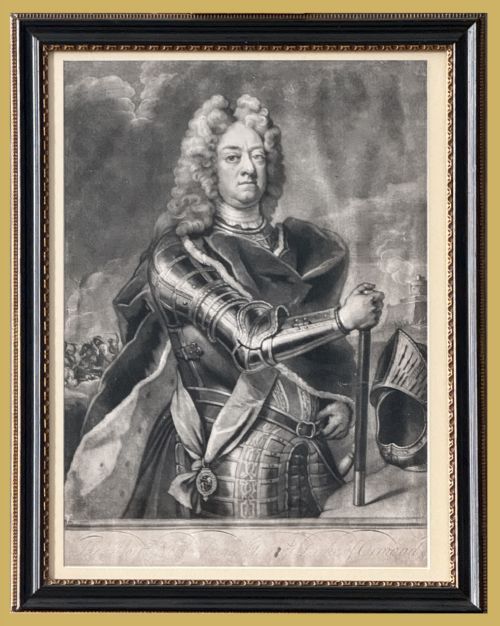
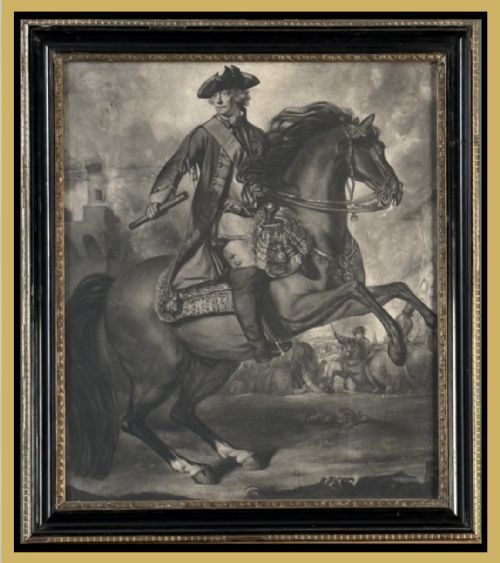
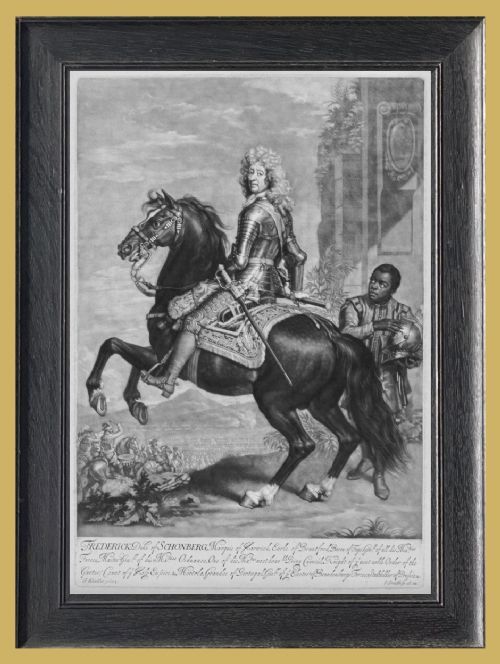
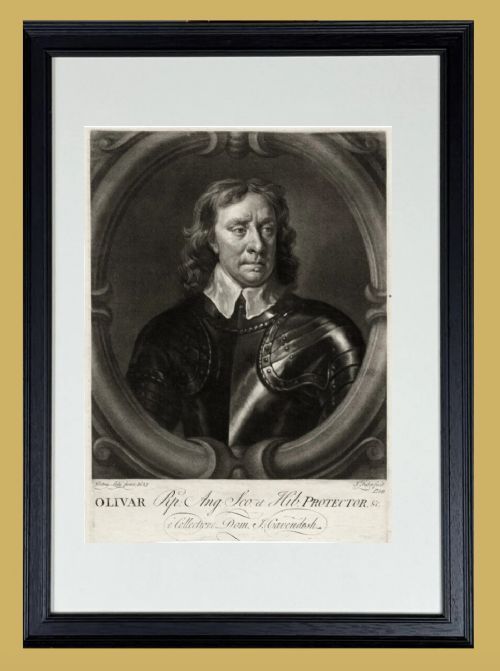
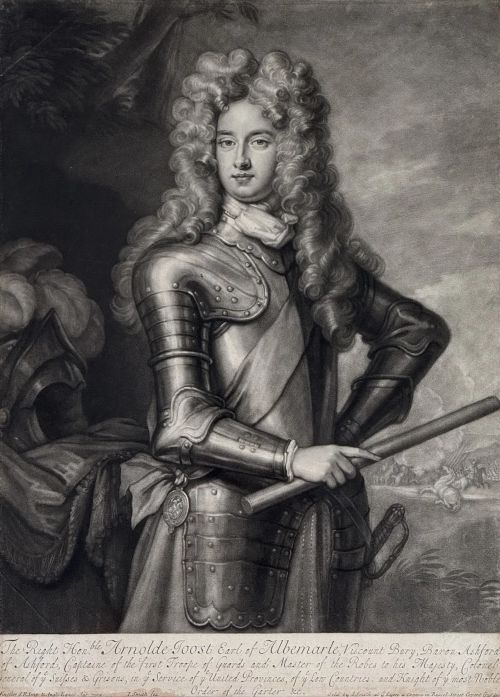
A framed military print captures historical campaigns, regiments and commanders through works on paper, wood engravings and watercolours spanning the seventeenth to the twentieth centuries. Buyers search for this phrase to find portraits of notable figures such as Oliver Cromwell and depictions of actions including the Battle of Waterloo.
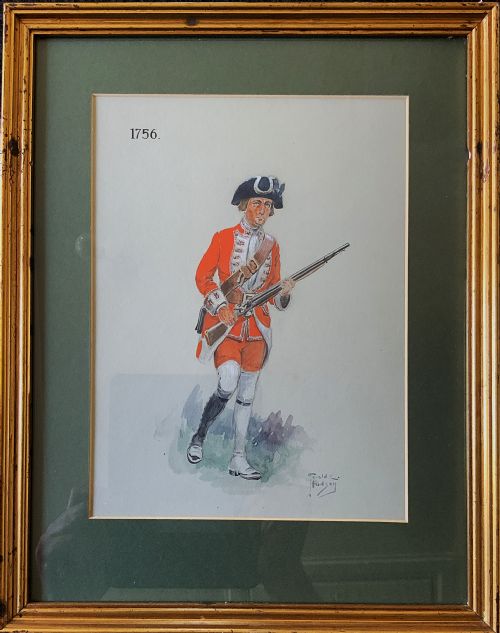
The pieces on this page appear in various formats, ranging from eighteenth-century mezzotint portraits to nineteenth-century reverse glass pictures and twentieth-century lithographs. Subjects encompass individual officers, infantrymen, naval personnel and formation scenes housed in period wood and gilt frames.
How They Were Made
Makers utilised traditional graphic techniques such as mezzotint, etching and wood engraving on paper, often working after paintings by prominent artists. Pigment and ink were applied to create detailed studies of uniforms and battle scenes.
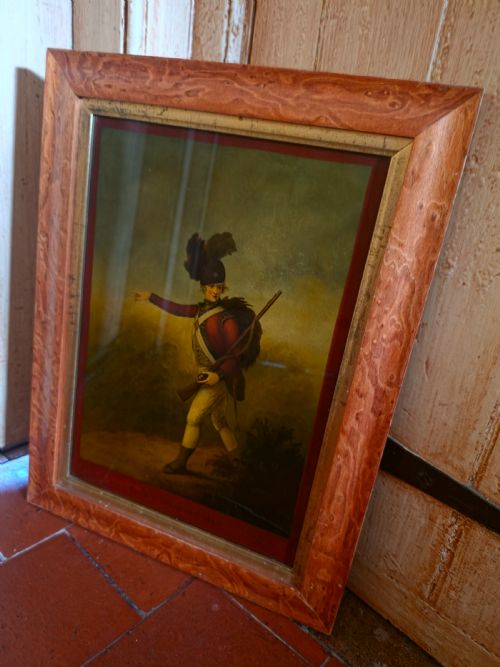
Some examples employ reverse glass execution, where pigment is painted directly onto the reverse side of a glass panel. Frames are constructed from wood, sometimes with gilt finishes, housing the paper or glass beneath protective glazing.
Even a light infantryman deserves a glass home.
What Varies in Quality
The preservation of the original framing, whether oak, wood or gilt, contributes significantly to the integrity of the piece. Works that retain their original glass and backing materials demonstrate greater historical coherence.
John Simon·Edward Fisher·John Smith·Joseph Sympson
The Framed Military Print Glossary
- Mezzotint
- A printmaking process of the intaglio family where the plate is roughened to achieve tones and dark shades. It was widely used in the eighteenth century for reproducing portraits.
- Reverse glass picture
- An artwork created by painting or drawing on the back of a piece of glass so that the image is viewed through the front. These require careful handling to prevent flaking of the pigment.
- Lithograph
- A planographic printing process using a stone or metal plate where the image areas accept ink and non-image areas reject it. This technique allowed for faithful reproductions of war art.
- Engraving
- A printmaking method where an artist incises a design onto a hard surface using a burin. The resulting lines hold the ink for transfer to paper under pressure.
Framed Military Print: Frequently Asked Questions
What periods do these pieces cover?
The selection encompasses works from the seventeenth, eighteenth, nineteenth and twentieth centuries. Examples range from early mezzotints of seventeenth-century commanders to twentieth-century lithographs and prints.
Individual pieces reflect the graphic styles and printing technologies of their specific eras, spanning Georgian, Victorian and Edwardian periods.
How should I display them?
These pieces require hanging away from direct sunlight to protect the paper, watercolours and pigments from fading over time. Stable indoor humidity levels help preserve the wood and gilt frames.
Most items arrive in original or period frames equipped with glass, ready for wall placement.
Are the frames original?
Many listings specify original framing materials, such as oak or gilt wood, which correspond to the period of the artwork. The combination of period glass and framing maintains the historical context of the print.
Descriptions indicate whether the frame is contemporary to the print or a later replacement.
What subjects are included?
Subjects feature military and naval commanders, individual regiments, infantrymen and specific engagements like the Battle of Waterloo. Portraits of historical figures sit alongside battle scenes and formation marches.
Works also record specific historical campaigns, including the Second Anglo-Afghan War and the First World War.