


Framed Italian View Painting
A framed italian view painting brings the sun-drenched canals and historic piazzas of the south straight onto a British drawing room wall.
Framed Italian View Painting
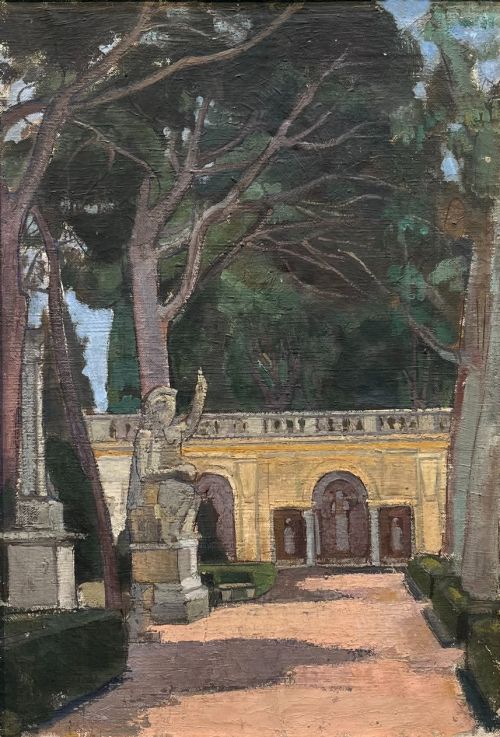
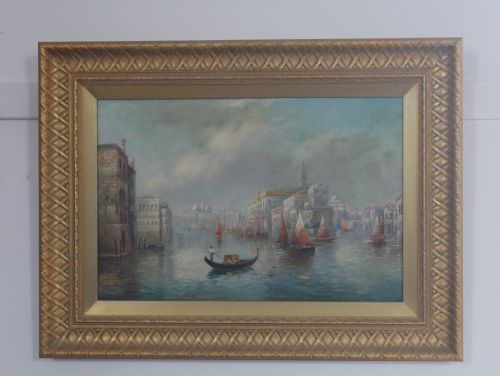
A framed italian view painting captures famous southern vistas, from the lagoons of Venice to the steps of Rome, recorded by travelling artists on the Grand Tour and beyond. These works span the nineteenth century and into the twentieth, translating foreign sunlight into detailed watercolours, gouaches, and oils.
You will most commonly meet nineteenth-century watercolours and oils depicting Venetian canals and Neapolitan coastlines, often housed in heavy giltwood frames. The subjects focus closely on recognisable landmarks such as the Grand Canal, the Doge's Palace, and Lake Como, painted both on location and back in British and European studios.
The selection ranges from intimate gouache studies of local landmarks to large oil paintings of bustling harbour scenes. Artists recorded everything from quiet lakeside mountains to grand architectural townscapes with practiced precision.
Materials and Technique
Painters worked primarily with oil on canvas or applied watercolour and gouache to paper, capturing the distinct light of Italy through layered pigments. Brushwork ranges from tight, architectural precision in townscapes to looser, more atmospheric sweeps of water and sky.
The framing is integral, utilising wood, glass, and gold leaf to protect the delicate works on paper or to complement the depth of canvas oil paintings. Elaborate giltwood frames often match the period of the artwork, accentuating the golden tones of the southern landscapes.
Travel painters sometimes packed a portable box of gouache so they could capture an Italian sunset before the gondola drifted too far.
Assessing Quality
Quality rests upon the artist's command of perspective and light, distinguishing a master's lively depiction of water and stone from a stiff, formulaic souvenir. The best pieces demonstrate confident brushwork that breathes life into busy canals and ancient facades.
The relationship between the painting and its frame matters greatly, with period giltwood settings adding considerable presence and historical harmony. Well-preserved watercolours retain their original vibrancy beneath glass, while oil paintings show stable pigment adhesion across canvas and wood supports.
Alfred Pollentine·Jane Vivian·Hercules Brabazon Brabazon·Robert George Talbot Kelly·Ettore Ascenzi
The Framed Italian View Painting Glossary
- Grand Tour
- A traditional trip through Europe undertaken by upper-class European young men of means, flourishing from about the seventeenth century onward. This travel fuelled a vast demand for topographical paintings and watercolours brought home as mementos.
- Gourache
- An opaque watercolour medium consisting of pigment, water, and a binding agent such as gum arabic, often used for vivid southern views on paper. It dries to a flat, velvety finish that allows for bright highlights.
- Giltwood
- Wood that has been coated with thin gold leaf or powder, frequently carved into elaborate nineteenth-century frames. It provides a warm, reflective border that enhances darker oil palettes.
- Townscape
- A painting or drawing depicting a city's buildings, streets, and urban spaces. In these collections, they focus heavily on Italian architectural landmarks and canals.
Framed Italian View Painting: Frequently Asked Questions
What is a framed italian view painting?
It is an artwork depicting landscapes, architecture, or waterways in Italy, preserved behind glass or within a wooden frame. These pieces capture the distinct light and scenery encountered by travellers.
They serve as historical records of nineteenth-century European travel and interior decoration. Most examples focus on famous locations like Venice, Rome, and Naples.
How were these paintings displayed?
Owners typically hung them in drawing rooms, studies, and hallways to display their cultural education and foreign travels. The ornate frames allowed the art to act as a principal decorative focal point.
They were designed to bring warmth and colour into domestic British interiors. Many were grouped in pairs or sets to cover larger wall spaces.
How do I tell watercolours from oils?
Watercolours are painted on paper, require glass protection in the frame, and show a translucent quality where the paper brightness shines through. Oils use canvas stretched over wood and feature thicker, opaque paint layers.
Oils often present a textured surface with visible brush marks. Watercolours feel flatter and rely on delicate washes of pigment.
What subjects are most common?
Venetian canals and lagoon views dominate the selections, featuring landmarks such as the Grand Canal and the Doge's Palace. Coastal scenes of Naples and mountain landscapes around Lake Como also appear frequently.
Artists frequently painted bustling townscapes alongside quiet rural ruins. Every scene aims to evoke the atmosphere of the southern peninsula.