


Italian Grand Tour Watercolour
An italian grand tour watercolour brings home the classical ruins, sunlit lakes and bustling cityscapes of historic Italy.
Italian Grand Tour Watercolour
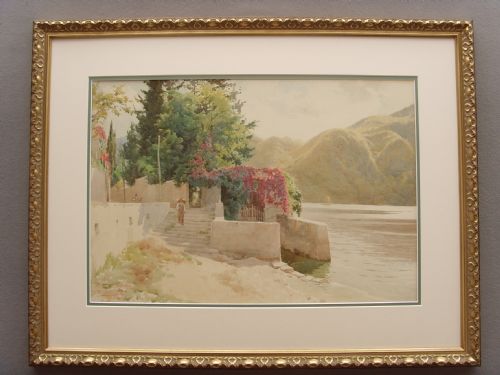
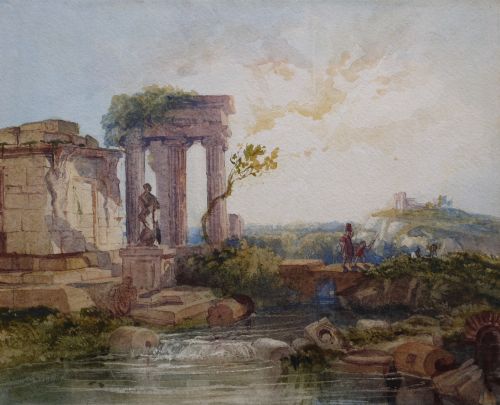
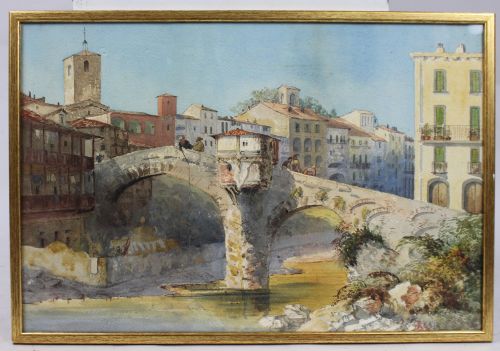
An italian grand tour watercolour captures the classical ruins, landmarks and landscapes that travellers recorded during their travels through Italy from the eighteenth to the early twentieth century. These works range from intimate depictions of Roman arches and Venetian canals to detailed architectural studies of ancient sites like Pompeii and the Roman Forum. Most examples seen here date from the nineteenth century, including pieces from the Edwardian era and earlier decades.
The subjects focus heavily on famous views such as the Spanish Steps, the Bridge of Sighs and the Campagna, often executed by travelling artists or local painters catering to foreign visitors. Buyers encounter individual sheets, pairs of views and occasionally sets of landmarks framed behind glass in period wooden surrounds. These paintings served as portable records of cultural education and aesthetic appreciation for collectors returning from abroad.
How they were made
Artists applied water-based pigment to paper, often building transparent washes to capture the luminous Mediterranean light and atmospheric skies of Italy. Many works received careful pen and ink detailing to define architectural stonework, ruins and figures before colour was laid down. Pigments were selected to render the warm terracotta tones of roofs, the deep blue of Italian lakes and the soft greens of the countryside.
Finished watercolours were housed behind glass within timber frames, frequently featuring gold leaf, gilded wood or gilt wood finishes that enhanced the display of the artwork. These frames protect the delicate paper surface from dust and moisture while complementing the domestic interiors where these pictures were historically displayed.
Current listings feature nineteenth-century watercolours executed on paper using pigment, displayed within gilded wood and gold leaf frames.
What varies in quality
The distinction between standard souvenir watercolours and superior works lies in the skill of the brushwork, the precision of architectural perspective and the handling of light and shade. Master hands capture the texture of weathered stone and the specific atmospheric conditions of a site with notable confidence, whereas lesser pieces rely on formulaic repetition. The vibrancy of the remaining pigment and the clarity of the composition also determine the visual impact of the painting.
Framing plays a role in the overall presentation, with exceptional period frames featuring intricate gilding or bespoke carpentry adding significant character to the piece. Signed or attributed works by documented artists command greater interest from collectors than unsigned sheets of generic tourist scenes.
Richard Principal Leitch·Franz Knebel·Vittore Zanetti Zilla·Benedetto Salviati·Charles H Poingdestre·Ettore Ascenzi·Thomas Brabazon Aylmer
The Italian Grand Tour Watercolour Glossary
- Grand Tour
- The traditional journey through Europe undertaken by upper-class European young men of means in the seventeenth, eighteenth and nineteenth centuries to study the arts and antiquities of Italy.
- Gilt wood
- Wood that has been coated with a thin layer of gold leaf or gold paint to give a decorative metallic finish. This material is frequently found on the antique frames enclosing these watercolours.
- Wash
- A technique in watercolour painting where a large, diluted area of pigment is applied to paper to create a smooth, semi-transparent layer of colour, often used for skies or water.
- Campagna
- The rural countryside surrounding Rome, characterised by rolling hills, ancient aqueducts and picturesque ruins that frequently inspired nineteenth-century landscape painters.
Italian Grand Tour Watercolour: Frequently Asked Questions
What subjects do these watercolours show?
The paintings depict famous Italian landmarks, classical ruins, rustic landscapes and city views across Rome, Venice, Naples and the surrounding countryside.
Popular subjects include ancient monuments like the Colosseum and the Forum, alongside bustling scenes of local figures and coastal waters.
How should I frame and hang them?
These works on paper require protection from direct sunlight to prevent the watercolour pigments from fading over time.
Keep them behind glass in stable indoor conditions away from damp walls and excessive temperature fluctuations.
Are these watercolours signed by artists?
Many pieces bear signatures, initials or dates from the artist who painted them, while others remain unsigned as typical travel mementos.
Signed works often provide a direct link to known painters working in Italy during the nineteenth century.
How do I date an italian grand tour watercolour?
Dating relies on visible artist signatures, inscribed dates on the mount or reverse, style of dress in any figures, and the construction of the frame.
Paper stock and watermark evidence can also help establish the approximate decade of creation.