

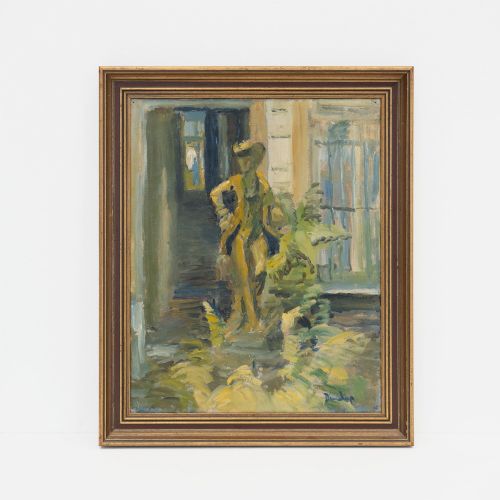


Framed Impressionist Figure Painting
A framed impressionist figure painting captures human presence through broken brushwork and natural light, bringing warmth and movement to a room.
Framed Impressionist Figure Painting
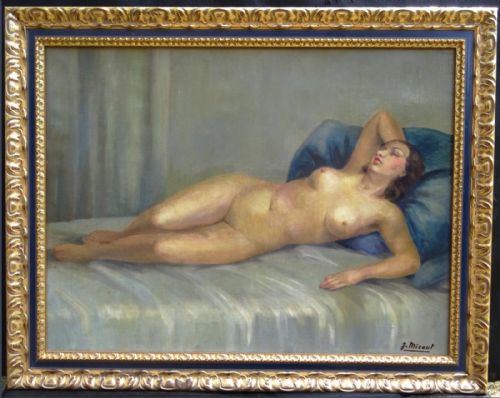
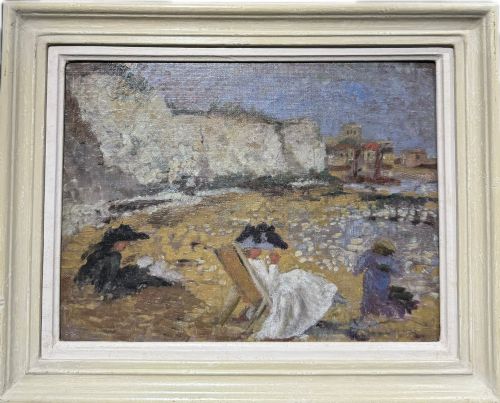
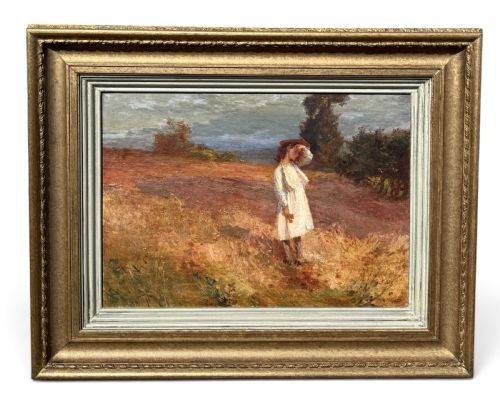
A framed impressionist figure painting focuses on people within landscapes, gardens, streets or interiors, rendered with visible brushstrokes and an emphasis on changing light rather than rigid realism.
The pieces gathered here span from the late nineteenth century through to the mid-twentieth century, encompassing British Impressionism, Post-Impressionism, Modern British and the Barbizon School.
Subjects range from casual beach scenes and dancers to solitary figures in gardens, executed by artists working across Britain, France and Italy.
Materials and technique
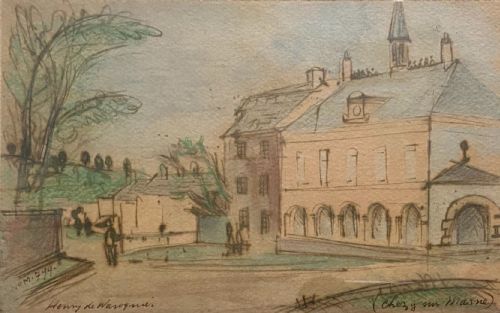
Artists built these works primarily using oil paint applied to canvas, panel or board, occasionally turning to watercolour and ink on paper for mixed media drawings.
Makers set their compositions within wooden and gilt frames, which range from simple mouldings to worn antique surrounds that complement the texture of the painted surface.
Framed Impressionist Figure Painting Retail Price Guide 2026
Typical asking prices for framed impressionist figure painting among the pieces listed under this phrase on Sellingantiques today, from the lower quarter to the upper quarter. They describe what is for sale here now, not the wider market.
Materials across these listings include oil paint on canvas, board and panel, alongside works on paper using ink and watercolour.
Judging quality
Quality rests on the confidence of the brushwork and the artist's command of light, where sure, economical strokes convey atmosphere and form far better than laboured detail.
The harmony between the canvas and its frame also matters, as a period or well-matched gilt surround enhances the depth of the painted scene.
Umberto Volpato·Henry de Waroquier·Florence Adelina Hess·Ronald Ossory Dunlop·Jean Hippolyte Marchand·Herbert Royle·David Woodlock·Yetta Kane·Kenneth B Malpass·Kershaw Schofield·Owen Bowen·Albert de Belleroche·Bernard Meninsky·Gaston Bouy
The Framed Impressionist Figure Painting Glossary
- Impressionism
- A nineteenth-century movement characterised by relatively small, thin yet visible brush strokes and an open composition. It prioritises the accurate depiction of light in its changing qualities.
- Post-Impressionism
- A predominantly French art movement that developed from about 1880 to 1910, extending Impressionism while rejecting its limitations. Artists sought greater expression through symbolic use of colour and form.
- Barbizon School
- Part of an art movement towards realism in art, inspired by French landscape painting. Painters of this circle favoured direct observation of nature and everyday rural life.
- Gilt
- A gold leaf or gold paint application used to coat framing surfaces. It provides a reflective border that isolates the painting from its surroundings.
Framed Impressionist Figure Painting: Frequently Asked Questions
How do I date these paintings?
Dating relies on stylistic shifts, canvas preparations and framing materials, moving from nineteenth-century academic realism towards freer mid-century brushwork.
Signatures, artist biographies and exhibition labels on the reverse often provide precise decades for works spanning the 1900s to the 1960s.
Where should I hang them?
These works suit dining rooms, libraries and studies where natural light complements the varied tones of oil paint on canvas.
Keep them away from direct sunlight and damp walls to protect both the pigment and the wooden frames.
How do I care for the frame?
Dust gilt and wooden frames gently with a dry, soft brush to prevent the buildup of grime in carved or moulded recesses.
Avoid liquid cleaners entirely, as moisture damages aged gilding and can warp the underlying timber.
What defines the figure style?
Figures in these works are integrated into their surroundings, captured in moments of leisure like bathing, dancing or walking.
Artists prioritised mood and movement over precise facial likeness, using loose paint application to suggest human presence.