





Framed Hunting Dog Picture
A framed hunting dog picture captures canine energy and field sports, bringing centuries of sporting tradition directly to your wall.
Framed Hunting Dog Picture
A framed hunting dog picture brings together centuries of canine portraiture and field sports history in various artistic mediums. When exploring these works, you will encounter pieces spanning from the Georgian and Regency eras through the Victorian period and into the early twentieth century.
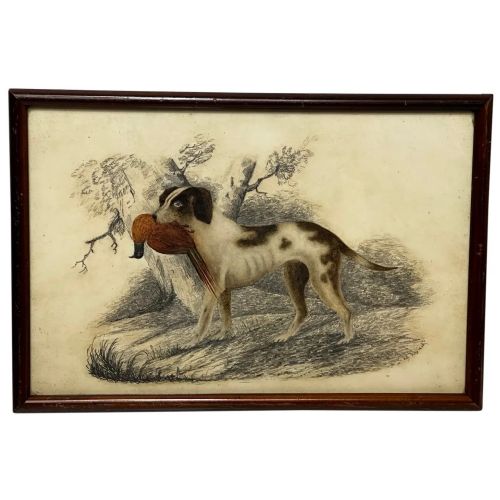
The subjects range from solitary setters and pointers in open landscapes to dynamic packs of hounds and terriers at work. These artworks frequently emerge as oil paintings on canvas or board, alongside delicate watercolours and period lithographs.
Most examples hail from British traditions, reflecting the deep cultural connection between country gentlemen, landowners, and their working dogs. You are most likely to meet Victorian interpretations featuring robust spaniels, hounds, and gun dogs framed in original wood or giltwood surrounds.
How they were made
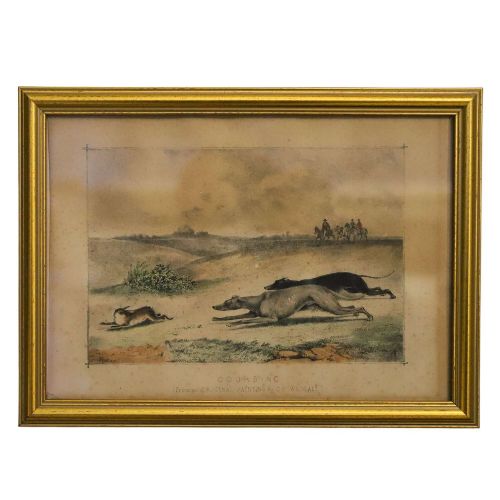
Artists utilised oil paint on canvas or wooden panel to build rich textures in the coats of hounds and setters, often pairing these with atmospheric landscapes. Watercolours on paper offered a lighter touch, capturing swift movements during hare coursing and field expeditions.
Framing played an integral role, utilising carved wood and giltwood mouldings designed to complement the domestic interiors of the nineteenth century. Lithographs provided an accessible method of reproduction, preserving detailed sporting scenes for broader publication.
Framed Hunting Dog Picture Retail Price Guide 2026
Typical asking prices for framed hunting dog picture among the pieces listed under this phrase on Sellingantiques today, from the lower quarter to the upper quarter. They describe what is for sale here now, not the wider market.
Materials documented across these listings include oil on canvas, watercolour, paper, glass, wood, and giltwood.
What varies in quality
Anatomical precision and the depiction of canine expression separate the finest works from ordinary decorative pieces. Master painters rendered muscle structure, tension, and texture with acute observation, whereas lesser hands produced rigid or generic forms.
The integrity of the original framing, whether deep giltwood or simple moulded wood, significantly impacts the overall presence and period authenticity of the artwork. Provenance, artist signature, and the preservation of the underlying canvas or paper further distinguish superior examples.
C. H. Weigall·Arthur Wardle·Samuel Raven·Colin Graeme Roe·John Charles Tunnard·Alfred Duke·Henri Schouten·Robert Cleminson·Frank Dadd·Samuel John Egbert Jones·Charles Hunt Jnr
The Framed Hunting Dog Picture Glossary
- Lithograph
- A print produced by drawing on limestone or a metal plate with a greasy substance, allowing ink to adhere only to the drawn areas. This technique enabled artists to replicate detailed sporting illustrations for widespread distribution.
- Watercolour
- A painting method where fine pigment is suspended in a water-soluble binder, applied to paper to create translucent layers. It was frequently employed for rapid field sketches and finished sporting watercolours.
- Giltwood
- Wood that has been coated with a thin layer of gold leaf or gilt powder, commonly used for ornate nineteenth-century picture frames. These frames add warmth and a distinct reflective quality to the enclosed artwork.
- Coursing
- The sport of hunting game animals, such as hares, with greyhounds or other sighthounds relying on sight rather than scent. This activity inspired numerous dynamic depictions in nineteenth-century art.
- Provenance
- The documented history of ownership of an artwork, tracing its path from the original creator to the current collection. A strong provenance helps confirm the authenticity and age of period paintings.
Framed Hunting Dog Picture: Frequently Asked Questions
What periods do these pictures span?
The works originate predominantly from the nineteenth and early twentieth centuries, encompassing Georgian, Regency, and Victorian aesthetics.
Artists during these eras recorded canine subjects with a strong focus on realism and sporting utility.
Are these works painted in oil or watercolour?
Makers utilised both oil on canvas and watercolour on paper, alongside period lithographic prints.
Oils offered rich depth for landscapes and dog coats, while watercolours captured immediate action in the field.
How should I hang a framed dog picture?
Select a wall with stable humidity away from direct sunlight to protect fragile watercolours, paper, and old canvases.
Pairing these artworks with traditional wood or giltwood surroundings enhances their historical character in living spaces.
How do I identify a Victorian sporting painting?
Look for characteristic themes involving gun dogs, terriers, and hound packs embedded within detailed countryside settings.
Signatures, framing materials, and nineteenth-century canvas or paper stock further aid in dating the piece accurately.