


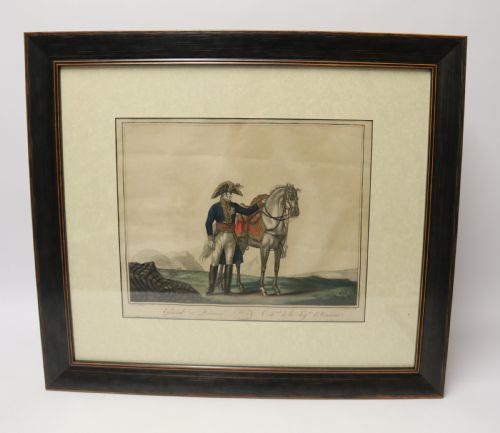


Framed Horse Illustration
A framed horse illustration brings centuries of equine study and sporting art onto your wall, preserved behind glass in period timber frames.
Framed Horse Illustration
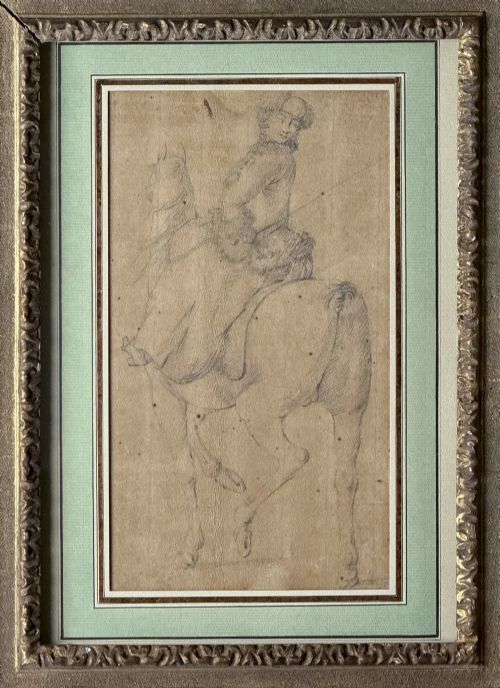
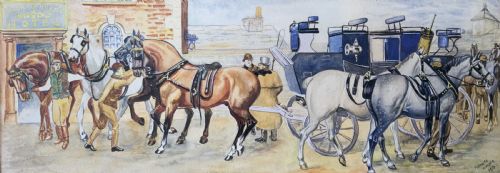
A framed horse illustration encompasses centuries of equine depictions, ranging from early eighteenth-century northern European school drawings to twentieth-century sporting art. These works capture horses in motion, at work, and in sport through various historical lenses.
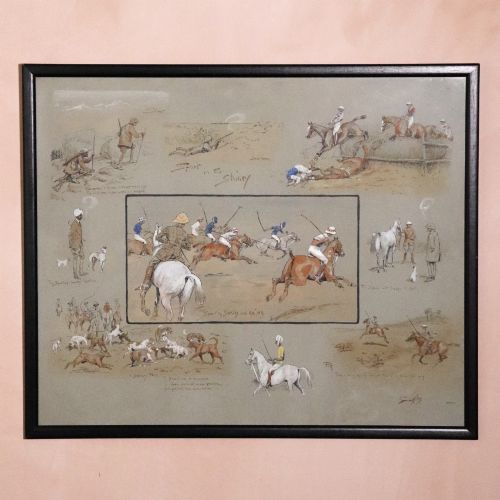
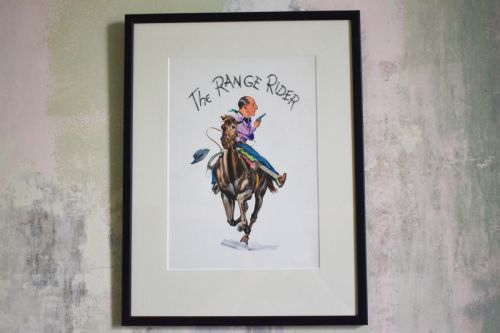
You are most likely to meet twentieth-century sporting prints and watercolours on this page, particularly works by artists such as Snaffles alongside Edwardian and mid-century pieces. These frequently feature oak or walnut frames enclosing detailed watercolours, chalk drawings, and original prints.
The selections span distinct periods including the Edwardian era, the nineteenth century, and eighteenth-century northern European traditions. Each piece reflects the dominant artistic style of its decade, from British colonial and orientalist interpretations to domestic sporting scenes.
How they were made
Artisans and artists employed paper as the primary support, applying watercolour, ink, chalk, charcoal, and pencil to create detailed imagery. Many works utilise heightened charcoal or hand-colouring techniques to enhance depth and contrast.
Protection and presentation rely on traditional materials like glass and wood, with oak and walnut frames enclosing the paper works. These frames secure the fragile watercolours and drawings while maintaining the aesthetic standards of their respective periods.
Listings feature paper supports housed in glass and wood, spanning watercolours, ink, chalk, and chromolithograph prints.
What varies in quality
The distinction between tiers rests upon the execution of the hand and the fidelity of the medium, separating hasty sketches from accomplished watercolours and signed prints. Masterful handling of chalk, watercolour, or ink dictates the visual impact of an equestrian study.
Framing and preservation contribute significantly to the standing of a piece, as original oak or walnut surrounds and clean glass safeguard the paper beneath. The harmony between the artwork, the period mount, and the framing materials defines the integrity of the object.
Cecil Charles Windsor Aldin·Helena Maguire·Michael Lyne·Thomas Worth
The Framed Horse Illustration Glossary
- Chromolithograph
- A multicoloured print produced through a lithographic process using multiple stones or plates. This technique allowed for vibrant reproduction of original artworks in the nineteenth century.
- Watercolour
- A painting method where the paints are made of pigments suspended in a water-based solution. It appears frequently on absorbent paper supports across equestrian and sporting subjects.
- Equestrian study
- An artistic drawing or painting focusing specifically on the anatomy, posture, and movement of horses. These studies range from technical sketches to finished portraiture.
- Orientalism
- An artistic style reflecting western fascination with eastern cultures, often seen in nineteenth-century French and British depictions. Works in this style incorporate dramatic lighting and heightened media.
Framed Horse Illustration: Frequently Asked Questions
What is a framed horse illustration?
It is an artwork depicting horses, executed in media such as watercolour, ink, chalk, or print, and housed behind glass within a wood frame.
These pieces reflect diverse traditions from the eighteenth century through to the mid-twentieth century, encompassing sporting art, military history, and portraiture.
How do I date a framed horse illustration?
Dating relies upon stylistic markers, artist signatures, framing materials, and the paper support characteristic of periods like the Edwardian era or the nineteenth century.
Inscriptions, publication dates on prints, and biographical details of artists such as Cecil Aldin or Snaffles provide precise chronological anchors.
Where should I hang these artworks?
These framed pieces suit studies, libraries, and hallways where traditional timber frames and equestrian subjects complement period interiors.
Protection from direct sunlight is essential to preserve watercolours, chalk, and tinted papers from fading behind the glass.
Are these works original?
The selection includes unique hand-painted watercolours and original drawings alongside period prints, chromolithographs, and published illustrations.
Listings specify the exact medium, distinguishing one-off watercolour paintings and chalk drawings from signed prints and published plates.