




Traditional Inn Artwork
Traditional inn artwork captures the social heart of British history through oil paintings and watercolours depicting historic coaching houses and tavern interiors.
Traditional Inn Artwork
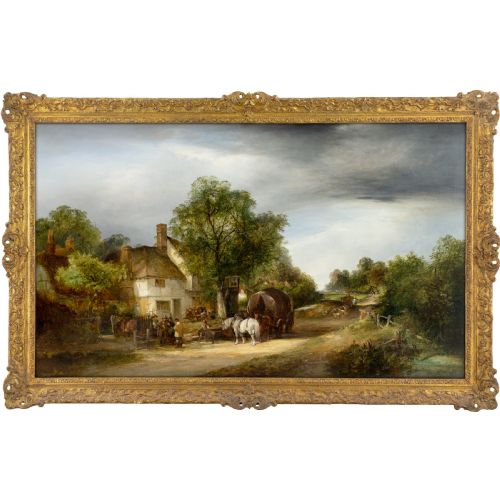
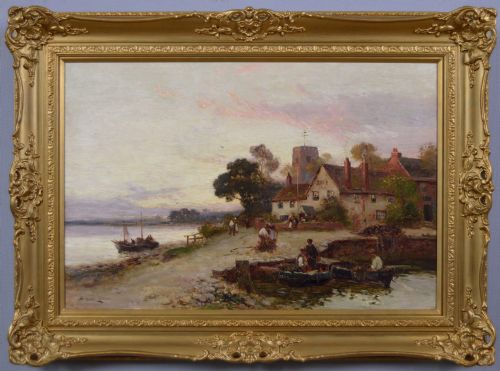
Traditional inn artwork brings centuries of British hospitality into your home through framed paintings and prints of historic hostelries. When you search for traditional inn artwork, you encounter charming scenes of coaching inns, riverside taverns, and lively tavern interiors from the eighteenth, nineteenth, and early twentieth centuries.
The pieces on offer span Victorian and Edwardian periods, alongside English Country and British School styles. You will find detailed watercolours of specific locations like The Mermaid Inn in Rye or The Old White Horse Inn, as well as broader genre scenes featuring horses and travellers.
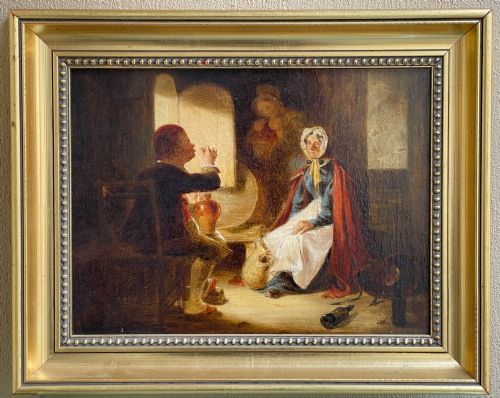
The subjects range from busy village coaching scenes with horses changing at the Black Swan to quiet interior moments modelled on the Dutch Golden Age. These works celebrate the physical architecture and social atmosphere of historic public houses across Britain.
Materials and methods
Artists working on these traditional scenes relied primarily on oil on canvas and delicate watercolours on paper. Many of the finest examples feature traditional framing in giltwood embellished with gold leaf, which enhances the depth of the painted scenes.
The technique encompasses both precise architectural topography and looser nineteenth-century genre painting. Painters built their compositions using layered pigments to capture the warmth of tavern interiors and the natural light of river landscapes.
Several paintings pay affectionate tribute to the humble tavern horse, patiently waiting outside while humans enjoy a pint.
Judging quality in tavern and inn paintings
Quality in traditional inn artwork rests upon the artist's ability to render atmosphere, human interaction, and architectural perspective convincingly. Works by recorded painters display confident brushwork in the handling of figures, horses, and historic signage.
The distinction between standard decorative pieces and superior works lies in the specificity of the subject and the fidelity of the period detail. Original watercolours and oil paintings by named artists demonstrate a greater depth of composition than mass-produced prints.
David Woodlock·Annie L Lee·Cuthbert Crossley·John Charles Maggs·Stuart Lloyd·John Atkinson
The Traditional Inn Artwork Glossary
- Genre painting
- A style of painting depicting scenes from everyday life, typically involving ordinary people in domestic or public settings such as taverns. This approach forms a major component of inn artwork.
- Giltwood
- Wood that has been treated with a thin layer of gold leaf or gilt paint, commonly used for traditional picture frames. It adds a warm, reflective border to oil paintings and watercolours.
- British School
- A loose classification for artists born or working mainly in Britain, particularly from the eighteenth to the twentieth centuries. Much of the traditional inn artwork falls under this broad designation.
- Dutch Golden Age
- A period in Dutch history spanning the seventeenth century, noted for tavern interior scenes that heavily influenced later British painters. Works in this style often depict figures gathered around tables indoors.
Traditional Inn Artwork: Frequently Asked Questions
What periods do these paintings cover?
The works span from the eighteenth century through the Victorian and Edwardian eras up to the nineteen-forties. Many pieces capture the late nineteenth-century romantic view of coaching life.
Earlier examples draw inspiration from Dutch Golden Age tavern interiors, while twentieth-century works continue the tradition of depicting specific named inns across the English landscape.
Are these works original paintings or prints?
The selection includes both original oil paintings on canvas and hand-painted watercolours on paper. Each medium offers a distinct texture and visual weight.
Framed prints also appear, representing popular views of historic British coaching houses from the interwar period.
How do I identify specific inns in the art?
Many titles and signatures explicitly name the establishment and location, such as The Mermaid Inn in Rye or The Old White Horse Inn in St Ives. Artists often recorded accurate architectural details and historical signage.
Signatures or inscriptions on the mounts and stretchers frequently provide further clues to the exact tavern depicted.
How should I hang and display these artworks?
These traditional paintings suit classic interiors, studies, dining rooms, and hallways where their heritage themes can take centre stage. Pair them with traditional wooden furniture to complement the historic subject matter.
Ensure they are positioned away from direct sunlight to protect delicate watercolours on paper and traditional giltwood frames.