





Framed Gothic Artwork
Framed gothic artwork brings centuries of ecclesiastical architecture and dark romanticism directly to the wall through period drawings, oils, and prints.
Framed Gothic Artwork
When you search for framed gothic artwork, you encounter a selection spanning original architectural drawings, cathedral watercolours, and early oil paintings. These pieces concentrate heavily on medieval buildings, abbeys, and historical scenes rendered across the nineteenth and early twentieth centuries.
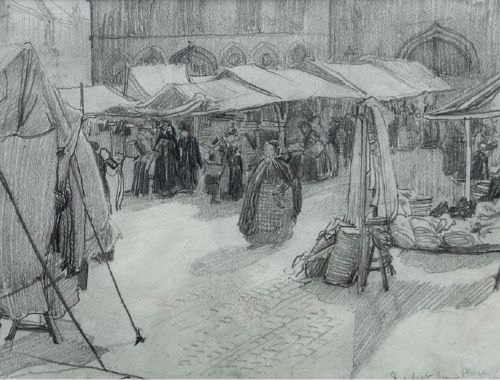
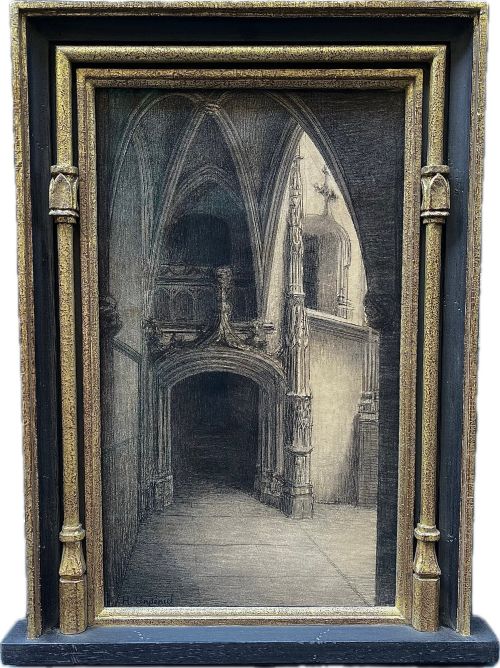
The most frequent examples on this page are detailed watercolours and ink studies of English and continental cathedrals, alongside nineteenth century original drawings documenting gothic art and architecture. Oils depicting ruined abbeys, moonlight churches, and Bavarian castles also appear regularly.
Origins range from nineteenth century depictions of Lincoln, Norwich, and York minsters to continental church interiors and trench art charcoal drawings. The assortment captures both precise topographical recording and atmospheric nineteenth century romanticism.
Materials and construction
The works rely on traditional supports including paper, canvas, and wood panels, upon which artists applied oil paint, watercolour, ink, and charcoal. Gold leaf occasionally highlights specific details within these compositions.
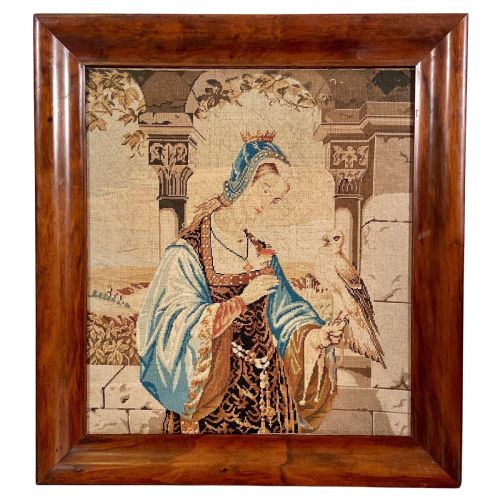
Framing typically involves wood surrounds, sometimes executed in walnut, housing glass to protect delicate paper items such as pencil drawings, etchings, and monochrome prints.
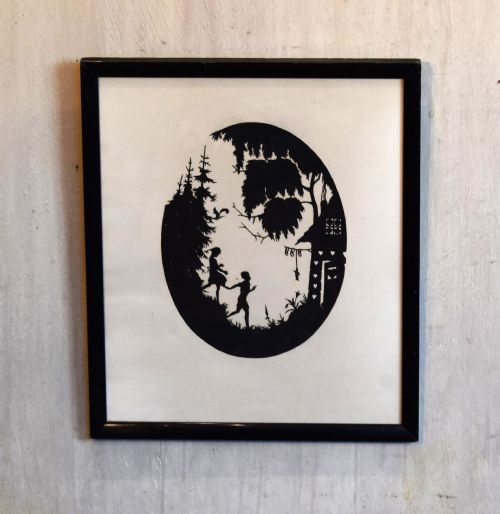
Hansel and Gretel hide quietly among the solemn cathedrals as a whimsical twentieth century gothic silhouette.
Quality differences in these pieces
The distinction between standard examples and superior pieces rests on the precision of architectural draughtsmanship and the artist's handling of atmospheric light. Master works capture stone texture and shadowed interiors with exact perspective and depth.
Originality of medium and the presence of period signatures or documentary inscriptions elevate certain drawings and paintings above standard topographical prints.
Henry Percy Huggill·Henri Charles Angéniol·Joan Gillchrest·Leopold Halvoet·Karl Herrle·Walter Meegan·R.P. Phillimore·Peter Toft·Fred Lawson·George De Paris·Tom Dudley·Frank Greenwood·Joseph Murray Ince
The Framed Gothic Artwork Glossary
- Gothic Revival
- An architectural and artistic movement reviving medieval gothic forms, prominent throughout the nineteenth century. It heavily influences the subject matter of these cathedral and abbey artworks.
- Etching
- A printmaking technique where lines are bitten into a metal plate with acid before being inked and pressed onto paper. This process produces fine, sharp architectural lines.
- Monochrome
- Executed in a single colour or shades of a single colour, such as ink wash or pencil. Many architectural drawings rely on this method to emphasise form and shadow.
- Watercolour
- Pigments suspended in water-based solution applied to paper. It is frequently employed here for light-sensitive cathedral interiors.
- Trench Art
- Objects made by soldiers and civilians during wartime conflicts, utilising available materials. The evidence includes charcoal battlefield drawings from this category.
Framed Gothic Artwork: Frequently Asked Questions
What subjects appear in framed gothic artwork?
The subjects focus predominantly on medieval architecture, including cathedrals, abbeys, churches, and castles. Scenes of York, Lincoln, and Norwich feature alongside continental church interiors and monastic ruins.
Artists also recorded historical buildings and collegiate halls, capturing the shadowed stone and soaring arches characteristic of the gothic style.
How do I date these artworks?
Dating relies on inscribed dates, signatures, artist biographies, and stylistic markers inherent to the nineteenth and early twentieth centuries. Many pieces carry explicit period attributions from the Victorian era onward.
Paper quality, framing materials, and ink fading also provide contextual clues regarding the exact decade of production.
How should I hang these pieces?
These artworks suit spaces with traditional decor, dark wood furniture, or neutral walls that allow the architectural details to stand out. Adequate distance from direct sunlight protects sensitive watercolours and paper drawings from fading.
Pairing complementary cathedral views or grouping monochrome etchings together creates a cohesive gallery display on a study or hallway wall.
Are these pieces original works?
The selection includes a mixture of unique original items and period prints. Original drawings in pencil, ink, and watercolour sit alongside oil paintings on canvas and panel.
Numbered or signed prints by historical printmakers also feature, offering accessible examples of nineteenth century architectural illustration.