


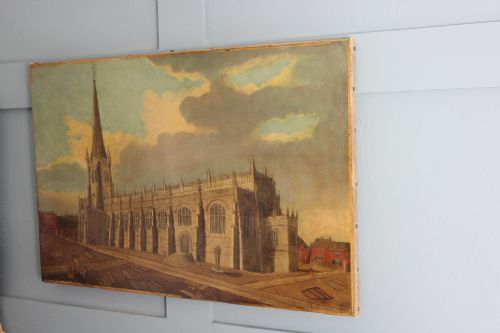


Gothic Cathedral Art
Gothic cathedral art brings the monumental scale and pointed arches of medieval sacred architecture directly into domestic spaces.
Gothic Cathedral Art
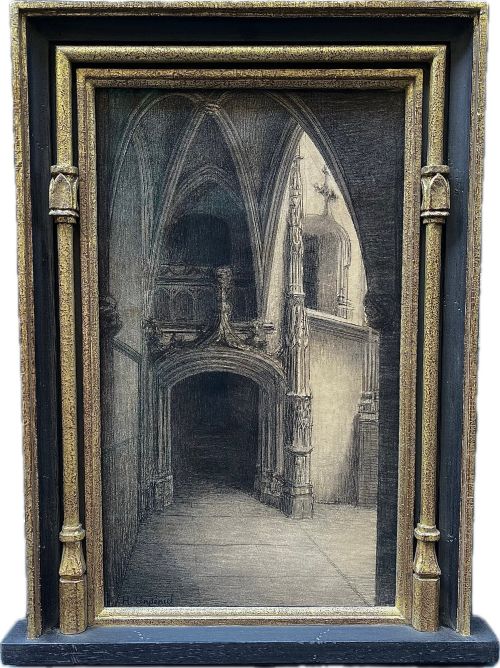
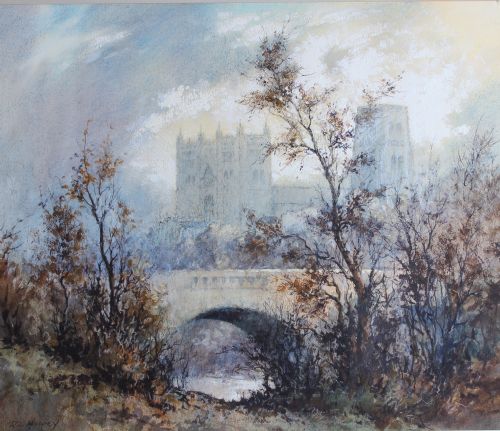
Gothic cathedral art encompasses framed artworks, paintings, wall art, and fine art paintings that depict ecclesiastical buildings and architectural studies. Buyers examining this category encounter watercolours, oil paintings, prints, and drawings produced across multiple centuries.
Pieces frequently originate from the eighteenth, nineteenth, and early twentieth centuries, reflecting changing interpretations of Gothic Revival and Victorian ecclesiastical styles. Works span detailed topographical records to broader artistic treatments of French and British cathedrals.
What varies in quality
Precision of architectural draughtsmanship separates standard topographical records from masterful renderings of perspective and masonry detail. The handling of light within cavernous naves and across stone facades dictates the visual strength of painted and drawn compositions.
Provenance and documented connections to specific buildings or named artists elevate the historical interest of individual pieces. The integrity of the original paper, canvas, or wood support alongside the retention of period framing influences overall desirability.
Listings feature works spanning the eighteenth to mid-twentieth centuries, executed in watercolour, oil, graphite, and ink on paper and wood.
Henri Charles Angéniol·Robert Leslie Howey·Leopold Halvoet·Fred Lawson·George De Paris·Frank Greenwood·William Marlow
The Gothic Cathedral Art Glossary
- Gothic Revival
- An architectural and artistic movement reviving medieval forms, particularly pointed arches and ribbed vaults. This style heavily influences nineteenth-century depictions of ecclesiastical structures.
- Topographical art
- Accurate graphic or painted representations of specific places and buildings. These works record actual architectural details of cathedrals and abbeys.
- Watercolour
- A paint consisting of pigment suspended in a water-based solution applied to paper. It allows artists to achieve translucent washes of light across stone surfaces.
- Etching
- A printmaking technique where acid cuts into unprotected parts of a metal plate to hold ink. This method produces fine, precise lines suited for architectural subjects.
- Post-Impressionism
- An art movement following impressionism that explored emotional and structural responses to subjects. Artists in this style depicted cathedral scenes with bolder brushwork and colour.
Gothic Cathedral Art: Frequently Asked Questions
What periods do these artworks span?
The works span from the eighteenth century through the nineteenth century and into the mid-twentieth century. Pieces reflect prevailing aesthetic movements including Georgian, Victorian, and early twentieth-century modern approaches.
Creators recorded ecclesiastical structures across these distinct eras using traditional drawing, painting, and printmaking techniques.
How were these cathedral artworks created?
Artists utilised media such as watercolour, oil paint, graphite, ink, and charcoal on paper, board, or canvas. Many works incorporate detailed architectural draughtsmanship to render stone arches, towers, and stained glass.
Printmakers employed etching and engraving plates to reproduce crisp architectural elevations and interior perspectives of historic abbeys.
Which cathedrals are commonly depicted?
Subjects include prominent British structures such as Durham, Norwich, York, Lincoln, and Ely cathedrals, alongside continental European churches. Specific architectural landmarks and abbey ruins form the primary focus of the visual compositions.
Certain works also document interior spaces, collegiate churches, and related ecclesiastical architecture across France and England.
How should I display framed cathedral art?
These framed pieces suit studies, libraries, and living spaces where traditional wall art complements architectural decor. Selecting positions away from direct sunlight preserves the watercolours, inks, and paper supports.
Matching the frame to the period of the artwork helps maintain the historical context of the piece within a room.