



Framed Gold Medallion
A framed gold medallion brings portraiture and classical relief work to the wall or the chain.
Framed Gold Medallion
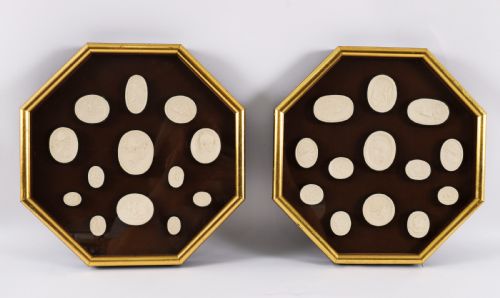
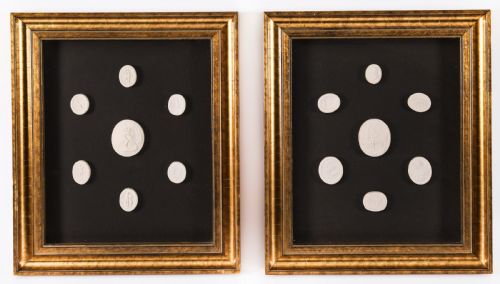
A framed gold medallion gathers miniature portraits, classical intaglios, and religious plaques set within precious metal and carved surrounds. When searching for a framed gold medallion, buyers encounter Georgian and Victorian pieces ranging from grand tour souvenirs to devotional pendants.
The objects span wall art, portrait miniatures, and jewellery pieces such as pendants and charms. Most examples on this page unite small-scale painting, enamel, or plaster relief with metal and wooden frames.
Origins stretch from British naval portraits to French religious medals and Italian grand tour intaglios. These diverse forms share a compact scale and a focus on detailed human likeness or classical motif.
How they were made
Craftsmen built these pieces using materials like 18K yellow gold, giltwood, enamel, and porcelain. Artisans painted watercolours on paper and agate panels, modelled plaster intaglios, and cast or carved mother-of-pearl.
Makers enclosed these delicate panels behind glass within twisted wire frames, ormolu mounts, and wooden surrounds. Enamelling techniques fused powdered glass to metal bases under heat, while portrait painters worked with fine brushes on tiny surfaces.
Framed Gold Medallion Retail Price Guide 2026
Typical asking prices for framed gold medallion among the pieces listed under this phrase on Sellingantiques today, from the lower quarter to the upper quarter. They describe what is for sale here now, not the wider market.
Listings feature items from the 18th century, Regency, Victorian era, and early 20th century up to the 1930s.
What varies in quality
Quality rests in the precision of the miniature painting or the crispness of the plaster and intaglio relief work. Superior examples display fine facial detailing and secure, well-executed metalwork on the surrounds.
The harmony between the inner medallion and its outer frame determines the overall success of the piece. Well-matched materials and intact glass or enamel surfaces elevate the execution across all periods.
The Framed Gold Medallion Glossary
- Intaglio
- A design carved into the surface of a material such as stone or glass so that an impression can be raised from it. Grand tour travellers frequently collected plaster versions of classical examples.
- Ormolu
- Gilded bronze used for furniture mounts and decorative frames. This technique applied a gold-mercury amalgam to a bronze base.
- Portrait miniature
- A small, highly detailed painting on ivory, vellum, card, or agate. These intimate items were often worn as jewellery or kept in protective cases.
- Giltwood
- Wood that has been coated with gold leaf or powder. It provides a bright, reflective surround for wall art and mirrors.
Framed Gold Medallion: Frequently Asked Questions
What is a framed gold medallion?
A framed gold medallion is a small artwork, portrait, or relief plaque housed in a precious metal setting and protective frame. These objects include pendant necklaces, wall plaques, and miniature paintings.
They bridge the worlds of fine art and jewellery, offering intricate craftsmanship in a portable or wall-hanging format.
How were these pieces used?
Many items served as personal devotions, wearable jewellery, or portable portraiture for travellers and families. Others functioned as decorative wall art and miniature sculptures for domestic interiors.
Their varied forms allowed owners to display status, religious faith, or affection for relatives and public figures.
How do I care for antique gold frames?
Keep these pieces away from direct sunlight and high humidity to protect delicate watercolours, silk, and enamel. Dust giltwood and metal frames gently with a soft, dry brush.
Avoid liquid cleaners on painted surfaces and glass, using only dry conservation methods where possible.
How can I tell the period of a piece?
Dating relies on the stylistic markers of the frame, the subject matter, and the materials used. Georgian and Regency pieces often feature distinct portrait styles and specific metalworking techniques.
Later Victorian and early twentieth-century examples incorporate different clasp types, enamel colours, and framing conventions.