
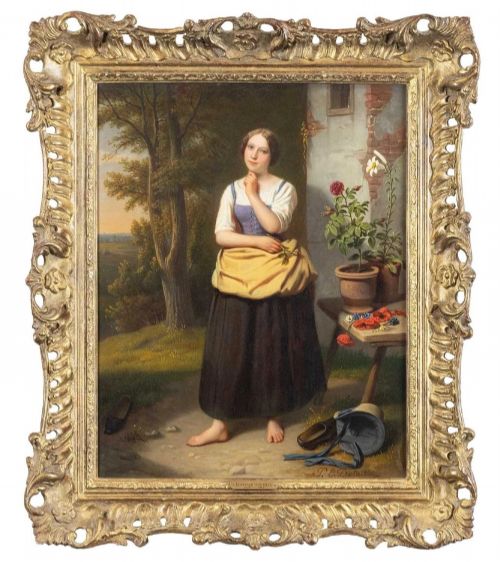


Framed French Figurative Painting
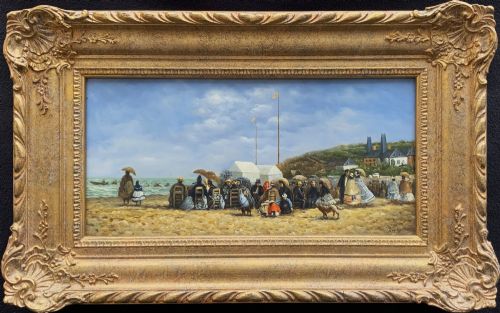
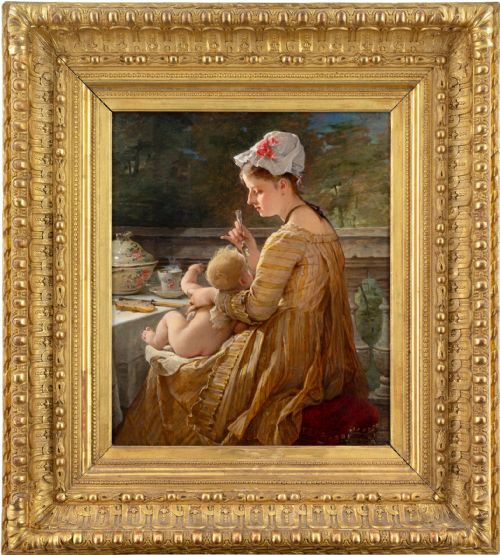
Framed french figurative painting brings domestic interiors, coastal scenes and classical figures into the room through canvas and oil paint.
Framed French Figurative Painting
A framed french figurative painting captures human subjects within domestic interiors, coastal retreats, and classical narratives. Buyers seek these works for their historical depth and expressive brushwork.
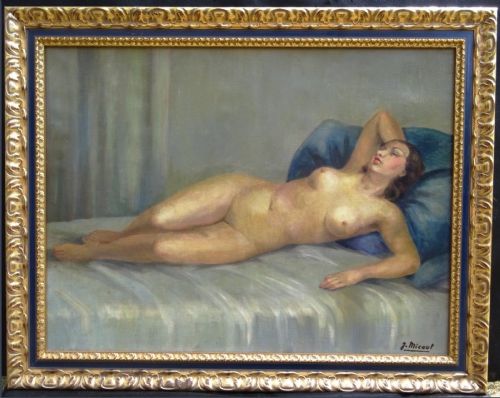
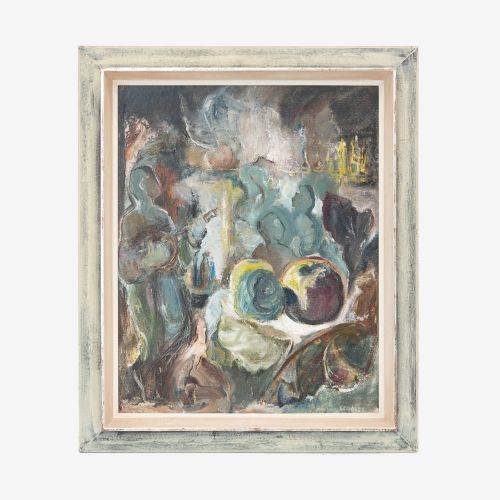
The selection ranges from nineteenth-century academic portraits and Rococo revival court scenes to twentieth-century post-impressionist gatherings and art deco nudes. Nineteenth-century canvases and mid-century panels form the bulk of the works available.
Subjects include solitary bathers, ballroom courtiers, mothers with children, and outdoor picnickers. Each piece relies on the human form to anchor the composition within its period style.
How they were made
Makers laid oil paint onto stretched canvas, wooden boards, or heavy paper, sometimes employing mixed media such as watercolour and coloured pencil. These supports dictated the scale and texture of each finished composition.
Giltwood and gesso frames enclose the paintings, often featuring ornate moulding characteristic of the period. The frames serve to protect the edges of the canvas while adding architectural weight to the presentation.
The collection includes pieces attributed to students of Manet and Picasso alongside established academic painters.
What varies in quality
Compositional confidence separates the accomplished works from standard decorative pieces. Masterful handling of light, shadow, and human anatomy creates a convincing sense of space and movement.
The integrity of the original support and the condition of the paint layer determine the survival of the piece. Brushwork that retains its crispness without excessive overpaint indicates superior execution by the artist.
Adelaïde Salles Wagner·Charles Zacharie Landelle·Raymond Moritz·Henri Vincent Anglade·Antoine Calbet·Gabriel Dauchot·Fernand Jean Barbier·Paul Leon Jazet·Jean Hippolyte Marchand·Albert Guillaume·Pinchus Kremegne·Irene Lagut·Edmund Alphonse Andre·James Bertrand·Albert de Belleroche·Kees van Dongen·Yves Brayer·Frederick Bartman·Adolphe Alexandre Lesrel·Leon Girardet·Gaston Bouy
The Framed French Figurative Painting Glossary
- Post-Impressionism
- A style that emerged in France as artists rejected the rigid limitations of impressionism, favouring expressive brushstrokes and symbolic forms. This approach prioritises emotional resonance over strict optical realism.
- Gesso
- A plaster mixture applied to wooden frames or panels to prepare the surface for gilding or painting. It provides a smooth, durable base that accepts gold leaf and intricate moulding.
- Academic
- Pertaining to the traditional style promoted by official European art academies during the nineteenth century. These works emphasise classical draughtsmanship, historical narrative, and polished surfaces.
- Intimist
- An artistic movement focusing on domestic interior scenes filled with quiet intimacy. Practitioners capture everyday moments in private spaces with soft lighting.
- Rococo Revival
- A nineteenth-century design movement resurrecting the ornate, asymmetrical ornamentation of the French eighteenth century. It appears in paintings depicting lavish court life and leisurely aristocrats.
Framed French Figurative Painting: Frequently Asked Questions
What periods do these paintings cover?
The selections span from the nineteenth century through the art deco era to the mid-twentieth century.
Individual works date from the eighteen-eighties up to nineteen-sixty, reflecting evolving European artistic movements.
How should I hang a heavy gilt frame?
Heavy giltwood and gesso frames require secure wall fixings anchored directly into studs or masonry.
Use professional picture hooks rated for the specific weight of the framed artwork to ensure stability.
Are these works painted on canvas or board?
The pieces utilise various supports including oil on canvas, wooden boards, heavy paper, and panel.
Each material responds differently to environmental conditions, requiring consistent indoor humidity levels.
How do I identify a post-impressionist piece?
Post-impressionist works display bold brushwork, simplified forms, and expressive use of colour rather than strict realism.
Artists working in this tradition focus on personal interpretation of the subject matter.