


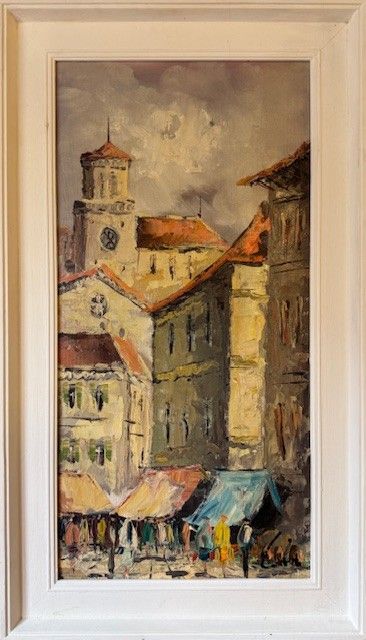


Framed French Cityscape
A framed french cityscape brings the street corners, rivers and monuments of Paris and provincial towns directly onto the wall in oil, watercolour or print.
Framed French Cityscape
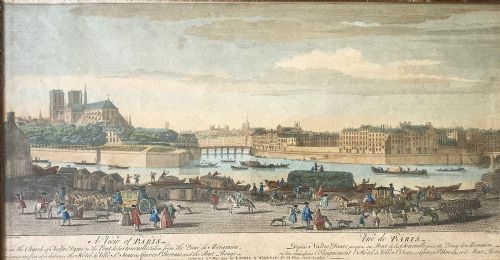
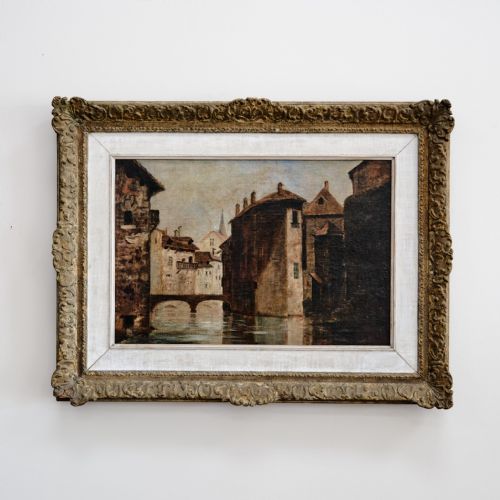
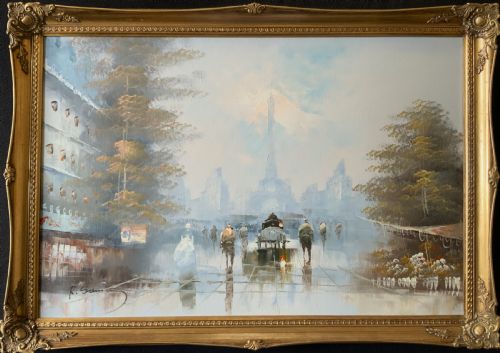
A framed french cityscape gathers street scenes, river views and architectural studies spanning from the eighteenth century to the mid-twentieth century. Buyers encounter oil paintings on canvas and board, watercolours, pastels and period engravings, mostly held in traditional wood or gilded frames. The selection includes works by named painters alongside anonymous compositions capturing market squares, riverbanks and historic quarters.
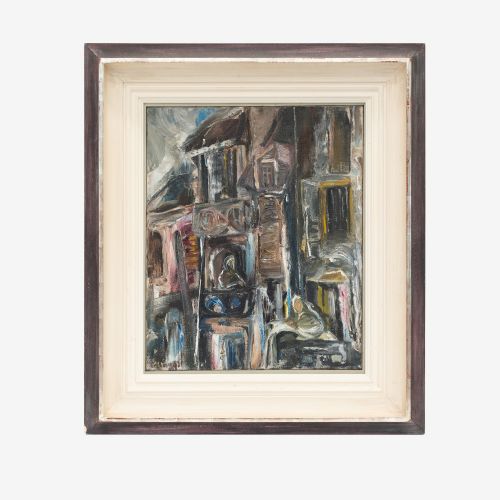
The material record stretches across several distinct periods, drawing heavily upon mid-century interpretations alongside works from the nineteenth century and earlier. Subjects range from grand Parisian landmarks like the Eiffel Tower and Notre Dame to quiet provincial lanes and northern waterways. These works reflect stylistic movements from post-impressionism and impressionism to mid-century modernism.
Materials and methods
Oil paint applied to canvas or board forms the primary medium for these townscapes, often building heavy texture through impressionist brushwork. Artists also utilised paper for pastels, watercolours, and detailed drypoint etchings or engravings featuring original hand colouring. Supports range from simple wooden stretchers to substantial period framing.
Frames play a structural and aesthetic role, utilising wood, glass, and gilt or gilded finishes to enclose the artwork. Many compositions rely on layered oil paint to capture the changing light of Parisian seasons, while works on paper employ fine ink lines, washes or drypoint engraving techniques.
One unexpected canvas tucks a mischievous Pierrot and Harlequin into the imaginary quays of Paris.
Judging the work
Quality rests upon the handling of light, atmosphere and perspective within the street or river view, separating evocative compositions from rigid or flat renderings. The depth of the brushwork and the confidence of the draughtsmanship dictate the visual success of the piece.
The integrity of the framing contributes to the overall standard, with period gilt wood mouldings enhancing the artwork more effectively than replacement surrounds. The preservation of the canvas, paper or board without excessive restoration preserves the original character intended by the painter or printmaker.
Lilian Colbourn·Caroline Burnett·Paul-Jean Anderbouhr·Victor Gabriel Gilbert·Gabriel Dauchot·Ron Folland·Merio Ameglio·Claude Jousset·Antoine Bouvard Senior·Eduard Leon Cortes·Noel Harry Leaver·Francis Dodd·Louis Icart·Pierre Peltier·Henry Schafer·Letitia Marion Hamilton
The Framed French Cityscape Glossary
- Impressionism
- A nineteenth-century painting style characterised by relatively small, thin yet visible brush strokes and an emphasis on accurate depiction of light.
- Drypoint
- A printmaking technique of the intaglio family, in which an image is engraved into a plate with a hard-pointed steel needle.
- Gilt wood
- Wood that has been treated with gold leaf or a gold-coloured substance to create a decorative metallic finish.
- Pastel
- A dry painting medium in the form of a stick, consisting of powdered pigment and a binder.
- Post-Impressionism
- A predominantly French art movement that developed from about 1880 as a reaction against impressionism's natural concern for the depiction of light and colour.
Framed French Cityscape: Frequently Asked Questions
What periods do these cityscapes cover?
The works span from the eighteenth century through the nineteenth century and across the twentieth century up to the mid-century period. Pieces include eighteenth-century engravings alongside impressionist and mid-century oil paintings.
This broad chronological range allows collectors to select works reflecting distinct historic eras and evolving artistic movements across France.
Are all the paintings original oils?
While oil on canvas and board forms the largest group of works, the selection also incorporates watercolours, pastels, drypoint etchings and hand-coloured engravings on paper.
Each medium offers a different textural quality, from heavy impasto oils to delicate linear etchings.
How should I hang a framed cityscape?
These works suit domestic or study walls where adequate lighting can highlight the brushwork and the details of the gilded or wooden frames. Standard picture wire and secure wall fixings support the weight of larger canvases safely.
Keeping paintings away from direct sunlight and damp environments protects both the canvas and the historical frame.
Which landmarks appear most often?
Parisian subjects dominate the selection, featuring views of the Eiffel Tower, Notre Dame, the River Seine, Montmartre and various historic bridges and squares. Other works depict provincial French locations, northern waterways and Venetian scenes.
These varied vistas capture both grand architectural monuments and quiet everyday street life.