
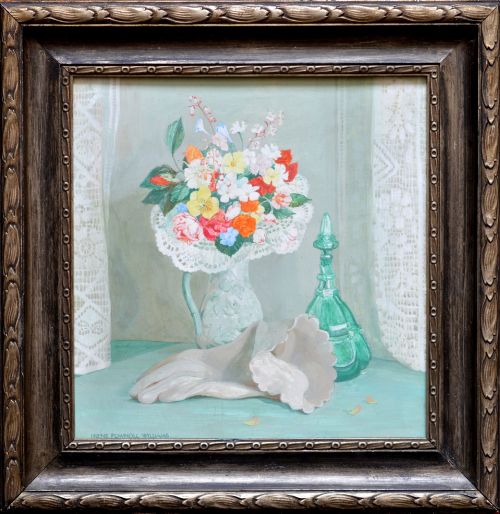
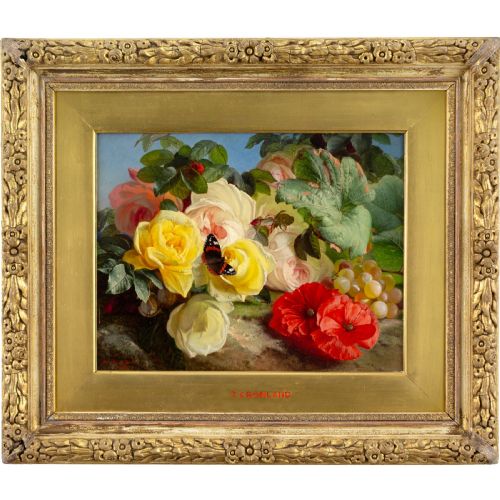
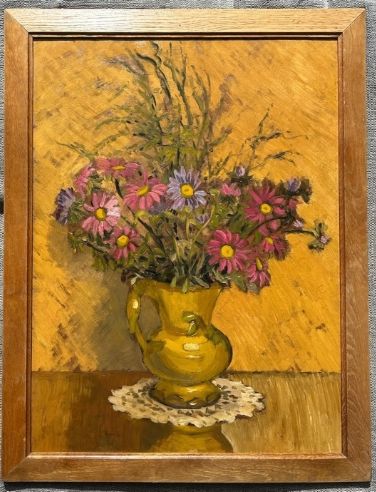
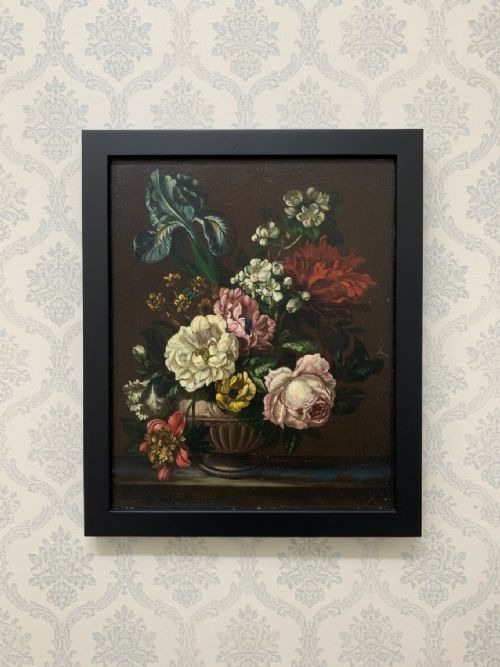

Framed Flower Wall Painting
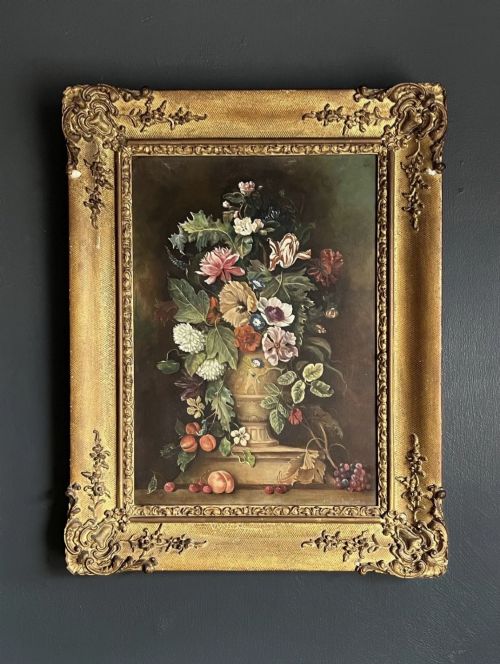
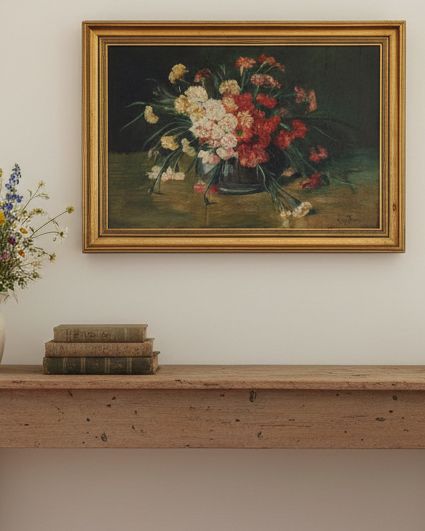
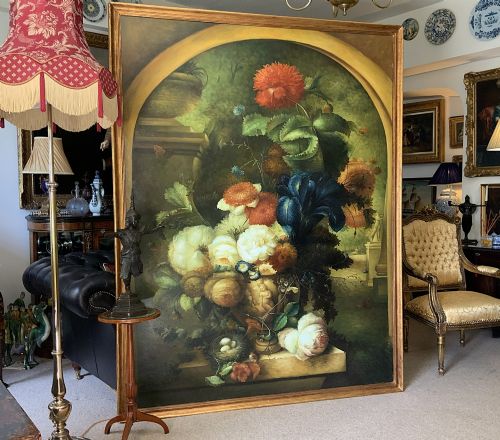
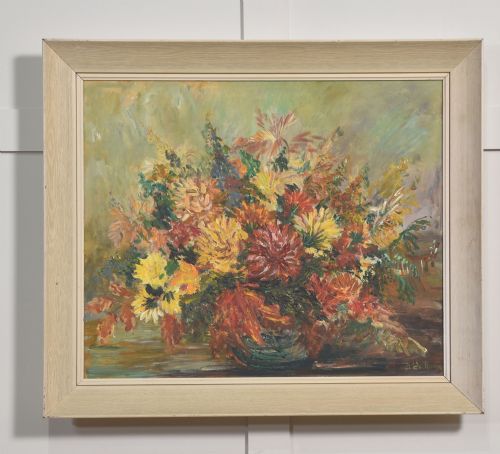
When you search for a framed flower wall painting, you uncover centuries of botanical studies and lavish floral still lifes preserved behind glass or within heavy wooden moulding.
Framed Flower Wall Painting
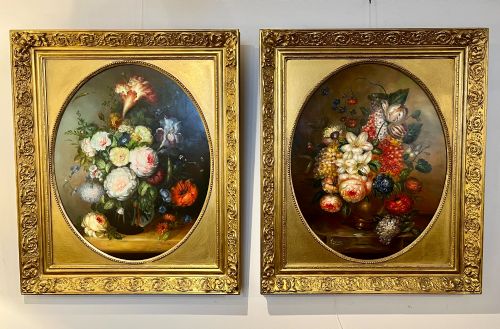
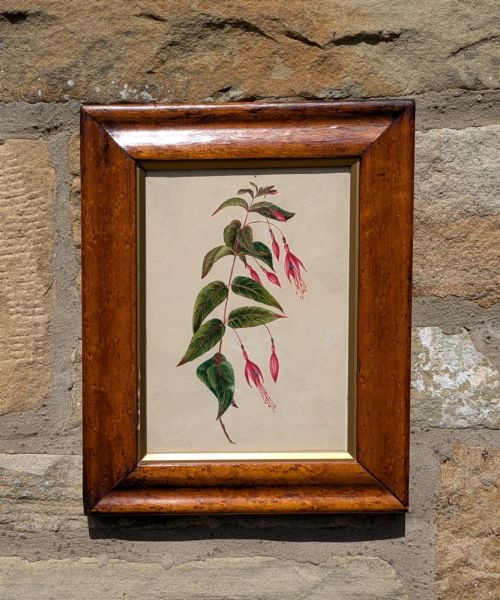
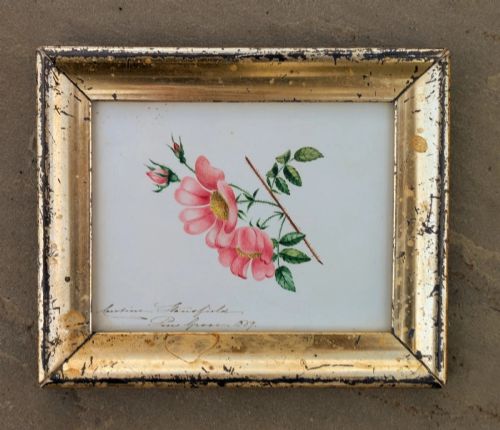
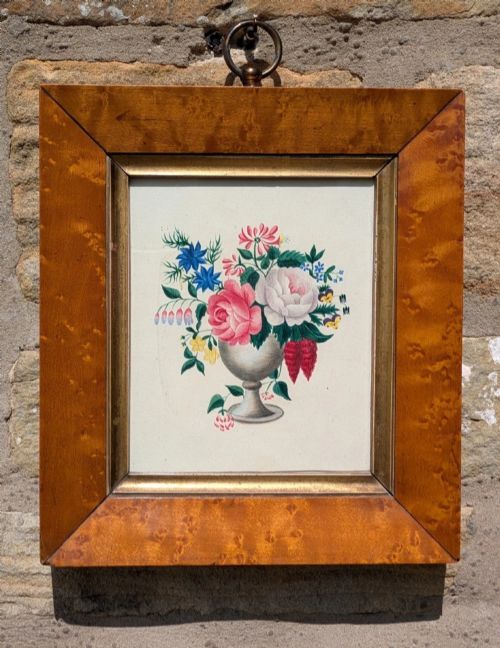
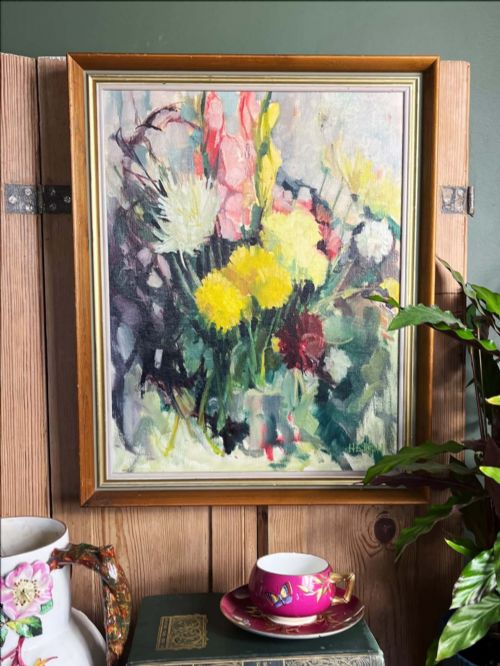
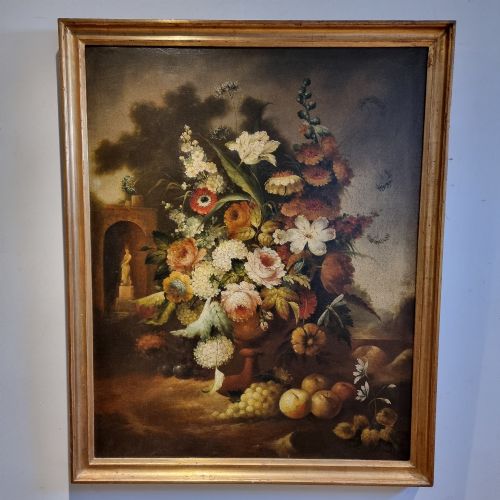
A framed flower wall painting encompasses centuries of botanical observation, ranging from intimate nineteenth-century watercolours to large-scale twentieth-century oil compositions.
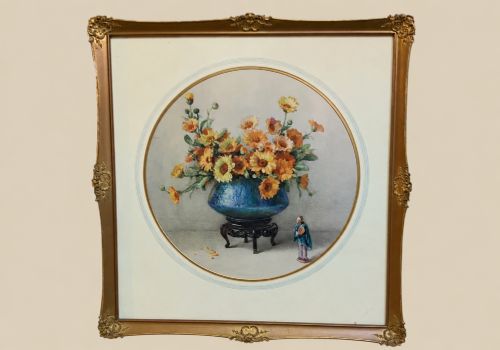
You will frequently encounter works executed on canvas, wood panel, board, and paper, capturing everything from wild roses and marigolds to elaborate Dutch-style floral arrangements.
The selection spans various periods including Victorian, Edwardian, and mid-century modern aesthetics, housed within original frames that complement the botanical subject matter.
How they were made
Artists painted these floral subjects using oil, watercolour, tempera, or gouache applied to prepared canvas, wooden panels, heavy paper, or board.
Many works are secured inside period wooden surrounds, occasionally embellished with gilt gesso moulding or protected beneath glass panes.
Several botanical studies manage to capture buzzing butterflies alongside their vases of heavy summer poppies.
What varies in quality
The sophistication of the brushwork and the naturalistic rendering of petals, stems, and light separate ambitious compositions from simpler decorative studies.
The craftsmanship of the accompanying frame, particularly hand-carved or gilt gesso examples, contributes significantly to the overall presence of the artwork.
Theude Gronland·Kenneth Cozens·Ernest Arthur Rowe·Emma Fordyce MacRae·Owen Bowen·James Tower
The Framed Flower Wall Painting Glossary
- Still life
- A painting or drawing depicting inanimate subject matter, typically commonplace objects or natural items such as cut flowers. These arrangements allow artists to focus intensely on colour, light, and composition.
- Gesso
- A plaster-like mixture used as a base for paint or moulded into decorative relief patterns on picture frames. It is often gilded with gold leaf to create ornate antique borders.
- Tempera
- A permanent, fast-drying painting medium consisting of coloured pigments mixed with a water-binder such as egg yolk. It produces a matte surface that retains its vibrancy over centuries.
- Oleograph
- A type of chromolithographic print textured to imitate an oil painting on canvas. These reproductions became popular in the late nineteenth and twentieth centuries as affordable wall art.
- Gouache
- An opaque water-based paint that produces a heavier, more solid colour block than traditional transparent watercolour. It is frequently employed in detailed botanical illustrations.
Framed Flower Wall Painting: Frequently Asked Questions
How do I hang a heavy framed oil painting safely?
Heavy framed works require sturdy picture wire and appropriate wall anchors fixed directly into masonry or wall studs to support the weight securely.
Ensure the hanging height positions the centre of the canvas at eye level for optimal viewing in your interior space.
Are watercolour floral paintings sensitive to sunlight?
Watercolours and works on paper are susceptible to fading when exposed to direct, prolonged sunlight due to the delicate nature of the pigments.
Position these pieces away from bright windows or use UV-protective glass during framing to preserve the subtle tones.
How can I identify the period of a wooden picture frame?
Period frames often exhibit traditional joinery techniques, hand-carved ornamentation, and aged patination on the wood or gilt surfaces.
Looking at the backboards, fixings, and nails can also provide clues regarding the manufacturing era of the frame.
What is the difference between oil on canvas and oil on board?
Oil on canvas involves pigment applied to a stretched textile surface, offering slight flexibility and a distinct woven texture beneath the paint layers.
Oil on panel or board uses a rigid wooden or composite backing, which painters have utilised across various centuries for stability.